
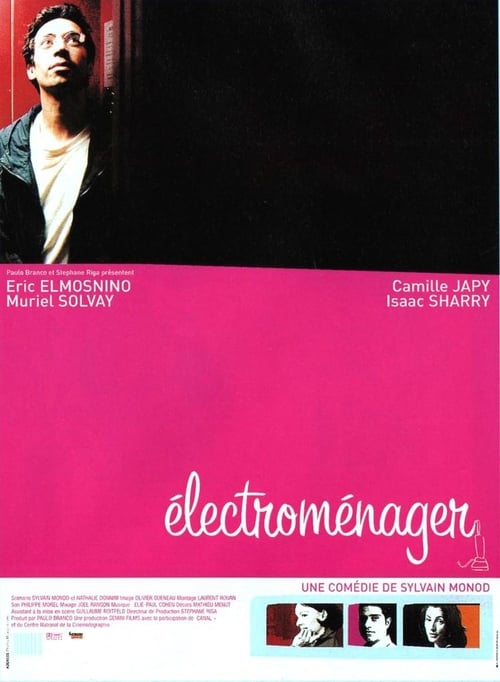











Popular
What is the significance of the main character's relationship with their family in Electroménager?
How does the protagonist's job influence their personal life in Electroménager?
What role do the various household appliances play in the character's journey in Electroménager?
How does the protagonist's view of success evolve throughout Electroménager?
What is the impact of the supporting characters on the protagonist's development in Electroménager?
Should I watch it?
Ask Your Own Question

What is the plot?
Sorry, we aren't able to watch and write up a full detailed plot yet. Check back in a few days.








What is the ending?
In the ending of "Electroménager," the main character, a young man named Romain, confronts the reality of his life choices and the impact they have on his relationships. He ultimately decides to take responsibility for his actions, leading to a bittersweet resolution with his family and friends.
As the film approaches its conclusion, Romain finds himself at a crossroads. He has been grappling with the consequences of his decisions, particularly how they have affected his relationship with his mother and his friends. The emotional weight of his choices becomes increasingly apparent, and he realizes that he cannot continue to live in denial.
In a pivotal scene, Romain visits his mother, who has been struggling with her own feelings of abandonment and disappointment. The tension in the room is palpable as they engage in a heartfelt conversation. Romain expresses his regrets and acknowledges the pain he has caused her. His mother, though hurt, begins to understand his struggles, and they share a moment of vulnerability that brings them closer together.
Meanwhile, Romain's friendships are also tested. He confronts his friends about their reckless behavior and the way it has influenced his own life. This confrontation is charged with emotion, as Romain lays bare his frustrations and fears. His friends, initially defensive, begin to reflect on their own actions and the impact they have had on their lives. This moment of honesty leads to a deeper understanding among them, and they collectively decide to make changes in their lives.
The film culminates in a scene where Romain stands alone, contemplating his future. The weight of his past decisions hangs heavy on him, but there is a sense of hope as he resolves to move forward with a renewed sense of purpose. He understands that while he cannot change the past, he can shape his future through the choices he makes today.
In the final moments, Romain is seen walking away from the familiar surroundings of his life, symbolizing his desire to break free from the cycle of mistakes and embrace a new beginning. The film closes on a note of ambiguity, leaving the audience to ponder the complexities of growth, responsibility, and the enduring bonds of family and friendship.
Is there a post-credit scene?
The movie "Electroménager," produced in 2001, does not feature a post-credit scene. The film concludes its narrative without any additional scenes or content after the credits roll. The story wraps up with a focus on the main characters and their journeys, leaving the audience with a sense of closure regarding the plot and character arcs.
What is the significance of the main character's relationship with their family in Electroménager?
The main character, who is deeply entrenched in the world of household appliances, struggles with their familial relationships, particularly with a parent who disapproves of their career choice. This tension drives the character's internal conflict, as they seek validation and acceptance while also trying to carve out their own identity in a world that seems to prioritize materialism over personal connections.
How does the protagonist's job influence their personal life in Electroménager?
The protagonist's job in the appliance industry serves as both a source of pride and a point of contention. Their dedication to their work often leads to neglecting personal relationships, particularly with a romantic partner who feels sidelined. This dynamic creates a palpable tension, as the protagonist grapples with the demands of their career versus the need for emotional intimacy.
What role do the various household appliances play in the character's journey in Electroménager?
Household appliances in Electroménager are not just tools; they symbolize the protagonist's aspirations and failures. Each appliance represents a different aspect of their life, from the mundane to the aspirational. As the protagonist interacts with these objects, they reflect on their own choices and the impact of consumer culture on their identity, leading to moments of both clarity and confusion.
How does the protagonist's view of success evolve throughout Electroménager?
Initially, the protagonist equates success with material wealth and professional recognition in the appliance industry. However, as the story unfolds, they begin to realize that true success lies in meaningful relationships and personal fulfillment. This evolution is marked by key moments of introspection, where the protagonist confronts the emptiness of their achievements and seeks a more authentic path.
What is the impact of the supporting characters on the protagonist's development in Electroménager?
Supporting characters in Electroménager serve as mirrors and foils to the protagonist, each representing different facets of societal expectations and personal desires. A close friend encourages the protagonist to pursue their passions, while a rival embodies the cutthroat nature of the industry. These interactions challenge the protagonist's beliefs and ultimately guide them toward a more nuanced understanding of what it means to lead a fulfilling life.
Is this family friendly?
"Electroménager," produced in 2001, is a film that explores themes of family dynamics, personal struggles, and the complexities of modern life. While it does not contain overtly graphic content, there are several aspects that may be considered objectionable or upsetting for children or sensitive viewers.
-
Emotional Turmoil: The film delves into the emotional struggles of the characters, including themes of loneliness, disappointment, and existential crises, which may be heavy for younger audiences.
-
Family Conflict: There are scenes depicting tension and conflict within the family, which may be distressing for children who are sensitive to familial discord.
-
Depictions of Failure: Characters face personal and professional failures, leading to moments of despair that could resonate negatively with sensitive viewers.
-
Mature Themes: The film touches on adult themes such as relationships, responsibility, and the pressures of modern life, which may not be fully comprehensible or appropriate for younger audiences.
-
Subtle Dark Humor: The film employs a form of dark humor that may not be suitable for all viewers, particularly children who may not grasp the nuances.
Overall, while "Electroménager" is not explicitly inappropriate, its emotional depth and mature themes may require parental guidance for younger viewers.








