



Popular
Should I watch it?
Ask Your Own Question

What is the plot?
Sorry, we aren't able to watch and write up a full detailed plot yet. Check back in a few days.









What is the ending?
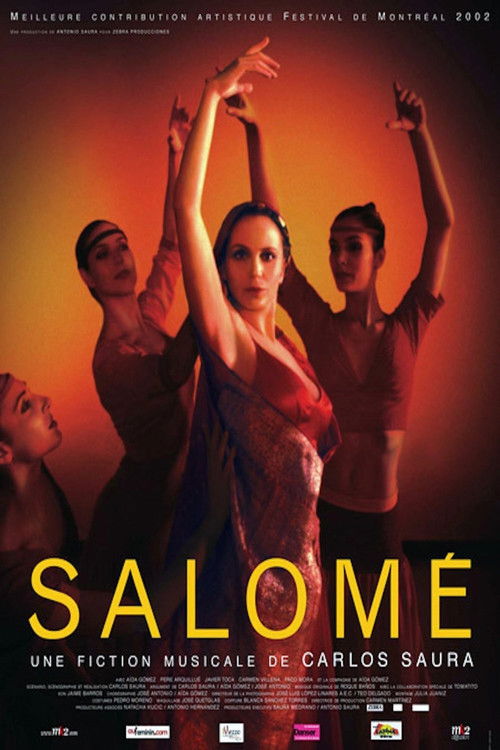
In the ending of the movie "Salomé," the tension culminates in a tragic and dramatic conclusion. Salomé, having danced for Herod and demanded the head of John the Baptist, receives the gruesome gift on a silver platter. The film closes with Salomé's haunting realization of the consequences of her actions, leading to a profound sense of loss and despair.
Expanding on this, the final scenes unfold with a palpable tension in the air. The setting is the opulent banquet hall where Herod, a figure of power and indulgence, sits enthroned, surrounded by his guests. The atmosphere is thick with anticipation as Salomé, a young woman caught between her desires and the machinations of those around her, prepares to perform the Dance of the Seven Veils. Her movements are both seductive and innocent, reflecting her internal conflict and the manipulation she faces from her mother, Herodias, who harbors a deep-seated grudge against John the Baptist.
As Salomé dances, Herod is entranced, his eyes fixated on her every move. The dance is a blend of beauty and foreboding, symbolizing the duality of her character--innocent yet complicit in the dark desires of those around her. After the performance, Herod, overwhelmed by lust and admiration, promises Salomé anything she wishes, not realizing the full weight of her request.
Salomé, emboldened by her mother's influence and the intoxicating power of the moment, asks for the head of John the Baptist, who has been imprisoned for condemning Herod's marriage to Herodias. Herod's face shifts from delight to horror as he realizes the implications of her request. He hesitates, torn between his desire to please Salomé and his respect for John, whom he knows to be a righteous man. However, the pressure from Herodias, who is eager to silence John, pushes him to comply.
The scene shifts to the dark, foreboding dungeon where John is held captive. The atmosphere is heavy with dread as the executioner approaches him. John, portrayed as a figure of unwavering faith and conviction, faces his fate with a calm acceptance, embodying the tragic hero. The execution is swift and brutal, and the camera captures the moment with a haunting stillness, emphasizing the gravity of the act.
As the executioner returns with John's head on a silver platter, the banquet hall erupts in a mix of shock and morbid fascination. Salomé, initially filled with triumph, is confronted by the reality of her actions. The head is presented to her, and she gazes upon it with a mixture of horror and realization. The weight of her desire and the consequences of her request crash down upon her, leading to a profound emotional turmoil.
In the final moments, Salomé's expression shifts from triumph to despair. The once vibrant and lively young woman is now a figure of tragedy, grappling with the irreversible consequences of her choices. The film closes on her face, capturing the haunting realization that her actions have led to the death of an innocent man, leaving her isolated and filled with regret.
The fates of the main characters are sealed in this tragic conclusion: Salomé, once a symbol of beauty and desire, becomes a tragic figure burdened by guilt; Herod, a ruler swayed by lust and manipulation, is left to grapple with the moral implications of his actions; and John the Baptist, a martyr for his beliefs, becomes a symbol of the cost of truth in a world driven by desire and power. The film ends on a note of somber reflection, emphasizing the tragic consequences of unchecked ambition and the loss of innocence.
Is there a post-credit scene?
The movie "Salomé," produced in 2002, does not feature a post-credit scene. The film concludes its narrative without any additional scenes or content after the credits roll. The story focuses on the biblical tale of Salomé, exploring themes of desire, power, and the consequences of one's actions, culminating in a dramatic and poignant ending that leaves the audience reflecting on the events that have transpired.
What motivates Salomé to dance for Herod?
Salomé is driven by a complex mix of desire, revenge, and the need for recognition. Her dance is not just a performance; it is a means to assert her power and agency in a world dominated by men. She seeks to captivate Herod, not only to fulfill her own desires but also to manipulate him into granting her a wish.
How does Herod react to Salomé's dance?
Herod is entranced and overwhelmed by Salomé's beauty and the sensuality of her dance. His reaction is a blend of lust and admiration, which ultimately leads him to make a rash promise to grant her any wish, showcasing his infatuation and the precariousness of his power.
What is the significance of the head of John the Baptist in the story?
The head of John the Baptist symbolizes the consequences of desire and the clash between moral integrity and sensual temptation. Salomé's request for his head serves as a pivotal moment that highlights her transformation from a passive character to one who actively shapes her fate, while also reflecting Herod's moral decay.
How does Salomé's relationship with her mother, Herodias, influence her actions?
Salomé's relationship with Herodias is fraught with tension and manipulation. Herodias encourages Salomé's seductive dance as a means to achieve revenge against John the Baptist, who condemned her marriage to Herod. This maternal influence pushes Salomé to embrace her power, but it also complicates her emotional state as she grapples with her own desires versus her mother's ambitions.
What internal conflicts does Salomé face throughout the film?
Salomé experiences a profound internal conflict between her burgeoning sexuality and the moral implications of her actions. As she dances and contemplates her wish for John's head, she struggles with feelings of guilt and the weight of her choices, ultimately leading to a tragic realization of the consequences of her desires.
Is this family friendly?
The 2002 film "Salomé," directed by Al Pacino, is based on the biblical story of Salomé and her dance of the seven veils. While the film is an artistic interpretation, it contains several elements that may not be suitable for children or sensitive viewers.
-
Themes of Manipulation and Betrayal: The narrative explores complex themes of power dynamics, seduction, and betrayal, which may be difficult for younger audiences to fully understand.
-
Violence and Death: The story includes references to violence and the beheading of John the Baptist, which, while not graphically depicted, is a significant and unsettling aspect of the plot.
-
Sexual Undertones: The film features suggestive themes and the dance of Salomé, which is inherently sexualized. This may be inappropriate for younger viewers.
-
Emotional Turmoil: Characters experience intense emotional struggles, including jealousy, desire, and despair, which could be distressing for sensitive individuals.
-
Religious Context: The film deals with religious figures and themes, which may provoke discomfort for some viewers depending on their beliefs.
Overall, while "Salomé" is a visually rich and artistically ambitious film, its mature themes and emotional depth may not be suitable for a family-friendly viewing experience.







