











Popular
What motivates the character of Sam to return to his hometown?
How does the relationship between Sam and his childhood friend, Claire, evolve throughout the film?
What role does the setting of the lake play in the story?
How does the character of Claire cope with her own personal demons in the film?
What is the significance of the family dynamics portrayed in Sam's family?
Should I watch it?
Ask Your Own Question

What is the plot?
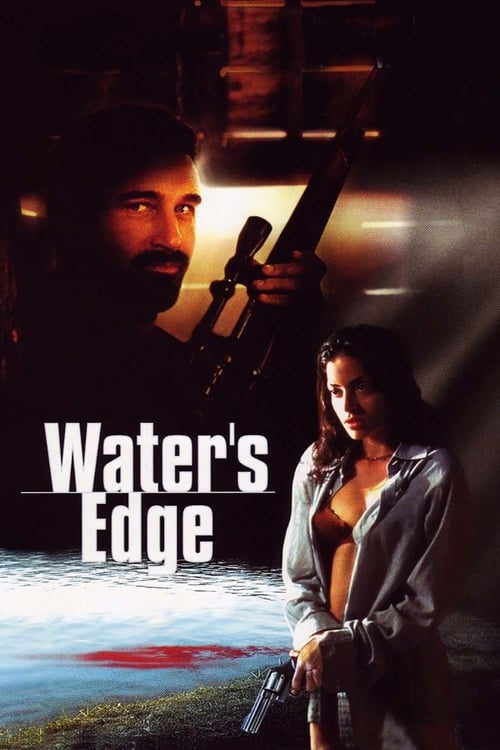
Robert Graves and his wife Molly Graves arrive in the small town of Reedsville already worn down by grief and money troubles, hoping that Robert's inherited cabin in the woods will give them a fresh start. The move feels like an attempt to step out of the wreckage of their old life and into something quieter, but from the start the place carries the uneasy stillness of a town that is hiding rot under a calm surface. Robert is a novelist, and the cabin his late father leaves him becomes both shelter and trap: it is isolated enough to feel like refuge, but close enough to town that it slowly pulls him into the orbit of the people who control Reedsville's secrets. Molly, still raw from the death of their young daughter, tries to keep the two of them together emotionally, but the grief between them hangs in the air like a second weather system, making every small disappointment feel larger and every silence heavier.
Robert heads out from the cabin hoping to work and maybe clear his head, but the town's fake peace collapses almost immediately when he stumbles onto a horrific scene in the woods. Sheriff Dodd is there with a young woman who is bound and gagged, and the sight turns the entire story on its axis. In one brutal moment, the man who is supposed to represent law and order is revealed as a predator in the middle of a violent act, preparing to smash the woman's head with a rock. Robert freezes just long enough to understand that this is not a misunderstanding or a private domestic dispute; it is a murder in progress. Sheriff Dodd senses Robert's presence and tries to wave him off with the cold authority of someone who has done this before, warning him not to interfere with "police business," but that only makes the scene more terrifying. Robert reacts on instinct, lunging into the confrontation in a desperate attempt to save the woman. The struggle is frantic and ugly, all rough movement and panic in the trees, and in the end Robert kills Sheriff Dodd with his shotgun. The shot is the film's first true rupture: a grieving novelist who came to town looking for peace has now taken a life in the woods of Reedsville.
The immediate horror does not end with Dodd's death; it only deepens. Robert cannot simply walk away, because the body, the bound woman, and the sheriff's vehicle are all evidence of something much bigger than a single attack. He starts to cover his tracks, trying to understand what he has walked into, and the investigation quickly reveals that Dodd's corruption is not isolated. In the sheriff's car Robert finds $200,000 in cash, neatly stashed away like a payoff or a bribe or money moved through a hidden pipeline of local crime. The money is shocking not just because of the amount, but because it proves that Dodd was not just abusing power in one moment of violence; he was part of a system. Robert is already shaken, but then he makes the discovery that pushes the whole situation into nightmare territory: there is a corpse in the trunk. The body confirms that the sheriff was involved in concealing murder, and now Robert is standing in the middle of a crime scene that is far larger and more organized than he first believed. The quiet woods around him suddenly feel like the edge of a sinkhole opening under the town.
The young woman Robert rescues becomes the first living clue in the puzzle, but she does not explain everything cleanly. Her story is tangled with fear, and the more Robert listens, the clearer it becomes that she is also entangled with the town's hidden social machinery. The film gradually reveals that Reedsville is a place where corruption is not a side business but a way of life: sex, blackmail, murder, and deceit are woven into the local power structure. The town's respectable faces are connected to the uglier ones by money and secrets, and one of the most important names in that network is Mayor Block. Daniel Baldwin's Mayor Block carries the polished confidence of a man who believes he can keep the whole apparatus sealed shut, and as Robert keeps digging, the mayor's role in the conspiracy becomes impossible to ignore. What begins as a chance encounter in the woods turns into an all-consuming descent into a local machine that feeds on concealment.
Robert's problem becomes as much survival as morality. If he goes to the authorities, he risks exposing himself as the man who killed Sheriff Dodd, even if that killing was in self-defense while trying to save the woman. But if he stays silent, he becomes part of the cover-up. The film plays this pressure against the already fragile emotional state of the Graves marriage. Molly wants a life, not another burial; Robert wants to make sense of what he has seen, but every answer drags him deeper into danger. The cabin that was supposed to protect them instead becomes the place where fear gathers. The inherited home is no longer just a symbol of family memory, but a physical anchor dragging Robert toward his father's past and the town's buried sins. That connection matters because it makes the move to Reedsville feel fated, as if Robert has not merely arrived in a new place but walked into a history that was waiting for him.
As Robert tries to manage the fallout, the web tightens around him. The rescued woman, later tied to the name Rae Butler, becomes more central, but she is not simply a helpless victim in the way Robert first believes. Her connection to the mayor and the hidden pictures found among the evidence suggest that she knows more than she initially admits. Those racy photographs, linking her and Mayor Block, become a key revelation because they hint at leverage, exploitation, and a network of kompromat-style blackmail. The town's corruption is not abstract; it is documented in images, in cash, in bodies hidden where they should never be found. Robert begins to understand that Sheriff Dodd's attempt to kill the woman may have been about protecting someone else, not just silencing her. The money in the car and the corpse in the trunk suggest that there are layers to the conspiracy, and every layer points upward toward people with authority and down toward victims with no power at all.
The tension keeps escalating as Robert and Molly are forced into contact with the town's public face. A charity auction at the library becomes one of the key social scenes, because it lets the film place its corrupt characters under polite lighting. The contrast is brutal: the town gathers for a respectable event while lies are still fresh in the air, and Robert is suddenly expected to play the role of a normal civic guest. The library setting, with its quiet rows and artificial civility, is a perfect mask for a community built on rot. Robert, still carrying the trauma of the woods, has to sit among people who may know exactly what happened or may be part of the reason it happened. Molly, meanwhile, speaks with Rae Butler while the woman cleans up in a bath, a scene that underscores both the vulnerability and the manipulative opacity surrounding Rae. Nothing in Reedsville is direct. Every conversation seems to conceal another agenda, and every kindness may be a trap.
The film's emotional pressure builds through Robert and Molly's fraying reactions to the danger around them. Robert is increasingly paranoid, but the paranoia is justified. He has already killed the sheriff, seen the money, and seen the body; now he knows too much to be allowed to walk away. Molly, who had hoped the town would give them space to grieve, is instead dragged into a nightmare that threatens to consume both of them. Her presence keeps the story from becoming only a corruption thriller; it remains a marriage story under stress, with the loss of their daughter still sitting beneath every decision they make. The town's violence is external, but their private pain means they are never fully steady enough to confront it cleanly. That instability makes them more vulnerable to the manipulations of people like Mayor Block and the other corrupt local figures who orbit him.
The final stretch of the film turns the screws harder. Robert is forced into direct contact with the town's power brokers, and the stolen cash and photographs become the center of the conflict. The evidence is not just incriminating; it is valuable, and anyone who controls it can use it to protect themselves or destroy others. Robert becomes a hunted man, not because he set out to expose corruption, but because he accidentally picked up the evidence trail after killing the sheriff in self-defense. The more he tries to disentangle himself, the more the town closes in. The law is useless because the law is the threat. The sheriff is dead, the mayor is compromised, and the men around them are all part of the same machine. Robert's only real defense is to keep moving and keep holding onto the proof.
In the chaos that follows, the film moves toward its violent climax. Rae's role is revealed to be far less innocent than she first appears, and the seeming victim/villain divide starts to blur. The town's conspirators want the money and the photographs back, and Robert is pressured from every direction to hand over what he has found. What began with a single woods confrontation becomes a full-scale struggle between one frightened outsider and a corrupt local network willing to kill to preserve itself. The emotional tone shifts from shock to grim inevitability. Robert is no longer merely reacting to events; he is trapped inside them, with no clean exit and no trustworthy ally.
The ending builds toward open confrontation, with Robert forced to face Mayor Block and the corrupt crew around him. The exact sequence of every physical blow and every tactical movement is less important than the outcome: the hidden structure of Reedsville finally comes into the light through violence, and the town's polished surface shatters. Robert's discovery of the money and the corpse, the rescue of the bound woman, and the exposure of the mayor's connection to the blackmail photos all converge in a final reckoning. The corrupt men who thought they controlled the story lose that control when the evidence turns back on them. The film ends in fiery, explosive fashion, with the confrontation burning away any illusion that the town can keep its secrets forever.
By the final scene, the movie's bleak moral logic has fully taken hold. Sheriff Dodd is dead at Robert Graves's hands, and the body in the trunk confirms the sheriff's involvement in murder beyond that first killing. The hidden cash and the photographs reveal the scope of the town's corruption, while Mayor Block is exposed as part of the same rotten structure. Molly survives the ordeal, but not unscarred; her emotional bond with Robert has been tested by grief, fear, and the unbearable knowledge that their attempt at a fresh start has turned into a blood-soaked entanglement with a criminal conspiracy. Robert survives too, but only as a man changed by what he has seen and done. The hopeful idea of retreating to his father's cabin is gone. Reedsville does not become home; it becomes the place where he is forced to discover that a quiet town can conceal its worst crimes in plain sight, and that trying to escape grief does not protect anyone from the violence waiting underneath. The story closes not with relief, but with the bitter certainty that the truth has been uncovered only after it has already cost lives, trust, and whatever peace the Graveses had left.



What is the ending?
In the ending of "Water's Edge," the characters confront their past decisions and the consequences of their actions. The film culminates in a tense standoff that leads to revelations and a tragic outcome for some characters, ultimately leaving them to grapple with their choices and the impact on their lives.
As the film approaches its conclusion, the atmosphere is thick with tension. The setting shifts to a secluded area near the water, where the characters gather, each carrying the weight of their secrets and regrets. The protagonist, a man named Jack, is deeply conflicted, torn between his love for his wife, who is struggling with her own demons, and the haunting memories of a past affair that has resurfaced.
Scene by scene, the narrative unfolds:
The first scene of the ending begins with Jack standing at the edge of the water, staring into the depths as if searching for answers. His wife, Sarah, approaches him, her expression a mix of anger and hurt. They engage in a heated conversation, where Sarah confronts Jack about his past infidelity. The emotional stakes are high, and Jack's internal struggle is palpable as he tries to explain his actions, revealing his deep remorse and desire for redemption.
In the next scene, the tension escalates when Sarah's brother, who has been protective of her, arrives. He is furious at Jack, blaming him for the turmoil in their family. The confrontation becomes physical, and the emotions boil over. Jack, feeling cornered, tries to defend himself, but the situation spirals out of control. The conflict is not just about Jack's past but also about the fragile state of their relationships and the unresolved issues that have festered over time.
As the confrontation reaches its peak, a tragic accident occurs. In a moment of chaos, someone falls into the water, and the scene shifts to frantic attempts to rescue them. The urgency of the moment highlights the fragility of life and the consequences of their unresolved conflicts. Jack dives in, driven by a mix of guilt and a desperate need to make things right. The water, once a symbol of their emotional turmoil, becomes a literal battleground for survival.
In the final moments, the aftermath of the accident leaves the characters forever changed. Jack emerges from the water, but the toll of the events weighs heavily on him. Sarah, witnessing the chaos and the loss, is left to confront her own feelings of betrayal and love. The brother, who had been so protective, is now faced with the reality of their fractured family.
The film concludes with a somber tone as the characters stand at the water's edge, each grappling with their choices and the impact on their lives. Jack's fate is one of isolation, as he realizes that despite his efforts, he cannot undo the past. Sarah is left to navigate her feelings of love and anger, while her brother must come to terms with the loss and the rift it has created in their family.
In the end, "Water's Edge" leaves the audience with a poignant reflection on the complexities of relationships, the weight of past decisions, and the enduring struggle for redemption amidst the chaos of life. Each character is left to face their own truths, forever altered by the events that unfolded at the water's edge.
Is there a post-credit scene?
The movie "Water's Edge," produced in 2003, does not have a post-credit scene. The film concludes its narrative without any additional scenes or content after the credits roll. The story wraps up with the resolution of the main plot, focusing on the emotional and psychological aftermath of the characters' experiences throughout the film.
What motivates the character of Sam to return to his hometown?
Sam returns to his hometown primarily to confront his past and the unresolved issues surrounding his father's death. He is haunted by memories and feels a deep sense of guilt and responsibility, which drives him to seek closure.
How does the relationship between Sam and his childhood friend, Claire, evolve throughout the film?
Sam and Claire's relationship is complex; it begins with a shared history and unresolved feelings. As they reconnect, Claire reveals her own struggles and the impact of their past on her life. Their bond deepens as they navigate their emotional scars, leading to moments of vulnerability and intimacy.
What role does the setting of the lake play in the story?
The lake serves as a powerful symbol throughout the film, representing both beauty and danger. It is the site of Sam's father's tragic death, which looms over the narrative. The lake's serene surface contrasts with the turbulent emotions of the characters, reflecting their inner turmoil and the secrets that lie beneath.
How does the character of Claire cope with her own personal demons in the film?
Claire copes with her personal demons through a mix of denial and confrontation. Initially, she appears to have moved on, but as Sam returns, her unresolved feelings and past traumas resurface. She struggles with her emotions, ultimately seeking solace in her relationship with Sam, which forces her to confront her pain.
What is the significance of the family dynamics portrayed in Sam's family?
The family dynamics in Sam's family are fraught with tension and unresolved conflict. Sam's relationship with his mother is strained, as she grapples with her own grief and the burden of the past. This tension highlights the theme of familial obligation and the struggle to reconcile love with loss, ultimately shaping Sam's journey toward healing.
Is this family friendly?
"Water's Edge," produced in 2003, is not considered family-friendly due to its mature themes and content. The film contains several potentially objectionable or upsetting aspects, including:
-
Intense Emotional Conflict: The characters experience deep emotional turmoil, including themes of betrayal, loss, and grief, which may be distressing for younger viewers.
-
Adult Relationships: The film explores complex adult relationships, including infidelity and the impact of these relationships on family dynamics, which may not be suitable for children.
-
Violence and Threats: There are scenes that involve threats and confrontations that could be unsettling, particularly for sensitive viewers.
-
Substance Use: The film depicts characters engaging in drinking and other adult behaviors that may not be appropriate for younger audiences.
-
Tragic Events: The storyline includes tragic events that can evoke strong emotional responses, potentially upsetting for children or those sensitive to such themes.
Overall, the film's exploration of heavy themes and adult situations makes it more suitable for mature audiences.







