




























Popular
What are the main differences between the Rutles and The Beatles as portrayed in the film?
How does the character of Dirk McQuickly evolve throughout the film?
What role does the character of Nasty play in the Rutles' story?
How does the film depict the Rutles' relationship with their manager, Leggy Mountbatten?
What are some key musical moments in the film that reflect the Rutles' journey?
Should I watch it?
Ask Your Own Question

What is the plot?
Sorry, we aren't able to watch and write up a full detailed plot yet. Check back in a few days.




What is the ending?
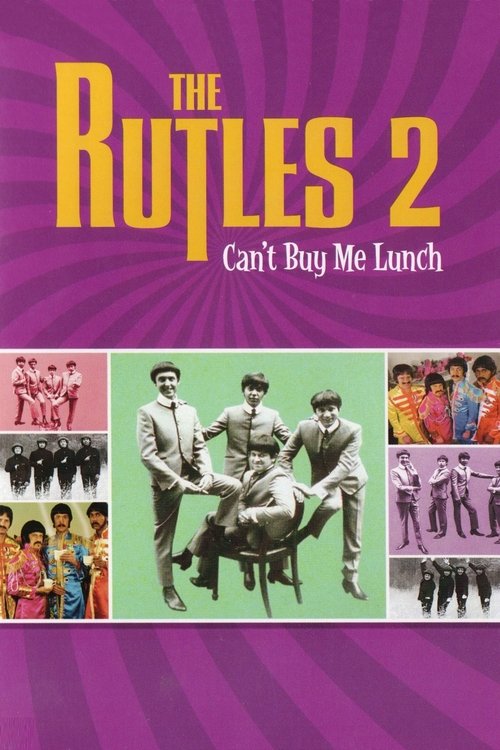
In the ending of "Can't Buy Me Lunch: Another Look at The Rutles," the film culminates in a reflective reunion of the band members, where they share their experiences and the impact of their music. The Rutles, having navigated the ups and downs of fame, come together to reminisce about their journey, ultimately finding peace with their past and a sense of closure.
As the film progresses towards its conclusion, the narrative unfolds with a series of scenes that capture the essence of the Rutles' journey.
The first scene of the ending begins with a gathering of the Rutles at a small, intimate venue. The atmosphere is filled with nostalgia as they prepare to perform together once more. The camera pans across the faces of the band members--Dirk, Nasty, Stig, and Barry--each displaying a mix of excitement and apprehension. They exchange glances, reflecting on their shared history, the highs of their fame, and the lows of their disbandment.
Next, the scene shifts to a rehearsal where the band members struggle to find their rhythm. Tension fills the air as they bicker over musical choices and past grievances. Dirk, the charismatic leader, tries to maintain harmony, but his frustration is palpable. Nasty, the cynical one, expresses doubts about their relevance in the current music scene, while Stig, the quiet genius, seems lost in thought, contemplating his place in the group. Barry, the drummer, attempts to lighten the mood with humor, but the underlying tension remains.
As they finally begin to play, the music transforms the atmosphere. The Rutles' signature sound fills the room, and the camaraderie begins to resurface. The camera captures close-ups of their faces, revealing smiles and laughter as they reconnect through their music. This moment serves as a reminder of their bond and the joy that their art brings them.
The next scene transitions to the performance itself, where the Rutles take the stage in front of a small but enthusiastic audience. The energy is electric, and the crowd's cheers echo the band's past glory. Each member shines in their own right--Dirk's charisma captivates the audience, Nasty's sharp wit elicits laughter, Stig's musicianship impresses, and Barry's infectious enthusiasm keeps the rhythm alive. The performance is a celebration of their legacy, and the Rutles seem to rediscover their passion for music.
As the concert concludes, the band members share a heartfelt moment backstage. They reflect on their journey, acknowledging the challenges they faced and the lessons learned. Dirk expresses gratitude for the opportunity to create music together again, while Nasty admits that despite his cynicism, he misses the thrill of performing. Stig, usually reserved, opens up about his desire to be more involved in the creative process, and Barry shares his hope for the future of the band.
The final scene shows the Rutles leaving the venue, arm in arm, with smiles on their faces. They walk into the night, illuminated by the glow of streetlights, symbolizing their renewed friendship and commitment to one another. The camera lingers on their silhouettes as they fade into the distance, leaving behind a legacy that transcends their past conflicts.
In this ending, each character finds a sense of closure and acceptance. Dirk embraces his role as a leader, Nasty learns to appreciate the joy of music, Stig finds his voice, and Barry remains the heart of the group. The film concludes with a sense of hope and unity, emphasizing the enduring power of friendship and creativity.
Is there a post-credit scene?
"Can't Buy Me Lunch: Another Look at The Rutles," produced in 2003, does not feature a post-credit scene. The film serves as a documentary-style exploration of the fictional band The Rutles, providing insights into their music, cultural impact, and the parody of The Beatles. The film concludes without any additional scenes or content after the credits roll, focusing instead on the narrative and interviews presented throughout the main feature.
What are the main differences between the Rutles and The Beatles as portrayed in the film?
The film highlights the Rutles as a parody of The Beatles, showcasing their rise to fame, musical evolution, and eventual disbandment. The Rutles' journey is filled with humorous twists that mirror The Beatles' real-life experiences, such as their early days in Liverpool, the impact of fame, and the pressures of the music industry. The characters, particularly Dirk McQuickly, Nasty, and Barry Wom, embody exaggerated traits that reflect the personalities of their real-life counterparts, creating a comedic yet insightful commentary on celebrity culture.
How does the character of Dirk McQuickly evolve throughout the film?
Dirk McQuickly, portrayed by Eric Idle, begins as an ambitious and somewhat naive member of the Rutles, eager to achieve fame and success. As the story progresses, Dirk's motivations shift from a pure love of music to a more self-serving desire for fame and recognition. This evolution is marked by moments of internal conflict, particularly when he grapples with the consequences of their fame, leading to a sense of disillusionment by the end of the film.
What role does the character of Nasty play in the Rutles' story?
Nasty, played by Neil Innes, serves as the quintessential 'bad boy' of the Rutles, embodying the rebellious spirit often associated with rock stars. His character is pivotal in driving the band's more outrageous decisions and antics, often leading them into trouble. Nasty's motivations are rooted in a desire for excitement and a rejection of societal norms, which adds a layer of complexity to the band's dynamic and highlights the tension between artistic integrity and commercial success.
How does the film depict the Rutles' relationship with their manager, Leggy Mountbatten?
Leggy Mountbatten, portrayed by John Halsey, is depicted as a shrewd and somewhat manipulative manager who is primarily focused on the Rutles' commercial success. His relationship with the band is fraught with tension, as he often prioritizes profit over their artistic vision. This dynamic creates a sense of conflict within the band, particularly for Dirk, who begins to question whether their music is being compromised for the sake of fame.
What are some key musical moments in the film that reflect the Rutles' journey?
The film features several key musical moments that encapsulate the Rutles' journey, including their early performances in small venues, the iconic 'Rutlemania' phase, and their later, more experimental works. Songs like 'I Must Be in Love' and 'Cheese and Onions' serve as both comedic elements and poignant reflections of the band's experiences, capturing the essence of their rise and fall in the music industry while parodying the styles of The Beatles.
Is this family friendly?
"Can't Buy Me Lunch: Another Look at The Rutles" is a documentary-style film that revisits the fictional band The Rutles, originally created as a parody of The Beatles. The film is generally family-friendly, but there are a few aspects that might be considered potentially objectionable or upsetting for children or sensitive viewers.
-
Satirical Humor: The film employs satire that may include references to drug use and the music industry, which could be confusing or inappropriate for younger audiences.
-
Mild Language: There are instances of mild language that may not be suitable for very young children.
-
Parody of Fame and Loss: The film touches on themes of fame, loss, and the pressures of celebrity, which might be emotionally heavy for some viewers, particularly children who may not fully grasp these concepts.
-
Visual Gags: Some visual humor may involve absurdity or surreal elements that could be unsettling for sensitive viewers.
Overall, while the film is light-hearted and comedic, parents may want to preview it to ensure it aligns with their comfort levels for younger audiences.








