






















Popular
What motivates Ultraman Cosmos to confront Ultraman Justice in the final battle?
How does Ultraman Justice's character differ from Ultraman Cosmos?
What role do the human characters play in the conflict between Ultraman Cosmos and Ultraman Justice?
What is the significance of the final battle location in Ultraman Cosmos vs. Ultraman Justice?
How does Ultraman Cosmos attempt to reach out to Ultraman Justice during their confrontation?
Should I watch it?
Ask Your Own Question

What is the plot?
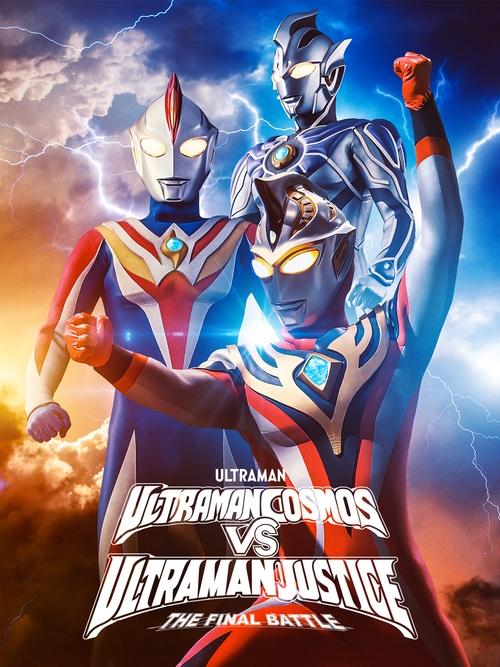
A bank of white cloud drifts over a deep blue ocean, the camera gliding low across the waves until the water gives way to a strange man‑made geometry: gleaming platforms, pylons, and towers that rise out of the sea, latticed with gantries and blinking beacons. This is the Blue Area, a vast oceanic complex built by humanity as both sanctuary and launch point, the nerve center of their most audacious project yet: the peaceful relocation of Earth's monsters to safe worlds beyond the stars.
Down on one of the main decks, a young man in a blue and white uniform stands at the rail, the ocean wind pushing his hair back. Musashi Haruno closes his eyes for a second, feeling the spray on his face. He's older than the boy who once looked up at two streaks of light in a storm and met a giant of light in the forest, but something of that starry‑eyed fifth grader still flickers behind his calm gaze. At his chest, beneath the fabric of his uniform, the faintest pulse of otherworldly light answers his heartbeat: Ultraman Cosmos, his companion and other self.
Behind him, footsteps ring on the metal deck.
"Musashi!" a woman calls.
He turns to see Ayano Morimoto jogging toward him, tablet in hand. She's a fellow member of Team SEA, the defense and support unit assigned to protect the Blue Area and oversee the kaiju relocation operation. Her expression is half exasperation, half worry.
"Briefing in five," Ayano says, a little out of breath. "Director Ikeyama's already chewing people out in there."
Musashi smiles, that gentle, almost shy smile that people have learned to trust. "I'll be right there."
Ayano glances past him, at the ocean and the far‑off silhouettes of enormous shapes moving slowly beneath the water. Transport pens. Monsters. All of it is still astonishing, even to those who work here.
"You really think this is going to work?" she asks quietly. "Moving all of them. Somewhere safe. No more battles in cities."
Musashi looks back at the swell of waves and the distant shapes, remembering all the battles where he stood between terrified humans and frightened, corrupted kaiju, where healing beams replaced killing blows.
"It has to," he says simply. "For them, and for us."
He heads toward the main operations building, Ayano falling into step beside him. The Blue Area hums around them: cargo loaders trundle along rails; cranes swing like colossal arms; screens on the walls show the deep pens where sedated monsters float in reinforced containment capsules, waiting to be lifted into orbit. Above, the sky is a polished blue… but in the upper atmosphere, something dark and glinting is beginning to drift closer, still unseen.
Inside the main conference room, Director Ikeyama stands at the head of a long table, walls lined with displays that show orbiting satellites, launch windows, and kaiju containment status. He is a serious man with stern eyes, used to making impossible choices. Representatives from the SRC--Space Research Center--stand along the sides, including Commissioner Owada and several SRC national representatives, their suits and guarded expressions betraying the political pressure behind this project.
Musashi slides into his place as Ikeyama begins.
"Today, Team SEA initiates Phase Two of the Kaiju Relocation Project," Ikeyama says. "Scorpus will be the first to be moved off‑world." He taps a console, and the screen behind him fills with the image of a monstrous, armored creature: Scorpus, a hulking kaiju with serrated carapace plates and scythe‑like limbs, currently held in sedated stasis in an underwater pen.
"Cosmos has developed new modes to deal with Scorpus," Ikeyama continues, nodding toward Musashi. "Our objective is to transport it without casualties--human or monster."
A murmur runs through the room: even among this enlightened group, there are those who would rather see kaiju annihilated than preserved. But this is Musashi's ethos, and Cosmos's: pacifism, coexistence.
Commissioner Owada folds his hands. "The world is watching, Director. If this doesn't work, support for the Blue Area and Team SEA evaporates."
Musashi feels Cosmos's presence stir in his mind, a calm warmth. He raises his head.
"We'll make it work," Musashi says. "Cosmos and I… we won't let anyone get hurt."
Ikeyama gives him a searching look, then nods once.
"Prepare for Scorpus extraction," Ikeyama orders. "Launch window is in three hours. Dismissed."
As the meeting breaks up, one of the SRC national representatives, Julie, approaches Musashi.
"They say you can talk to it," she says. "To Cosmos. To the monsters. Do they… understand what we're doing?"
Musashi hesitates. How do you explain the emotional undercurrents of beings that size? The fear they radiate when cornered, the aching loneliness.
"They understand fear," he answers slowly. "And they understand when someone isn't trying to kill them. It's a start."
Julie nods, thoughtful, then moves away. Musashi lingers a moment, glancing at a smaller side screen that briefly flashes a headline: "SISTER PLANET JURAN DESTROYED; GYASHI REFUGEES ARRIVE." A photograph of a sorrowful, sea‑haired woman--an Alien Gyashi--fades in and out beside it. The news has shaken the world: Juran, a beloved twin world to Earth, annihilated by a force named in hushed tones--Scorpus, and its master, Sandloss.
As Musashi watches, another figure appears in the doorway. Alien Gyashi Jin, his long hair shimmering with a faint aquatic sheen even under fluorescent lights, steps inside. His eyes, too old and too sad for this place, meet Musashi's for a moment. There is no greeting. Just a silent weighing.
Gyashi Jin turns away, speaking quietly with Commissioner Owada. Their voices are too low to catch, but the words "trust," "Juran," and "judgment" drift faintly in the air.
The countdown to the extraction ticks on.
Hours later, the operation begins.
On massive screens in the Blue Area control room, the underwater pens appear in high‑definition. Scorpus floats sedated, a titan at rest, cables securing the capsule that contains its bulk. In orbit above, a specialized kaiju transport spacecraft holds steady, its bays open, gravity clamps primed.
"Begin lift," Ayano says, fingers racing over her console.
Out over the ocean, cranes shudder to life. The capsule containing Scorpus rises from the depths in a cascade of foam and rivulets, the monster's massive shape gleaming darkly behind reinforced glass. The waves slap against the sides of the containment cradle as it ascends toward the clouds, countless cameras streaming the moment live to a world hungry for hope.
Musashi watches from the control room, arms folded, jaw tight. Cosmos is a steady light in his mind, ready.
At first, everything goes smoothly. Scorpus's capsule clears the Blue Area superstructure and enters the rising corridor of air toward orbit. The kaiju transport ship above adjusts its position, a long, silver arrow knifing through the upper atmosphere.
Then an alarm shrieks.
"Unidentified object approaching from high orbit!" someone calls. "Vector… negative intercept on transport vessel!"
On the screen, a dark mass streaks in from the edge of space, shedding violet energy. It slams into the transport ship, the impact a blossoming flower of fire and debris. The control room gasps as the ship's silhouette splinters, pieces spiraling away like burning leaves.
"Transport ship is hit! We've lost her!" Ayano cries.
In the sky above the Blue Area, wreckage glitters down like deadly rain. The capsule containing Scorpus rocks violently, alarms flaring as containment fields flicker.
Musashi's hand goes to his chest.
"Cosmos," he whispers.
He bolts from the control room, sprinting down corridors as emergency lights flash red. Out on the launch platform, he skids to a halt, looking up. The capsule is tumbling, systems overwhelmed. Scorpus's sedation is failing; inside the cylinder, the monster's eyes flicker open.
Musashi raises the Evoltruster, the device glinting in the sunlight. His voice rings out over the roar of klaxons and crashing metal.
"Cosmos!"
A pillar of blue‑white light erupts, swallowing him. In an instant, Musashi is gone, replaced by a towering figure of light. Ultraman Cosmos rises above the Blue Area, blue and silver armor shining, eyes glowing with calm determination.
He rockets into the sky, arms cutting through the air as he closes on the falling capsule. With a swift motion, he stabilizes it, surrounding it with a field of soft, blue energy--a healing, calming force that seeps through the metal and into Scorpus's thrashing mind.
"Sleep," his voice resonates, not in words but in intent. "We're not your enemy."
For a moment, Scorpus calms, the capsule's spin slowing. Below, the Blue Area breathes out as one.
Then a beam of crimson light lances down from the clouds and shatters Cosmos's blue aura.
Cosmos flinches, dragged sideways by the impact. The capsule spins free, tumbling again. Scorpus roars, crashing against its confinement.
A new presence streaks from the sky: another giant of light, but this one cold, sharp, its color pattern severe, dominated by metallic silver and deep violet. It cuts between Cosmos and the capsule, positioning itself like a barrier.
Ultraman Justice has arrived.
Cosmos hovers, stunned. He knows of other Ultras, beings of light who protect worlds. But the feeling radiating from this one is not warm. It is ruthless.
"Who are you?" Cosmos's voice echoes, a low tremor.
Justice does not answer with words. Instead, a voice booms through the Blue Area's loudspeakers and every open channel on Earth--a synthetic, clipped voice with no warmth.
"Designation: Justice," it says. "Agent of Galactic Order. This world stands trial."
In the Blue Area control room, Gyashi Jin's head snaps up. His pupils narrow.
"The Groker," he breathes. "They've come."
In orbit, hidden behind sensor jamming fields, a fleet of Groker vessels positions itself. These are the same Groker who watched Juran die, who categorized its people and monsters as threats, and now turn that cold calculus upon Earth.
On the screen, Justice raises an arm between Cosmos and the capsule. A beam of violet energy, precise and surgical, slices through the auxiliary thrusters on the capsule's exterior. Scorpus roars as the capsule hurtles downward.
"No!" Cosmos surges forward, trying to catch it again.
Justice intercepts him. With a sudden, brutal kick, Justice hammers Cosmos in the chest, sending him tumbling end over end in the air.
In the control room, Ayano stares, horrified.
"He's… he's attacking Cosmos?" she whispers.
Director Ikeyama's face is pale. "Why? Isn't he--aren't they on the same side?"
Gyashi Jin's voice is bitter. "Their 'side' is order. Not life. They judged Juran the same way. Monsters, humans… all unstable variables."
Cosmos recovers in mid‑air, arms flaring out to steady himself. He turns back, raising his hands.
"Wait!" he calls to Justice. "You don't understand. We're trying to move the monsters, not use them as weapons. There's no need to--"
Justice slams into him, shoulders first. The two giants crash together, grappling, their bodies shattering clouds as they tumble. Justice fights with a merciless efficiency, every movement aimed not at subduing, but at disabling.
Inside Musashi's consciousness, Cosmos speaks.
"He has power like ours," Cosmos says, his mental voice calm even under strain. "But his heart is… closed."
Musashi feels the impacts as a series of dull, distant blows.
"Then show him," Musashi thinks. "Show him what we're protecting."
Cosmos shifts, blue light swirling across his body as he slides into a new mode--one of the "new forms" he has recently awakened, combining agility and soft force fields, designed for protection rather than offense. He sweeps an arm, generating a curved shield of shimmering energy between Justice and the Blue Area below, catching stray blasts and deflecting debris.
"Look," Cosmos says aloud, gesturing with his free arm downward. "They're trying to save lives. Human and monster."
Justice's faceless gaze does not soften. "Humanity's history: war, destruction, exploitation of kaiju and cosmos alike. Verdict: threat to galactic stability. Sentence: annihilation."
He drives his palm into Cosmos's shield. The field cracks like glass under too much strain. Violet beams rake across the Blue Area.
Down below, an auxiliary launch pad explodes, a ball of fire rising as tanks rupture. Ikeyama barks orders.
"Evacuate secondary platforms! Seal bulkheads!"
On the ocean surface, shockwaves from falling debris churn up foaming waves. Inside the control room, people are thrown from their feet as the structure rocks.
Ayano clutches the edge of her console. "If the main pens are hit--"
"Then we lose containment on every kaiju in this sector," Ikeyama says grimly.
In orbit, unseen by most instruments, Groker warships move into position above the Blue Area. Their targets are not the monsters--they are the symbols of humanity's new path: the kaiju transport spacecraft still in their gantries.
Cosmos senses the danger, turning his head toward the black specks descending from orbit. Justice follows his gaze, then glances back at Cosmos.
"You have had your chance," Justice says. "You failed to control them. Now order will be restored."
He drives a flashing kick into Cosmos's ribcage. Cosmos's new mode dampens the force, but not enough. The blue Ultra is hurled sideways, crashing into the waves with a colossal splash. Water erupts hundreds of meters into the air, steam rising where energy meets sea.
Cosmos sinks, disoriented, vision blurred. For a moment, all he feels is cold water and Musashi's stubborn refusal to let go.
On the surface, Groker energy beams rake across the sky and pierce the primary kaiju transport ship still moored to its orbital hook. The ship's hull blossoms fire; its spine snaps. The craft breaks apart, plummeting in incandescent fragments toward the sea.
In the control room, the main screen fills with a view of the doomed vessel.
"Transport ship Alpha is… it's gone," Ayano whispers, voice cracking. "All transport capability… destroyed."
Gyashi Jin closes his eyes. This is the same methodology they used on Juran: destroy options, then declare judgment.
On every channel--television, radio, satellite feed--the Groker's synthetic voice speaks.
"This is the Groker Tribunal. Planet: Earth. Species: Human. Evaluation: unstable, violent, incapable of coexisting with kaiju. You are judged a threat to galactic order. You have six hours before total annihilation."
The words flood homes, streets, command centers, the Blue Area itself. People freeze mid‑step, mid‑conversation. Six hours.
Under the waves, Cosmos's body glows faintly, motionless. But inside that glow, Musashi and Cosmos float in a shared space of memory and resolve.
"We can't let them," Musashi says, his mental voice steady. "We can't let Earth become another Juran."
Cosmos's reply is quiet. "I know."
He remembers Musashi as a boy, reaching out his hand to a fallen giant of light in a stormy forest. He remembers every time Musashi chose healing over harm, even when humans begged him to obliterate their fears.
"We will stand," Cosmos says.
He surges upward, breaking through the surface in an explosion of foam. Blue light intensifies across his body as he shifts into another of his new modes--stronger, more combat‑capable but still infused with his pacifist nature.
High above, Justice hangs in the air like a silver judgment. He watches Cosmos rise.
"You persist," Justice says.
Cosmos levels his gaze. "Because they deserve a chance to choose better."
They clash again, beams cutting the sky. Justice's strikes are heavy, relentless. Cosmos absorbs blows, deflects others, refusing to answer lethal force with lethal force. Each time he gets an opening, he uses it to shield falling debris from the Blue Area or to reinforce the containment around Scorpus's capsule, which still tumbles, now dangerously close to the waves.
Below, Scorpus's eyes burn with confusion and rage. The capsule hits the water hard, bouncing and cracking. One corner shatters; seawater floods in. Scorpus begins to wrench itself free.
In the control room, the disaster multiplies.
"Scorpus containment is failing," Ayano reports. "If it breaks out here--"
"Cosmos will handle it," Ikeyama says, but his eyes betray his doubt. Cosmos is barely holding his own against Justice.
Elsewhere on Earth, similar scenes play out in emergency coordination centers. The Groker broadcast is replayed with subtitles in dozens of languages. SRC representatives like Julie argue frantically with panicked officials, trying to keep militaries from launching hopeless counterattacks that will only justify the Groker's judgment.
In a smaller briefing room, Gyashi Jin stands before a holographic projection of Juran: a lush, oceanic world, now only static and scorched data.
"Juran trusted them," Jin says softly to Commissioner Owada. "Trusted that their trials were fair. They weren't. They watch. They measure. And then they erase."
Owada looks shaken. "And Justice? Is he one of them?"
"Not Groker," Jin replies. "But bound to them. He believes in justice. They told him this is justice."
On the screen, Cosmos staggers under a ferocious barrage. Justice has stopped talking. All that remains is his mechanical efficiency and Cosmos's stubborn refusal to retaliate with killing force.
Justice's palm glows; he drives a point‑blank energy blast into Cosmos's chest. The blue Ultra cries out, body arching as the beam spears through his defenses. He falls, crashing into one of the Blue Area's outer towers. Metal snaps like twigs; the tower collapses into the sea.
Musashi's consciousness reels. Pain flares, then dims, but his resolve does not. He feels the presence of billions of lives behind him: humans on land, monsters in containment pens, sea creatures in the dark oceans. All of them facing annihilation in six hours.
"Get up," Musashi tells Cosmos. "We're not done."
Cosmos pushes himself up, sparks arcing across his damaged chest armor. He looks up at Justice, still hovering, impassive.
"What do you see when you look at them?" Cosmos asks.
Justice hesitates for half a beat. "Variables. Instability."
Cosmos raises his head.
"I see mistakes," he says. "But I also see people who change. Monsters who can be calmed, not killed. Worlds that can heal."
Justice's response is another crushing kick, sending Cosmos into the sea again. The message is clear: the Groker's judgment is not up for debate. The "trial" is theater; the sentence was decided long ago.
As Cosmos sinks, Scorpus tears free of the shattered capsule at last. The monster roars, rising from the ocean in a maelstrom of spray, its massive claws glinting. Its eyes lock onto the nearest source of pain and chaos: the Blue Area.
It lunges.
"Scorpus!" Ayano screams.
On instinct, Cosmos shoots upward yet again, intercepting the monster before it can demolish the central control hub. He wraps his arms around Scorpus's torso, straining to hold it back. Scorpus thrashes, spikes gouging Cosmos's armor.
Justice pauses, watching. He sees Cosmos expending immense effort not to kill the kaiju, but to restrain it, redirect it.
"Why do you protect it?" Justice asks. "It threatens your species."
Cosmos grunts, forcing Scorpus's head away from the Blue Area.
"Because it's scared," he answers. "Because we made it this way. And because if we only ever answer fear with fear, there's no future worth saving."
He shifts again, light rippling across his frame as he channels healing energy through his arms into Scorpus's body. The monster's struggles slowly weaken, its eyes softening from rage to confusion to weary calm.
"Sleep," Cosmos whispers.
Scorpus finally slumps, its vast bulk settling into a more stable posture. Cosmos eases it back into the water, guiding it away from the Blue Area to a safer distance.
Even Justice cannot deny the effectiveness of this method. The scene mirrors countless encounters Cosmos and Musashi have had before: win not by destruction, but by understanding.
But the Groker do not care.
In orbit, the Groker flagship charges a massive weapon. Its form swells, plates unfolding like a metal flower around a central core of crackling energy. Bits of wrecked transport ship and orbital debris swirl around it, drawn into the forming construct.
Gyashi Jin watches telemetry patterns scroll across a display and goes cold.
"They're summoning it," he says. "The same weapon that destroyed Juran. Giga Endra."
Images of that day flash in his mind: a streak of light, a planetary shield failing, oceans boiling, cities turned to glass. Scorpus and Sandloss as heralds of annihilation, and then the final instrument: Giga Endra, a colossal, formless entity of pure destructive force.
"Once it completes the charge," Jin says, "there is nothing left. Not even ash."
In the sky, the air grows heavy. Clouds darken as strange auroras ripple, reacting to energies far beyond normal spectra. People all over Earth look up. They see a new "star" forming--too bright, too malevolent--directly above.
The Groker broadcast again.
"Final verdict execution in T-minus three hours."
Time compresses. Around the world, groups respond as best they can: some military units vainly launch missiles toward the unseen Groker fleet, their weapons disintegrated before impact; others focus on evacuations that, in the face of planetary annihilation, are cruelly meaningless.
In the Blue Area, Ikeyama reorients their mission.
"Even if we can't stop them," he says, "we can get as many off this platform as possible. Priority to the young, the injured--human and kaiju."
Ayano stares at him. "You're talking like we're going to lose."
Ikeyama meets her eyes. "I'm talking like a man who has seen cities fall. We plan for every outcome."
Gyashi Jin steps forward.
"There is another path," he says. "But it depends on whether Justice can be reached."
Owada frowns. "He just tried to kill Cosmos and destroyed our last hope of moving the monsters peacefully. How do you plan to reach him?"
"By reminding him what justice really is," Jin replies.
He requests a direct comlink to Justice. To everyone's surprise, the Groker approve it. Perhaps they are confident nothing will change their agent's course.
High above, Justice hovers, watching Cosmos tend to Scorpus and shore up the Blue Area's damage. His mission parameters are clear: neutralize local Ultra, allow Groker to proceed.
A signal pings in his subspace communication channels. Justice accepts it. Gyashi Jin's face appears as a tiny projection in his vision.
"Ultraman Justice," Jin says. "I am Alien Gyashi Jin. My people lived on Juran."
Justice's response is flat. "Juran. Designation: unstable. Status: eliminated."
Jin's jaw tightens.
"I was there when your 'order' came," he says. "We worked with our monsters. Protected them, as they protected us. But the Groker's records didn't care about that. Only about incidents. Numbers. Collateral."
Justice does not reply immediately. For the first time, there is a hint of something like uncertainty.
"You executed their sentence," Jin continues. "Did you see the faces of the children as oceans burned? Did you weigh their lives, or were they just data points?"
Memories flicker in Justice's deep core: not of faces--Ultras perceive differently--but of signatures, energies suddenly snuffed out. He had told himself then that such sacrifice was necessary. That chaos on Juran would ripple outward and threaten the galaxy.
"Your monsters, your weapons," Justice says slowly, "could have endangered other worlds."
"And so you destroyed everything," Jin answers. "Is that justice? Or is it fear--fear of things you don't understand, fear of the messiness of life?"
Below, Cosmos pauses, sensing the strange, quiet exchange between his fellow Ultra and the alien whose world was lost.
"Look at Earth," Jin urges. "Look at Musashi Haruno, who offers his own life to protect monsters he has every reason to hate. Look at Cosmos, who refuses to kill even when it would be easier." He swallows. "Justice is not erasing what might go wrong. It is protecting what can go right."
Justice's gaze turns toward Earth, toward the Blue Area, where Cosmos is helping a damaged support tower stabilize, his giant hands taking care not to crush fragile human structures.
"Your data," Jin presses, "is incomplete."
The Groker voice cuts in, harsh. "Communication with local entities is unnecessary. Justice, cease extraneous input. Maintain course."
For a long moment, Justice does nothing. The Groker repeat the order. The pulse of Giga Endra's forming core intensifies, the "star" above growing brighter, its light sickly.
Then Justice speaks.
"I require re‑evaluation."
The Groker respond with a burst of static that almost sounds like anger.
"Re‑evaluation denied. Execute sentence."
Something inside Justice shifts. The rigidity of his programming meets the immovable wall of what he has just witnessed: a world striving, stumbling, but choosing compassion even for its most dangerous creatures. A boy who became a man and still believes that monsters can be saved.
Justice looks down at Cosmos again. He sees not a variable to be neutralized, but a colleague. An equal.
He thinks of Juran. Of Gyashi Jin, whose voice trembled with grief and hope.
"Justice cannot exist without understanding," he says softly--to himself, to the Groker, to anyone listening.
He turns, and for the first time, his posture changes not as a combat adjustment but as an act of will. He angles his body between Earth and the growing Giga Endra.
The Groker's voice spikes in volume. "Ultraman Justice. You are out of compliance. Stand down."
Justice ignores them. Instead, he broadcasts on an open channel, his voice now resonant not with machine coldness, but with something like conviction.
"Ultraman Cosmos," he calls. "Will you fight with me?"
Down below, Cosmos straightens, surprise shimmering through his aura. Musashi exhales, a laugh of disbelief bubbling up even in the chaos.
"About time," Musashi says.
Cosmos's eyes brighten. He launches into the sky, leaving the Blue Area behind, climbing through layers of air toward Justice. As he rises, the camera glimpses the world beneath: continents, oceans, clouds. All of it under the looming light of Giga Endra, now clearly visible--a roaring, formless mass of energy coalescing into a vague, monstrous shape above the Groker fleet.
Cosmos comes to a halt beside Justice. For a heartbeat, the two giants of light simply hover there, side by side. Their designs--one soft and blue, the other sharp and silver--contrast, but in this moment, they are aligned.
"Thank you," Cosmos says.
Justice inclines his head slightly. "I am correcting a mistake."
The Groker spew threats and orders, but their words are drowned out by the growing roar of Giga Endra's power. The entity opens like a vast flower of annihilation, its core swirling with destruction potent enough to strip a planet's atmosphere and boil its seas.
On Earth, people stare up, shaking. Some pray. Some hold each other. In the Blue Area control room, Ayano, Ikeyama, Julie, Owada, Gyashi Jin, and the others gather at the windows and screens, watching two small shapes--two Ultras--rise between Earth and the horror above.
Gyashi Jin whispers, "Juran never had anyone stand like that for her."
"Maybe this time," Ayano says, "we change the story."
Cosmos and Justice exchange one more look. No words are needed. The plan is simple and insane: they will take the brunt of Giga Endra's final attack, block it, divert it, whatever they can--long enough that the core collapses, or at least long enough that Earth endures.
Cosmos feels Musashi's presence, steady and unflinching.
"Whatever happens," Musashi tells him, "I'm with you."
Justice feels, for the first time, something like a host's emotion: the collected hopes of those he has judged. It is unfamiliar, but not unwelcome.
Giga Endra screams--a soundless, cosmic howl--and then fires.
A beam erupts from its core, wide as a continent, lancing downward. It is not a clean beam of light; it is a surging tide of entropy, a wave that unravels matter at the atomic level, the same force that turned Juran into a dead, cracked husk.
Cosmos and Justice move as one.
They thrust their hands forward, palms out. Blue light blooms from Cosmos's hands, soft yet immense, a wave of healing and protection scaled up to planetary proportions. From Justice's palms surges a brilliant white‑violet barrier, sharp, dense, forged from his concept of order itself but now repurposed as a shield rather than a sword.
The two energies merge into a single, shimmering wall that spans the space between Earth and Giga Endra. The annihilation beam slams into it.
The universe turns white.
From Earth, it looks as if a second sun has ignited in the sky. Shadows vanish. For a terrible moment, everything is light.
Inside that light, Cosmos and Justice strain. Their energies erode under the onslaught, their forms flickering at the edges. Giga Endra's attack is overwhelming, all the hatred and fear the Groker have poured into their concept of "justice" unleashed at once.
Musashi grits his teeth, pouring everything--every memory, every act of kindness, every moment where he chose to save instead of destroy--into Cosmos's power.
"This is what we're protecting," he thinks. "This is justice."
Justice feels the same torrent from Gyashi Jin and countless others who, in their hearts, still believe in something better than annihilation. He channels that belief, reshaping his own core. He is no longer the Groker's executioner. He is an Ultra of true Justice.
The wall holds--for a heartbeat. Two. Ten.
Below, in the Blue Area, everyone watches, breathless. Time seems to slow, the countdown to annihilation forgotten in the face of this single, luminous struggle.
Then cracks appear.
The combined barrier starts to fracture, hairline fissures racing across its surface. Cosmos's blue field dims; Justice's white‑violet shield shudders. Their bodies, behind the wall, begin to break apart at the edges, particles scattering like motes of dust.
Cosmos knows what this means. So does Musashi.
"We can't hold it," Cosmos says, regret in his voice.
"We don't have to," Musashi answers. "We just have to hold it long enough."
Justice looks down at Earth one more time. He sees oceans, forests, cities. Creatures sleeping in pens, unaware. Children pointing at the sky. Adults trying not to cry.
"If this is the cost of true justice," he says, "I accept it."
He shifts his stance, pressing his palms harder into the barrier, funneling every last reserve of power into it. Cosmos does the same. The glow around them intensifies beyond what their cores are meant to handle.
In the Blue Area, Gyashi Jin feels tears on his face. He had thought he had no more left to shed after Juran. He was wrong.
"Don't let this be in vain," he murmurs, though he is not sure to whom.
The barrier shatters.
Giga Endra's annihilation beam punches through, lashing downward. But it is no longer whole. Cosmos and Justice have blunted it, split it, robbed it of coherence. What was once a solid lance is now a spray of dissipating energy, leaking out into space, scattering like cosmic dust.
The remnants still slam into the upper atmosphere, sparking wild auroras, but they lack the focus to strip away air, to boil seas. Earth trembles, but it does not die.
Cosmos and Justice, caught in the backlash at point‑blank range, are engulfed.
Their bodies disintegrate, not just broken apart, but unraveled down to light. Particles stream outward, merging with the flood of dissipating energy. For a heartbeat, two distinct silhouettes--one blue, one silver--are visible within the maelstrom, then even those vanish.
In the Blue Area, Ayano screams. Ikeyama grips the console so tightly his knuckles whiten. Julie covers her mouth, eyes wide. Gyashi Jin drops to his knees.
On every screen, the light fades.
Giga Endra's core flickers. Without its full destructive charge and with its own energy feedback ricocheting through its structure, the entity destabilizes. It lets out one last, feeble pulse, then collapses in on itself, imploding silently. The Groker flagship and its escorts, too close to the collapsing energy field, are caught in the implosion. Their hulls crumple like paper, then vanish into the forming singularity of nothingness.
Moments later, all that remains is a faint, harmless shimmer in space.
The Groker's voice, which had been omnipresent for hours, falls silent. No more orders. No more judgment.
Earth is still here.
But Cosmos and Justice are gone.
The world experiences a moment of stunned, impossible quiet. Then sound returns: radios crackle, people sob or shout in disbelief, emergency sirens continue their inexorable wail and, somewhere, someone laughs in shock that they are still alive.
In the Blue Area, the control room is filled with the low hum of equipment and the uneven breathing of its occupants.
"We… we're still here," Ayano says, as if afraid speaking it aloud will break the spell.
Ikeyama looks at the instruments. Atmosphere: intact. Oceans: intact. Life readings: high.
"Yes," he says. His voice breaks. He clears his throat. "Yes, we are."
Gyashi Jin slowly stands. His gaze is fixed on the spot in the sky where Cosmos and Justice made their stand. There is no sign of them now, no lingering silhouette. But he feels a warmth in his chest, a strange, foreign hope.
"Juran died alone," he says softly. "Earth did not."
Later that day--though time feels strange after an event like this--the Blue Area hosts an impromptu ceremony. There are no speeches at first. People simply gather on the main deck, looking out at the ocean and up at the sky.
Scorpus, calmed and sedated again, rests far from the Blue Area, gently secured. Other kaiju, disturbed by the energies, are monitored but peaceful. Humanity's coexistence project has taken a blow, but it still exists.
Ayano stands beside Musashi's usual place at the railing, staring at the empty space. It takes a moment for her to register the emptiness in a different way.
"Where's Musashi?" she asks.
No one answers immediately. Then Julie says, "He was on the platform when he… when Cosmos transformed."
The silence that follows is heavy.
"Then he's gone too," Ayano whispers.
Director Ikeyama steps forward, placing a hand on the rail.
"Musashi Haruno knew the risks," he says. "From the day he chose to stand with Ultraman Cosmos, he knew this could happen. But he also knew something else: that some things are worth giving everything for."
Ayano's eyes fill with tears. "He always said we could save them all. Even the monsters. Even the people who hated them."
"He wasn't wrong," Gyashi Jin says. He steps into the circle, the late afternoon light catching the faint iridescence of his hair. "Today proves that. Two giants of light gave their lives not to destroy, but to protect. And because of that, Earth has a future."
Owada looks out at the ocean. "What do we do with that future?"
Ikeyama turns, scanning the faces around him: human, alien. Scientists, soldiers, refugees from a dead world.
"We honor them," he says. "Musashi. Cosmos. Justice. We honor them by continuing what they started. The Blue Area stays. The kaiju relocation project continues. We prove, every day, that their sacrifice bought more than survival. It bought change."
Ayano nods, wiping her eyes. "We'll keep saving monsters. Humans too."
Gyashi Jin looks up at the sky one last time.
"I misjudged you," he says, almost to himself. "Earth. Humanity. Justice. I thought Juran's story would repeat here. I'm… glad I was wrong."
He closes his eyes. For a moment, he thinks he feels a familiar presence--a gentle, blue warmth like a distant star. Somewhere, somehow, Cosmos and Justice are not entirely gone. In the larger Ultra continuity, they will return in later battles on other worlds, their sacrifice here a chapter in a longer story. But for the people of Earth, for now, all that matters is that they are safe because two giants chose to stand between them and annihilation.
As the sun dips toward the horizon, turning the sea gold, the camera pulls back. The Blue Area is a small cluster of lights on a vast, dark ocean. The sky above is clear, the unnatural star gone. People move about on the decks, tiny figures continuing their work.
Musashi Haruno does not walk among them. Ultraman Cosmos does not stride across the waves. Ultraman Justice does not hover in judgment overhead.
But their absence is filled with purpose.
A child on a nearby shore looks up at the sky, clutching a toy Ultra figure in one small hand. He points at the fading contrails high above, remnants of energies that almost destroyed everything.
"Did you see them?" he asks his mother. "The giants of light?"
She smiles through tears. "Yes," she says. "They were beautiful."
The child nods solemnly. "I'm going to be like them. I'm going to protect monsters and people too."
His words are simple, but they echo the core of what Musashi and Cosmos taught the world: that real justice is not annihilation, but compassion; not erasing what frightens us, but learning to live with it, to heal it, to grow alongside it.
The waves roll in, endless. The sky darkens, stars beginning to appear--distant lights in a vast universe that, for all its dangers, still contains worlds worth saving.
Earth turns, alive.
Far beyond, in a quiet corner of space, two faint motes of light drift side by side, slowly brightening.
More Movies Like This
Browse All Movies →
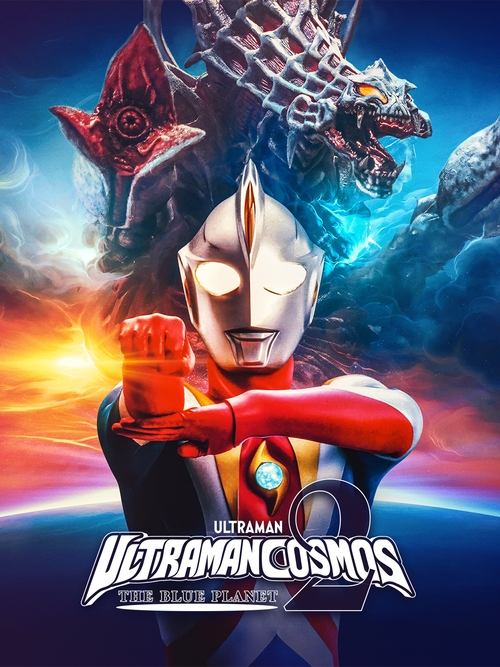

What is the ending?
In the ending of "Ultraman Cosmos vs. Ultraman Justice: The Final Battle," Ultraman Cosmos and Ultraman Justice engage in a climactic battle against the powerful monster, Giga-Bat. After a fierce confrontation, Ultraman Cosmos ultimately prevails, using his powers to protect humanity and restore peace. The film concludes with a sense of hope as Ultraman Cosmos departs, leaving behind a message of harmony and coexistence.
Now, let's delve into the ending in a more detailed narrative fashion:
As the final battle looms, the atmosphere is thick with tension. The city lies in ruins, a testament to the chaos unleashed by Giga-Bat, a monstrous creature that embodies destruction. Ultraman Cosmos, embodying the spirit of peace and protection, stands resolute, determined to save humanity from the brink of annihilation. His heart is heavy with the weight of responsibility, yet he is fueled by an unwavering belief in the goodness of humanity.
The scene shifts to Ultraman Justice, who has been manipulated by darker forces, his intentions clouded by a desire for power. As he confronts Ultraman Cosmos, the two titans clash in a dazzling display of light and energy. The sky is illuminated with their fierce exchanges, each blow resonating with the emotional stakes of their conflict. Ultraman Justice, torn between his original purpose and the influence of malevolent forces, struggles internally, his face reflecting a mix of anger and confusion.
In a pivotal moment, Ultraman Cosmos reaches out to Ultraman Justice, attempting to remind him of their shared mission to protect life. The words resonate, and for a fleeting moment, Justice hesitates, caught in the crossfire of his own turmoil. This moment of vulnerability is quickly overshadowed by Giga-Bat's rampage, forcing both Ultramen to unite against the greater threat.
The battle against Giga-Bat escalates, showcasing the raw power of both Ultramen. They combine their strengths, a visual spectacle of energy beams and combat prowess. The city watches in awe and fear, the fate of their world hanging in the balance. As Giga-Bat unleashes a devastating attack, Ultraman Cosmos channels his energy, embodying the essence of hope and unity. With a final, powerful strike, he defeats Giga-Bat, the monster disintegrating into a cascade of light.
In the aftermath, the dust settles, and the city begins to heal. Ultraman Justice, now free from the dark influence, stands alongside Ultraman Cosmos. There is a moment of reconciliation, a silent understanding passing between them. Justice acknowledges his past mistakes, his expression softening as he realizes the importance of protecting life rather than seeking power.
As Ultraman Cosmos prepares to leave, he turns to the people of Earth, delivering a heartfelt message about the importance of coexistence and harmony. His eyes reflect a deep compassion, a promise that he will always be there to protect them, even from afar. The citizens, filled with gratitude and hope, watch as he ascends into the sky, a beacon of light fading into the horizon.
Ultraman Justice, now transformed by the experience, vows to continue the fight for peace on Earth, taking on the mantle of protector in his own right. The film closes with a sense of renewal, the characters having grown through their trials, embodying the themes of redemption, unity, and the enduring spirit of hope. The final scene leaves the audience with a lingering sense of optimism, as the world begins to rebuild, inspired by the sacrifices made by the Ultramen.
Is there a post-credit scene?
In "Ultraman Cosmos vs. Ultraman Justice: The Final Battle," there is indeed a post-credit scene that adds a layer of intrigue to the film's conclusion. After the credits roll, the scene opens with a serene view of a peaceful landscape, hinting at the aftermath of the intense battles that have just transpired.
As the camera pans, we see Ultraman Cosmos standing on a hill, gazing thoughtfully at the horizon. His expression is one of contemplation and hope, reflecting on the sacrifices made and the friendships forged during the conflict. The gentle breeze rustles through the grass, symbolizing a sense of calm after the storm.
Suddenly, the tranquility is interrupted by a faint, ominous rumble in the distance. The ground trembles slightly, and Cosmos's demeanor shifts from peaceful reflection to alertness. He turns his head, sensing a disturbance that suggests the emergence of new threats.
The scene then cuts to a shadowy figure lurking in the darkness, hinting at a potential new adversary. The figure is shrouded in mystery, with only a pair of glowing eyes visible, suggesting that the battle for peace is far from over.
As the screen fades to black, a message appears, teasing the audience with the promise of future challenges and adventures for Ultraman Cosmos, leaving viewers with a sense of anticipation and excitement for what lies ahead. This post-credit scene effectively sets the stage for potential sequels or further developments in the Ultraman universe, emphasizing the ongoing struggle between good and evil.
What motivates Ultraman Cosmos to confront Ultraman Justice in the final battle?
Ultraman Cosmos is driven by a deep sense of justice and a desire to protect humanity. He believes in the value of life and seeks to understand Ultraman Justice's motivations, which he perceives as a threat to peace. This internal conflict fuels his determination to confront Justice, as he hopes to resolve their differences and prevent further destruction.
How does Ultraman Justice's character differ from Ultraman Cosmos?
Ultraman Justice embodies a more aggressive and uncompromising approach to justice, believing that the ends justify the means. His character is marked by a sense of righteousness that often leads him to take extreme measures, contrasting with Ultraman Cosmos's more compassionate and empathetic nature. This fundamental difference in their philosophies creates tension and conflict throughout the film.
What role do the human characters play in the conflict between Ultraman Cosmos and Ultraman Justice?
The human characters serve as a bridge between the two Ultramen, representing the stakes of their conflict. They provide emotional depth and highlight the consequences of the Ultramen's actions. Their interactions with both Ultraman Cosmos and Ultraman Justice reveal the impact of the Ultramen's battle on humanity, showcasing themes of hope, fear, and the desire for understanding.
What is the significance of the final battle location in Ultraman Cosmos vs. Ultraman Justice?
The final battle takes place in a desolate urban landscape, symbolizing the destruction that can result from unchecked power and conflict. This setting amplifies the emotional stakes, as it reflects the potential consequences of their fight on the world. The ruins serve as a backdrop for their clash, emphasizing the need for resolution and the protection of life.
How does Ultraman Cosmos attempt to reach out to Ultraman Justice during their confrontation?
During their confrontation, Ultraman Cosmos tries to communicate with Ultraman Justice, urging him to reconsider his methods and the impact of his actions. He expresses empathy and understanding, attempting to appeal to Justice's sense of morality. This effort highlights Cosmos's belief in dialogue and reconciliation, contrasting with Justice's more combative stance.
Is this family friendly?
"Ultraman Cosmos vs. Ultraman Justice: The Final Battle" is generally considered family-friendly, as it is part of the Ultraman franchise, which is aimed at younger audiences. However, there are a few aspects that might be potentially objectionable or upsetting for children or sensitive viewers:
-
Intense Battles: The film features several intense fight scenes between Ultraman Cosmos and Ultraman Justice, as well as confrontations with various monsters. These battles can be visually striking and may evoke feelings of fear or anxiety.
-
Destruction and Chaos: The battles often lead to significant destruction in urban environments, which might be distressing for younger viewers who are sensitive to scenes of chaos or devastation.
-
Emotional Conflict: Characters experience moments of doubt, fear, and conflict, particularly regarding their roles as protectors and the consequences of their battles. This emotional weight might resonate deeply with some viewers.
-
Monsters and Villains: The presence of monstrous creatures and antagonistic characters can be frightening for younger children, especially those who may have a fear of monsters or dark themes.
-
Themes of Sacrifice: The film explores themes of sacrifice and the burden of responsibility, which may be heavy for some children to fully understand or process.
Overall, while the film is designed for a younger audience, these elements may require parental guidance for sensitive viewers.








