













Popular
What motivates the main character, a psychologist, to delve into the world of mind games?
How does the relationship between Dr. David and his patient evolve throughout the film?
What role does the antagonist play in Dr. David's journey?
What specific mind games are employed by the characters throughout the film?
How does the setting influence the characters' psychological states?
Should I watch it?
Ask Your Own Question

What is the plot?
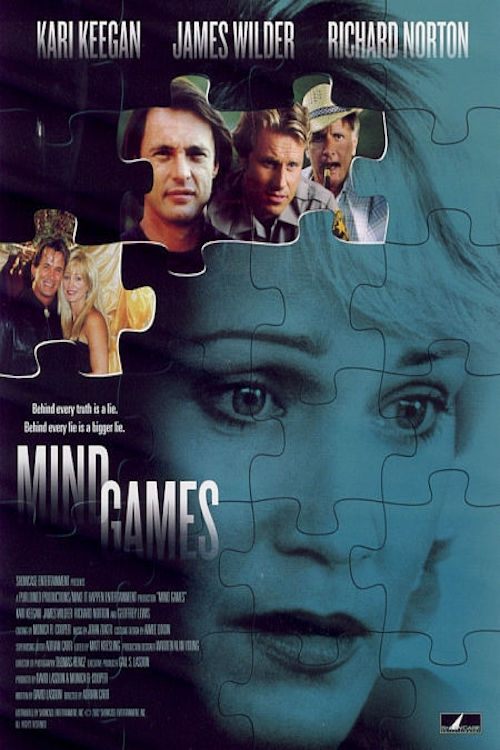
Jill Reeves wakes up in her home, disoriented and frightened, her mind a blank slate for the last seven months of her life. The world she thought she knew has vanished, replaced by a fog of confusion and fear. She tries to piece together her shattered reality, but the first person she sees only deepens the mystery: Carter Tallerin, a confident, swaggering Texan man who tells her, "We're married, Jill." His words hit her like a blow, shattering her fragile grip on what is real. She cannot remember him, nor the life they supposedly shared. The house around her feels both familiar and alien, every corner hiding secrets she cannot yet grasp.
Jill's amnesia is the cruel lens through which the story unfolds. She is desperate to reclaim her identity, but every revelation only deepens the labyrinth of lies and half-truths surrounding her. Carter's presence is both a comfort and a threat. He exudes charm and dominance, but there is an unsettling edge to his behavior. He insists on their marriage, yet simultaneously files for divorce, a contradiction that puzzles Jill and unsettles the audience. Carter's swagger masks a complex agenda, and Jill senses that beneath his Texan bravado lies manipulation.
Jill's brother enters the picture, a man whose loyalty and intentions are equally ambiguous. He confirms the marriage to Carter, adding weight to Carter's claims, but his involvement in the unfolding drama hints at deeper family conflicts. The brother's interactions with Jill are tense, marked by half-spoken accusations and guarded truths. Jill's fragmented memories offer no refuge; she cannot trust her own mind, and the people around her seem to guard their own secrets fiercely.
As Jill begins to investigate her lost past, she moves through various locations that serve as puzzle pieces in her quest. Her home is the epicenter of her confusion, a place where memories flicker like shadows. Legal and real estate offices become battlegrounds where documents reveal the tangled web of domestic and financial intrigue. Jill pores over marriage certificates, divorce filings, and real estate deals that suggest betrayal and manipulation. Each paper she uncovers feels like a thread pulling her deeper into a conspiracy she barely understands.
Social settings--family gatherings, meetings with acquaintances--become stages where Jill confronts the duplicity around her. Conversations are loaded with subtext; smiles mask resentment, and every word seems calculated. Jill's interactions with Carter grow increasingly fraught. He is both her husband and her adversary, a man who oscillates between tenderness and cold calculation. At one confrontation, Carter leans in close, his voice low and cutting: "You don't remember because you don't want to. But I'm here, Jill. Whether you like it or not."
The tension escalates as Jill uncovers betrayals that cut close to the bone. Her brother's role in the family's financial dealings, Carter's legal maneuvers, and Jill's own forgotten actions intertwine in a toxic dance of power and deceit. The film's atmosphere thickens with psychological suspense as Jill's search for truth becomes a battle for survival--not against physical enemies, but against the corrosive effects of mistrust and memory loss.
Despite the intensity of the unfolding drama, the film notably contains no deaths. The conflict is cerebral and emotional rather than violent. The confrontations are battles of wills and words, where each character tries to assert control over Jill's fractured reality. Jill's struggle is internal as much as external; she wrestles with the possibility that she herself may be hiding secrets from her own consciousness.
In the climax, Jill gathers the fractured pieces of her past and confronts Carter and her family in a series of charged encounters. The legal and emotional stakes come to a head as Jill challenges Carter's claims and exposes the duplicity woven through her relationships. The final scenes are tense and layered with subtext, as Jill faces the truth about her marriage, her family's betrayals, and her own identity. The film closes on an ambiguous note: Jill, though battered and bewildered, begins to accept the complexity of her situation. She stands amid the ruins of her past, uncertain but resolute, embodying the film's themes of memory, identity, and trust.
"Mind Games" ends without neat resolutions or dramatic showdowns. Instead, it leaves the audience with a lingering sense of unease and reflection, emphasizing that some truths are elusive and that the mind itself can be the most treacherous mystery of all. Jill Reeves survives, but the scars of her amnesia and the betrayals she uncovers suggest that her journey toward self-understanding is only just beginning. Carter Tallerin remains a shadowy figure--part antagonist, part enigma--his true motives never fully revealed but felt in every tense exchange.
This narrative, unfolding in the quiet spaces of homes, offices, and whispered conversations, is a psychological thriller that probes the fragile boundaries of memory and trust. Jill's story is a haunting exploration of how the past can be both a prison and a puzzle, and how the search for truth can sometimes be the most dangerous game of all.









What is the ending?
In the ending of "Mind Games," the protagonist, a man named Jack, confronts the antagonist, a manipulative figure named Dr. K, in a final showdown. Jack's journey leads him to realize the importance of confronting his own fears and the impact of his choices. The film concludes with Jack overcoming Dr. K's psychological manipulation, reclaiming his life and sense of agency. The fate of the characters is ultimately tied to their personal growth and the resolution of their internal conflicts.
As the climax of "Mind Games" unfolds, the tension escalates in a dimly lit room where Jack faces Dr. K. The atmosphere is thick with anticipation, and Jack's heart races as he prepares for the confrontation. Dr. K, with a smug demeanor, taunts Jack, reminding him of his past failures and the psychological games he has played. Jack, however, is no longer the man he once was; he has undergone a transformation throughout the film, fueled by his desire to break free from the chains of manipulation.
In this pivotal scene, Jack stands firm, his resolve evident in his posture. He recalls the moments of doubt and fear that Dr. K exploited, but now, he channels that pain into strength. The dialogue between them crackles with intensity as Jack challenges Dr. K's authority, declaring that he will no longer be a pawn in his games. The emotional stakes are high, and Jack's voice trembles with a mix of anger and determination.
As the confrontation escalates, Dr. K attempts to regain control, using psychological tactics to undermine Jack's confidence. He brings up Jack's past mistakes, trying to instill doubt. However, Jack's internal monologue reveals his newfound clarity; he understands that his past does not define him. With each word, he dismantles Dr. K's manipulative facade, exposing the vulnerabilities that lie beneath the antagonist's bravado.
The climax reaches its peak when Jack finally confronts the core of his fears. In a moment of catharsis, he acknowledges the pain that Dr. K has caused him but refuses to let it dictate his future. The room seems to pulse with energy as Jack's emotional breakthrough becomes palpable. He takes a step forward, asserting his independence and reclaiming his narrative.
In the aftermath of this confrontation, the film shifts to a quieter scene. Jack stands alone, breathing heavily, the weight of the encounter settling in. He feels a sense of liberation wash over him, a stark contrast to the suffocating grip Dr. K once had on his life. The camera captures the subtle changes in Jack's expression, reflecting a mix of relief and newfound purpose.
As the credits roll, the fates of the main characters are revealed. Jack emerges victorious, having broken free from the psychological chains that bound him. He walks away from the confrontation with a renewed sense of self, ready to embrace the future on his own terms. Dr. K, on the other hand, is left in the shadows, his manipulative power diminished, a symbol of the consequences of unchecked control and the fragility of the human psyche.
In this final act, "Mind Games" encapsulates the journey of self-discovery and the importance of confronting one's fears. Jack's victory is not just over Dr. K but also over the internal struggles that have haunted him, marking a significant turning point in his life. The film closes on a note of hope, emphasizing the resilience of the human spirit in the face of adversity.
Is there a post-credit scene?
The movie "Mind Games" produced in 2003 does not have a post-credit scene. The film concludes its narrative without any additional scenes or content after the credits roll. The story wraps up with the resolution of the main plot, leaving no further developments or cliffhangers for the audience to ponder after the film ends.
What motivates the main character, a psychologist, to delve into the world of mind games?
The main character, Dr. David, is driven by a deep-seated desire to understand the complexities of the human mind and to help his patients overcome their psychological struggles. His own past traumas and failures in his personal life fuel his obsession with unlocking the secrets of mental manipulation and control.
How does the relationship between Dr. David and his patient evolve throughout the film?
Initially, Dr. David maintains a professional distance from his patient, Sarah, who is struggling with severe anxiety and trauma. As the story progresses, their relationship deepens, revealing layers of vulnerability and trust. Dr. David becomes increasingly invested in Sarah's recovery, which leads to ethical dilemmas as he begins to blur the lines between therapist and confidant.
What role does the antagonist play in Dr. David's journey?
The antagonist, a rival psychologist named Dr. Kane, embodies the darker aspects of psychological manipulation. He challenges Dr. David's methods and ethics, pushing him to confront his own beliefs about the power of the mind. Dr. Kane's presence serves as a catalyst for Dr. David's transformation, forcing him to question his motivations and the consequences of his actions.
What specific mind games are employed by the characters throughout the film?
Throughout the film, various psychological tactics are employed, including gaslighting, emotional manipulation, and role reversal. Dr. David uses these techniques to help Sarah confront her fears, while Dr. Kane uses them to undermine Dr. David's credibility and authority, creating a tense psychological battle between the two.
How does the setting influence the characters' psychological states?
The film is set in a dimly lit, claustrophobic office that reflects the characters' internal struggles. The oppressive atmosphere amplifies the tension and anxiety experienced by both Dr. David and Sarah. As they navigate their psychological battles, the setting becomes a character in itself, mirroring their emotional states and the escalating stakes of their mind games.
Is this family friendly?
"Mind Games," produced in 2003, is a psychological thriller that delves into complex themes and intense situations. While it may not be explicitly graphic, there are several elements that could be considered objectionable or upsetting for children or sensitive viewers:
-
Psychological Tension: The film features intense psychological manipulation and mind games that may be disturbing for younger audiences, as they explore themes of control and fear.
-
Violence: There are scenes that depict violence or threats of violence, which could be unsettling. The tension often escalates to confrontational moments that may evoke anxiety.
-
Emotional Distress: Characters experience significant emotional turmoil, including fear, betrayal, and desperation. These themes may resonate deeply and could be distressing for sensitive viewers.
-
Mature Themes: The film addresses adult themes such as obsession, revenge, and the darker aspects of human nature, which may not be suitable for children.
-
Dark Atmosphere: The overall tone of the film is dark and suspenseful, which may create an unsettling viewing experience for younger audiences.
Given these aspects, "Mind Games" may not be considered family-friendly and could be more appropriate for mature viewers who can handle its psychological complexities.









