
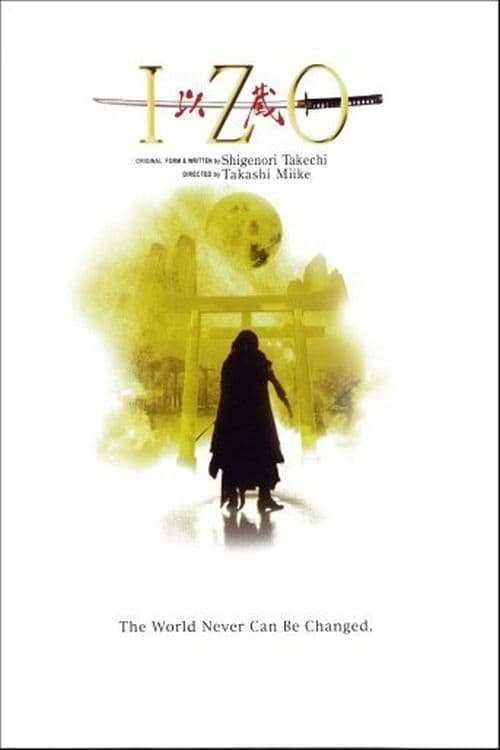








































Popular
What is the significance of Izo's journey through time and space?
How does Izo's character evolve throughout the film?
What role do the various historical figures play in Izo's journey?
How does the film depict the theme of suffering through Izo's experiences?
What is the significance of the recurring imagery of death and rebirth in Izo's story?
Should I watch it?
Ask Your Own Question

What is the plot?
Sorry, we aren't able to watch and write up a full detailed plot yet. Check back in a few days.





What is the ending?
In the ending of "Izo," the titular character, Izo, confronts his fate after a series of violent encounters and existential struggles. He ultimately finds himself in a surreal confrontation with the concept of death and the cycle of suffering. The film concludes with Izo's acceptance of his own mortality, leading to a poignant moment of realization.
As the film approaches its conclusion, Izo, a samurai who has been resurrected and is wandering through time and space, continues to grapple with his violent past and the injustices he has faced. The scenes become increasingly surreal, reflecting Izo's internal turmoil and the chaos of the world around him.
In the final act, Izo finds himself in a desolate landscape, surrounded by the remnants of his violent journey. He encounters various figures from his past, including those he has wronged and those who have wronged him. Each encounter is marked by a sense of inevitability, as Izo is forced to confront the consequences of his actions. The emotional weight of these meetings is palpable; Izo's face reflects a mixture of anger, sorrow, and resignation.
As he moves through this landscape, Izo is confronted by a group of soldiers who represent the oppressive forces of society. They attack him, and in a flurry of violence, Izo fights back, showcasing his skills as a warrior. However, the battle feels futile, as Izo is ultimately overwhelmed. The violence is relentless, and Izo's struggle becomes a metaphor for the endless cycle of suffering and revenge.
In a climactic moment, Izo is finally brought to his knees, facing a figure that embodies death. This figure, shrouded in darkness, represents the culmination of Izo's journey--a confrontation with his own mortality. In this moment, Izo's expression shifts from defiance to acceptance. He realizes that his life has been a series of battles against not just external foes, but also his own inner demons.
The film concludes with Izo's acceptance of death. As he closes his eyes, the screen fades to black, leaving the audience with a lingering sense of the cyclical nature of life and death. The final moments suggest that Izo's journey may not have been in vain, as he comes to terms with his existence and the pain he has endured.
In summary, the fates of the main characters are intertwined with Izo's journey. Izo, after a life filled with violence and suffering, finds a moment of clarity in his acceptance of death. The soldiers, representing the oppressive forces, remain a constant threat, but their ultimate defeat of Izo serves to highlight the futility of his struggle. The film closes on a note of somber reflection, emphasizing the themes of mortality, suffering, and the search for meaning in a chaotic world.
Is there a post-credit scene?
The movie "Izo," directed by Takashi Miike and released in 2004, does not contain a post-credit scene. The film concludes its narrative without any additional scenes or content after the credits roll. The story itself is a surreal and violent journey that follows the character Izo, a samurai who is resurrected and forced to confront the consequences of his past actions across different time periods. The film's ending leaves viewers with a sense of ambiguity and reflection on themes of suffering, vengeance, and the cyclical nature of violence, but it does not extend into a post-credit sequence.
What is the significance of Izo's journey through time and space?
Izo's journey is marked by his relentless pursuit of vengeance and understanding of his own existence. As he travels through different eras, he encounters various characters that reflect the brutality and chaos of human nature, which deepens his internal conflict and highlights his struggle with his own identity.
How does Izo's character evolve throughout the film?
Initially, Izo is consumed by rage and a desire for revenge after his execution. As he traverses through time, he begins to confront the futility of his anger and the cyclical nature of violence, leading to moments of introspection where he questions his purpose and the meaning of his suffering.
What role do the various historical figures play in Izo's journey?
The historical figures Izo encounters serve as mirrors to his own struggles and philosophies. Each character embodies different aspects of humanity, from cruelty to compassion, forcing Izo to confront his own beliefs about justice, morality, and the consequences of his actions.
How does the film depict the theme of suffering through Izo's experiences?
Izo's experiences are laden with suffering, both physical and emotional. The film portrays his pain through graphic violence and the emotional toll of his encounters, emphasizing the relentless cycle of suffering that he witnesses and endures, which ultimately shapes his character and motivations.
What is the significance of the recurring imagery of death and rebirth in Izo's story?
The imagery of death and rebirth is central to Izo's narrative, symbolizing his struggle to escape the cycle of violence and his quest for redemption. Each death he experiences or witnesses serves as a catalyst for his transformation, pushing him closer to understanding the deeper implications of life, death, and the possibility of renewal.
Is this family friendly?
"Izo," directed by Takashi Miike, is not considered family-friendly due to its intense and graphic content. The film contains several potentially objectionable or upsetting scenes, including:
-
Extreme Violence: The film features numerous scenes of brutal violence, including sword fights, beheadings, and graphic depictions of death.
-
Gore: There are explicit images of blood and dismemberment that may be disturbing to viewers.
-
Psychological Trauma: The protagonist experiences significant emotional and psychological turmoil, which may be unsettling for sensitive viewers.
-
Themes of Suffering: The narrative explores heavy themes such as revenge, existential despair, and the cyclical nature of violence, which can be distressing.
-
Adult Language and Situations: The film includes strong language and adult themes that are not suitable for children.
Overall, "Izo" is a challenging film that delves into dark and complex themes, making it more appropriate for mature audiences.







