












Popular
What is the relationship between Clara and the protagonist?
How does Clara's past influence her actions in the film?
What role does the setting play in Clara and the protagonist's relationship?
How does the protagonist's perception of Clara change throughout the film?
What are the key moments that define Clara's character arc?
Should I watch it?
Ask Your Own Question

What is the plot?
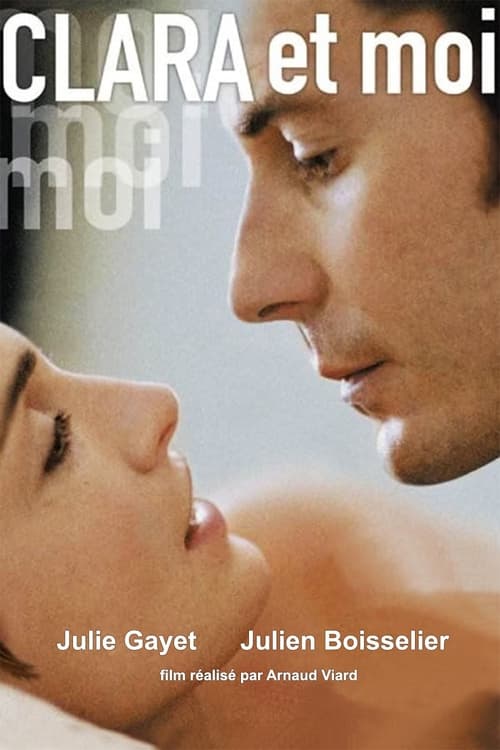
Antoine begins the film as a man who appears to have everything a young single Parisian could want: a promising career, loyal friends, and his own apartment, but none of it keeps him from feeling alone. The story opens with him at a psychoanalysis session, saying in effect that he is there "just to see," a small, guarded admission that already frames him as someone half-observing his own life rather than fully living it. From that office he returns to the metro, carrying the same quiet emptiness with him, and the film's first romantic spark appears when he notices a girl across from him. That glance becomes the hinge of the whole story.
The girl is Clara, and in the early stages she is everything Antoine is not: radiant, intelligent, exciting, and immediately alive in his eyes. According to the plot descriptions, the relationship starts with Antoine making a phone call, then leading to a meeting at Place de l'Odéon before they drift together toward the Quais de Seine. The film lets this first approach unfold with the easy warmth of a Paris romance, and even the sources' mention of a little song, remembered only through a fragment like "If I met you on the street corner…," suggests that this opening is meant to feel tender, lightly playful, and fate-touched. Antoine, who has been defined by loneliness, suddenly finds himself pulled into joy.
As he and Clara spend more time together, the relationship deepens into what looks like the beginning of a serious love story. Antoine falls deeply in love, and the film shows him moving from solitary habit into emotional dependence, his life reorganizing around Clara's presence. He is no longer simply the successful young man with friends and an apartment; he is a man reorganizing his inner world around another person. The sources indicate that the film follows their story through friends, family, and end-of-year celebrations, so the romance is not isolated in a handful of dates but grows into a fuller shared life, expanding into social circles and seasonal ritual. That matters, because the movie is not just about attraction; it is about the way a seemingly secure life can be transformed by intimacy.
Clara, meanwhile, is presented as kind and gentle in some descriptions, and as beautiful, radiant, and exciting in others, but always as someone who brings light and motion into Antoine's emotional routine. Antoine's loneliness turns into happiness, and for a while the relationship seems to be moving toward permanence. The film builds this sense of inevitability carefully, letting the viewer believe that this is a love story that may actually last. Antoine's mood changes with Clara's, and the world seems, for a time, to have opened up around him.
Then the film's central rupture arrives. Antoine learns that Clara is HIV-positive. The sources describe this as a painful secret from Clara's past, an unexpected fact that pushes Antoine into shock and anger. This is the moment the movie pivots from romantic promise to moral and emotional crisis. The revelation is not treated as a minor complication; it becomes the axis on which the entire relationship turns. Antoine's reaction exposes a part of himself that had been hidden beneath the surface of his charm and stability. The available plot information says that his "latent selfishness" resurfaces here, and that the relationship begins to wobble under the pressure of his fear and doubt.
The emotional confrontation is intense even in summary form. Antoine is forced to decide what Clara's diagnosis means for his love, for his future, and for the version of himself he thought he was. Rather than responding with immediate solidarity, he hesitates, recoils, and weighs his choices. Clara, who has already had to carry the burden of her illness, now faces a second trauma: the breakup or suspension of the relationship at the exact moment when she most needs trust. The sources emphasize that the relationship is put on hold, then separated, and that Clara suffers both the disclosure of her status and Antoine's withdrawal. There is no indication of physical violence or any death in the film; the devastation is emotional, internal, and relational rather than fatal.
What follows is not a simple reconciliation but a period of painful distance. Antoine is left to sit with his fear and the consequences of his response, and Clara is left to absorb the cost of being seen as a risk rather than a person. The film's tension comes from this gap between what Antoine thought love would be and what it requires in reality. The sources make clear that he is not only shocked by the diagnosis itself but also forced into a personal reckoning with his own emotional limitations. This is where the movie shifts from romance into self-interrogation.
Antoine's journey toward understanding begins after the separation, when he starts searching for a way to make sense of what has happened. One key step is his conversation with his father at his parents' home. The sources do not provide the exact dialogue, but they do indicate that this exchange matters because it helps Antoine move beyond himself. His father gives him a book by Rainer Maria Rilke, and that gift functions as more than a literary gesture; it becomes a symbolic tool for reflection and emotional reorientation. In effect, Antoine is being asked to look at love, suffering, and responsibility through a wider lens than the one his fear has allowed.
The father-son conversation becomes one of the film's major confrontations, not because it is loud or explosive, but because it changes Antoine's perspective. The earlier shock at Clara's revelation gave way to defensiveness, and now the film pushes him toward comprehension. The sources say that through this discussion and the Rilke book, Antoine comes to a new understanding of the relationship, seeing beyond his own distress and recognizing what Clara meant to him. The key twist here is not a new factual revelation about Clara, but Antoine's internal reversal: he begins to understand that what he lost was not merely a romance, but an opportunity to love responsibly and without conditions.
The ending carries that change into a final, symbolic image. The sources describe a presumed face-to-face encounter between Clara and Antoine through a window. That visual matters because it suggests both separation and contact at once. A window is a barrier, but it is also a clear surface through which one person can still see another. By ending there, the film refuses an easy sentimental closure while still offering a fragile form of connection. Antoine does not simply erase the past; he arrives at a quieter understanding of it. Clara is no longer just the beautiful woman who transformed his loneliness into joy, nor simply the source of his fear. She becomes, in his mind, the woman whose presence forced him to confront the limits of his own self-image.
The final scene, as the available material allows us to reconstruct it, is therefore less about plot mechanics than emotional resolution. Antoine has passed through desire, shock, refusal, and reflection. He has gone from the metro glance that opens the romance to the parental conversation that reshapes it, and finally to the window image that holds the whole relationship in suspended, unresolved visibility. Clara's HIV status remains part of the story's irreversible reality, but the film's final movement suggests that Antoine's understanding has changed more than the facts have. He now sees what the relationship was, and what it cost, in a way he could not when he was first confronted by fear.
No deaths are mentioned in the available sources, and none appear to structure the film's dramatic arc. The real losses are emotional: Antoine loses the innocence of uncomplicated romance, Clara loses the security of being loved without judgment, and both lose the version of the relationship that might have existed before the revelation. What remains at the end is not a triumphant reunion but a hard-won understanding, rendered in the film's last image as a look through glass rather than a full embrace.



What is the ending?
In the ending of "Clara and Me," Clara, a young girl with a vivid imagination, faces the reality of her mother's illness. As she grapples with her emotions, she learns to cope with loss and the importance of cherishing memories. The film concludes with Clara finding solace in her creativity, symbolizing hope and resilience.
As the final scenes unfold, we see Clara sitting in her room, surrounded by drawings and sketches that reflect her inner world. The sunlight filters through the window, casting a warm glow on her artwork. Clara's mother, who has been battling a serious illness throughout the film, is shown in a hospital bed, frail but still holding onto her spirit. Clara visits her, clutching a drawing she made of them together, a representation of their bond and the love they share.
In a poignant moment, Clara presents the drawing to her mother, who smiles weakly, her eyes glistening with tears. This exchange is filled with unspoken words, as Clara's mother understands the depth of her daughter's feelings. Clara's mother encourages her to keep drawing, to keep imagining, and to never lose her sense of wonder. This moment encapsulates the film's theme of the power of imagination and the enduring nature of love.
As Clara leaves the hospital, she walks through the corridors, her small figure contrasting with the sterile environment. She pauses to look at a mural on the wall, a colorful depiction of a fantastical world. Inspired, she begins to sketch again, her pencil moving swiftly across the paper, capturing the essence of her dreams and hopes.
The film then shifts to a montage of Clara's life after her mother's passing. We see her growing older, her art becoming more sophisticated, yet still retaining the whimsical quality that characterized her childhood drawings. Clara finds solace in her creativity, using it as a means to process her grief and celebrate her mother's memory.
In the final scene, Clara stands in front of an art exhibit showcasing her work. The gallery is filled with people admiring her pieces, and Clara beams with pride. She spots a familiar face in the crowd--her mother's spirit, represented in a soft, ethereal light, watching over her. Clara smiles, feeling a sense of connection and peace, knowing that her mother will always be a part of her journey.
The film concludes with Clara stepping outside into the sunlight, a renewed sense of purpose in her stride. She carries her sketchbook close to her heart, ready to embrace the future while honoring the past. The ending emphasizes the themes of resilience, the healing power of art, and the enduring bond between mother and daughter, even in the face of loss.
Is there a post-credit scene?
In the movie "Clara and Me," there is no post-credit scene. The film concludes with a poignant resolution to the story, focusing on the emotional journey of the characters and their relationships. The ending encapsulates the themes of love, loss, and the impact of memories, leaving the audience with a sense of closure without any additional scenes after the credits. The film wraps up its narrative effectively, emphasizing the connections formed throughout the story rather than extending it further with a post-credit moment.
What is the relationship between Clara and the protagonist?
Clara is the central figure in the protagonist's life, serving as both a muse and a source of conflict. Their relationship is complex, marked by moments of deep connection and misunderstandings that drive the narrative forward.
How does Clara's past influence her actions in the film?
Clara's past is filled with trauma and loss, which shapes her behavior and decisions throughout the film. Her struggles with trust and vulnerability are evident as she navigates her relationship with the protagonist.
What role does the setting play in Clara and the protagonist's relationship?
The setting, a small town with picturesque landscapes, serves as a backdrop that reflects the emotional states of the characters. The contrast between the beauty of the surroundings and the turmoil in Clara's life enhances the narrative tension.
How does the protagonist's perception of Clara change throughout the film?
Initially, the protagonist sees Clara as an enigmatic figure, but as the story unfolds, he begins to understand her deeper struggles and motivations. This shift in perception leads to significant character development for both.
What are the key moments that define Clara's character arc?
Key moments include her confrontations with her past, her interactions with the protagonist that reveal her vulnerabilities, and her ultimate decision to confront her fears, which marks a turning point in her character development.
Is this family friendly?
"Clara and Me," produced in 2004, is a family-friendly film that primarily focuses on themes of friendship, love, and personal growth. However, there are a few scenes and aspects that might be considered potentially objectionable or upsetting for children or sensitive viewers:
-
Emotional Struggles: The film delves into the emotional challenges faced by the characters, including feelings of loneliness and loss. These themes may resonate deeply and could be upsetting for some viewers.
-
Family Conflict: There are moments of tension and conflict within family dynamics that may be difficult for younger audiences to process, as they reflect real-life struggles.
-
Illness: The film touches on themes of illness and the impact it has on relationships, which could be distressing for sensitive viewers.
-
Separation: Scenes depicting separation or longing for connection may evoke strong emotions, particularly for children who may relate to feelings of abandonment or loss.
Overall, while the film is suitable for family viewing, these elements may require parental guidance for younger audiences to help them navigate the emotional content.







