
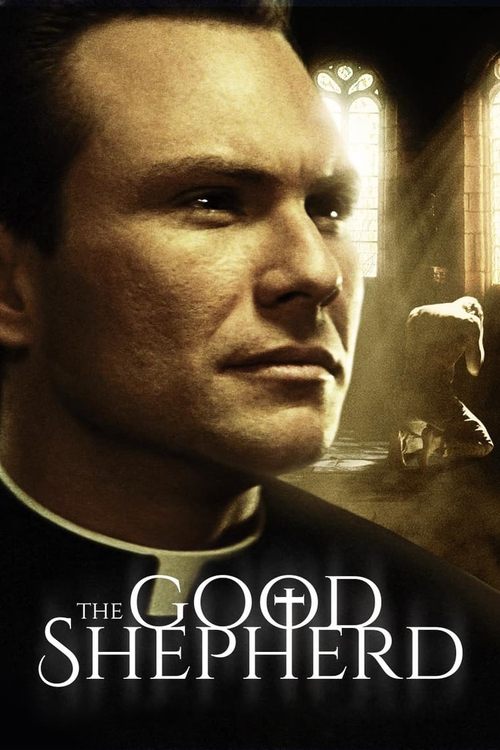

















Popular
What is Edward Wilson's role in the formation of the CIA?
How does Edward Wilson's relationship with his father influence his character?
What role does Margaret 'C' Wilson play in Edward's life?
How does the film depict the moral dilemmas faced by Edward Wilson?
What is the significance of the character of General Bill Sullivan in the story?
Should I watch it?
Ask Your Own Question

What is the plot?
Sorry, we aren't able to watch and write up a full detailed plot yet. Check back in a few days.







What is the ending?
In the ending of "The Good Shepherd," Edward Wilson, having dedicated his life to the CIA, faces the personal cost of his choices. He discovers the betrayal of his closest relationships, particularly with his wife, Margaret, and his son, who has grown distant. The film concludes with Wilson standing alone, reflecting on the sacrifices he has made for his country and the isolation that has resulted from his commitment to secrecy and duty.
As the film approaches its conclusion, we see Edward Wilson, portrayed by Matt Damon, deeply entrenched in the world of espionage. The narrative shifts to a tense moment in the early 1960s, where Wilson is involved in a covert operation that leads to the assassination of a key figure in the Cold War. This act weighs heavily on him, showcasing the moral ambiguity of his work.
In a subsequent scene, Wilson returns home to find his wife, Margaret, played by Angelina Jolie, waiting for him. Their relationship has deteriorated over the years, strained by Wilson's secrecy and emotional distance. Margaret confronts him about his infidelity and the lies that have built a wall between them. The emotional tension is palpable as Wilson struggles to express his feelings, revealing the internal conflict he faces between his duty to his country and his responsibilities as a husband and father.
The narrative then shifts to Wilson's son, who has grown up largely without his father's presence. In a poignant scene, Wilson attempts to connect with him, but the distance is evident. His son, now a young man, is disillusioned and feels abandoned. This moment encapsulates the personal sacrifices Wilson has made in the name of national security, highlighting the cost of his commitment to the CIA.
As the film nears its end, Wilson is confronted by the reality of his choices. He learns that his actions have led to the death of a close friend, which serves as a catalyst for his introspection. The weight of his decisions becomes unbearable, and he begins to question the very foundation of his life's work.
In the final scenes, Wilson is seen alone in a stark, dimly lit office, surrounded by the remnants of his career. The camera lingers on his face, capturing the profound sense of isolation and regret. He reflects on the relationships he has sacrificed, the trust he has broken, and the life he has chosen over personal connections. The film closes with Wilson standing in silence, a man who has given everything to his country but lost everything in the process.
The fates of the main characters are starkly illustrated: Edward Wilson remains a solitary figure, burdened by the weight of his choices; Margaret has moved on, having found her own path away from Wilson; and their son, now estranged, embodies the loss of familial bonds due to Wilson's relentless pursuit of duty. The ending serves as a powerful commentary on the personal costs of a life dedicated to secrecy and the sacrifices made in the name of national security.
Is there a post-credit scene?
The Good Shepherd, produced in 2004, does not have a post-credit scene. The film concludes with a poignant final scene that encapsulates the themes of secrecy, sacrifice, and the personal costs of a life dedicated to intelligence work. The story ends on a reflective note, focusing on the character Edward Wilson, played by Matt Damon, as he grapples with the consequences of his choices and the impact on his family and personal relationships. The absence of a post-credit scene aligns with the film's serious tone and narrative focus, leaving the audience to ponder the complexities of loyalty and betrayal in the world of espionage.
What is Edward Wilson's role in the formation of the CIA?
Edward Wilson, played by Matt Damon, is depicted as a key figure in the early days of the CIA. He is a Yale student and a member of the secret society Skull and Bones, which shapes his worldview and connections. His intelligence and loyalty to his country lead him to become deeply involved in the agency's formation during World War II, where he is tasked with gathering intelligence and conducting covert operations.
How does Edward Wilson's relationship with his father influence his character?
Edward Wilson's relationship with his father is strained and complex. His father, a prominent figure in the family, is emotionally distant and ultimately commits suicide. This traumatic event profoundly impacts Edward, instilling in him a sense of duty and a need to prove himself. It shapes his character, driving him to seek validation through his work in intelligence, often at the expense of personal relationships.
What role does Margaret 'C' Wilson play in Edward's life?
Margaret 'C' Wilson, portrayed by Angelina Jolie, is Edward's wife. Their relationship is marked by emotional distance and secrecy, largely due to Edward's commitment to his work and the demands of his career in the CIA. Margaret struggles with Edward's secrecy and the impact it has on their family life, leading to tension and eventual estrangement. Her character highlights the personal sacrifices made by those involved in the intelligence community.
How does the film depict the moral dilemmas faced by Edward Wilson?
Throughout the film, Edward Wilson grapples with numerous moral dilemmas, particularly regarding loyalty, betrayal, and the cost of national security. His work often requires him to make difficult choices that conflict with his personal ethics, such as the decision to betray a friend for the sake of the agency. These moments of internal conflict reveal his struggle between duty to his country and the personal toll it takes on his relationships and conscience.
What is the significance of the character of General Bill Sullivan in the story?
General Bill Sullivan, played by Robert De Niro, serves as a mentor and father figure to Edward Wilson. He represents the military's influence on the CIA and embodies the pragmatic, often ruthless approach to intelligence work. Sullivan's character is significant as he guides Edward into the world of espionage, pushing him to embrace the darker aspects of their work, which ultimately shapes Edward's trajectory and moral compass throughout the film.
Is this family friendly?
"The Good Shepherd," produced in 2004, is not considered family-friendly due to its mature themes and content. Here are some potentially objectionable or upsetting aspects that may affect children or sensitive viewers:
-
Violence and War: The film includes scenes depicting the aftermath of war, including violence and death, which may be distressing.
-
Political Intrigue: The narrative involves complex themes of espionage and betrayal, which may be difficult for younger audiences to understand and could evoke feelings of anxiety.
-
Substance Abuse: There are instances of characters using alcohol and smoking, which may not be suitable for younger viewers.
-
Emotional Turmoil: The protagonist experiences significant personal loss and emotional struggles, including themes of isolation and betrayal, which could be heavy for sensitive viewers.
-
Sexual Content: There are scenes that imply sexual relationships and infidelity, which may not be appropriate for children.
-
Mature Themes: The film explores themes of loyalty, sacrifice, and the moral ambiguities of espionage, which may be too complex or unsettling for younger audiences.
Overall, the film's tone and subject matter are geared towards an adult audience, making it less suitable for children.








