
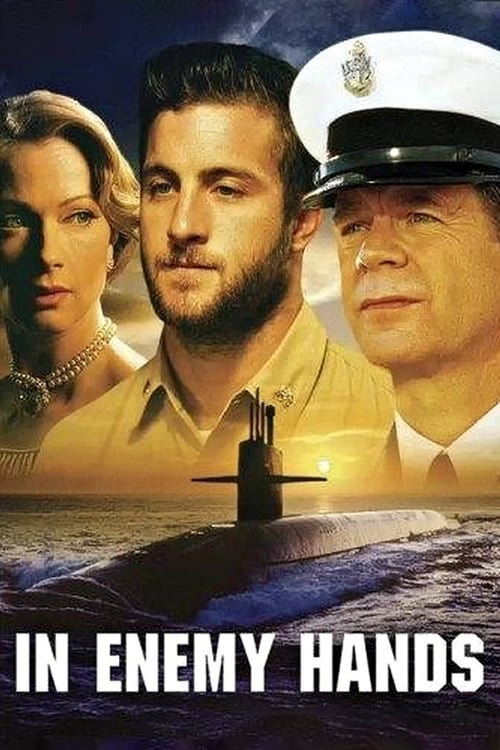





























Popular
What is the significance of the character U-boat Captain Hans Kessler in the story?
How does the relationship between Lieutenant Commander Thomas 'Tom' McCoy and Captain Kessler evolve throughout the film?
What role does the setting of the U-boat play in the development of the plot?
What are the key events that lead to the capture of the American sailors?
How does the film portray the theme of honor and duty through its characters?
Should I watch it?
Ask Your Own Question

What is the plot?
Sorry, we aren't able to watch and write up a full detailed plot yet. Check back in a few days.





What is the ending?
In the ending of "In Enemy Hands," the German submarine U-boat, after a series of intense confrontations and moral dilemmas, ultimately sinks. The American crew members, led by Lieutenant Commander Thomas "Tom" McGowan, manage to escape, but not without significant loss. The film concludes with a sense of somber reflection on the futility of war and the shared humanity between enemies.
As the film approaches its climax, the tension aboard the U-boat escalates. The American prisoners, including Lieutenant Commander McGowan, have formed a bond with their captors, particularly with the German captain, who grapples with his own moral conflicts. The crew of the U-boat is faced with the reality of their situation as they are pursued by American forces.
In the final scenes, the U-boat is severely damaged during a confrontation with American naval forces. The crew is forced to make desperate decisions as the submarine begins to take on water. The German captain, torn between duty and the lives of his crew and prisoners, ultimately chooses to save the Americans, showing a moment of humanity amidst the chaos of war.
As the submarine sinks, the American crew members manage to escape through the torpedo hatches. They swim to the surface, gasping for air, and are eventually rescued by an American ship. The fate of the German crew is left ambiguous, but it is implied that they do not survive the sinking.
The film closes with a poignant reflection on the shared experiences of the characters, emphasizing the tragic consequences of war and the fleeting connections formed in the face of adversity. The final moments leave the audience with a sense of loss and the haunting realization of the cost of conflict.
Is there a post-credit scene?
In the movie "In Enemy Hands," produced in 2004, there is no post-credit scene. The film concludes without any additional scenes or content after the credits roll. The story wraps up with the resolution of the main conflict, focusing on the characters' experiences and the emotional weight of their journey during World War II. The ending emphasizes themes of camaraderie, sacrifice, and the complexities of war, leaving the audience with a sense of closure regarding the characters' fates.
What is the significance of the character U-boat Captain Hans Kessler in the story?
Captain Hans Kessler, portrayed by the actor, is a complex character who embodies the struggles of leadership and morality during wartime. As the captain of the German U-boat, he is initially depicted as a strict and disciplined officer, but as the story unfolds, his character reveals deeper layers of humanity and conflict. Kessler grapples with the harsh realities of war, the responsibilities of his crew, and the moral dilemmas of his actions, especially when faced with the American prisoners.
How does the relationship between Lieutenant Commander Thomas 'Tom' McCoy and Captain Kessler evolve throughout the film?
The relationship between Lieutenant Commander Tom McCoy and Captain Kessler is central to the narrative. Initially, they are adversaries, representing opposing sides of the war. However, as they are forced to interact under dire circumstances, their relationship evolves from hostility to a reluctant mutual respect. McCoy's determination to survive and Kessler's internal conflict about his duties lead to moments of understanding and shared humanity, highlighting the complexities of their characters.
What role does the setting of the U-boat play in the development of the plot?
The U-boat serves as a claustrophobic and tense setting that amplifies the film's themes of isolation and conflict. The confined space creates a pressure cooker environment where the characters' emotions and motivations are heightened. The U-boat's interior, with its dim lighting and mechanical sounds, reflects the oppressive atmosphere of war, forcing characters to confront their fears and moral choices. This setting becomes a character in itself, influencing interactions and decisions.
What are the key events that lead to the capture of the American sailors?
The capture of the American sailors occurs after a tense naval engagement where their ship is attacked by Kessler's U-boat. The Americans, led by McCoy, are caught off guard, and the ensuing chaos leads to their surrender. This pivotal moment sets the stage for the subsequent interactions between the captives and their captors, highlighting the themes of survival and the human condition amidst the brutality of war.
How does the film portray the theme of honor and duty through its characters?
The theme of honor and duty is portrayed through the contrasting motivations of Kessler and McCoy. Kessler is torn between his duty as a captain and his growing empathy for the American prisoners, while McCoy struggles with his own sense of honor in the face of captivity. Their internal conflicts and decisions reflect the complexities of adhering to one's principles in a time of war, showcasing how honor can manifest in different ways depending on the character's perspective.
Is this family friendly?
"In Enemy Hands," produced in 2004, is a war drama set during World War II that explores themes of conflict, survival, and the human condition. While the film does not contain explicit content, it does include several potentially objectionable or upsetting scenes that may not be suitable for children or sensitive viewers.
-
War Violence: The film depicts naval warfare, including scenes of battles and explosions that may be intense and distressing. The portrayal of soldiers in combat can evoke feelings of fear and anxiety.
-
Death and Injury: There are moments that show the aftermath of battle, including injured and dying soldiers. These scenes can be graphic in their emotional impact, highlighting the harsh realities of war.
-
Tension and Hostility: The interactions between characters from opposing sides can be filled with hostility and mistrust, which may be unsettling for younger viewers.
-
Emotional Struggles: Characters experience significant emotional turmoil, including fear, despair, and moral dilemmas, which may be heavy for sensitive audiences to process.
-
Themes of Betrayal and Survival: The film explores complex themes such as betrayal and the instinct to survive, which may be difficult for younger viewers to fully understand or cope with.
Overall, while the film does not contain graphic violence or explicit content, its themes and emotional weight may not be suitable for all audiences, particularly children or those sensitive to war-related content.







