









Popular
What motivates the character Attilio to travel to Iraq?
How does Attilio's relationship with his wife Vittoria evolve throughout the film?
What role does the character of the tiger play in the story?
How does the setting of war-torn Iraq impact the characters' experiences?
What is the significance of Attilio's poetic nature in the film?
Should I watch it?
Ask Your Own Question

What is the plot?
Sorry, we aren't able to watch and write up a full detailed plot yet. Check back in a few days.






What is the ending?
In the ending of "The Tiger and the Snow," the protagonist, Attilio, finally reaches his beloved, Vittoria, who has been gravely injured in the war-torn landscape of Iraq. He confronts the harsh realities of the situation, but his love and determination shine through. The film concludes with a sense of hope and resilience, as Attilio's unwavering affection for Vittoria transcends the chaos around them.
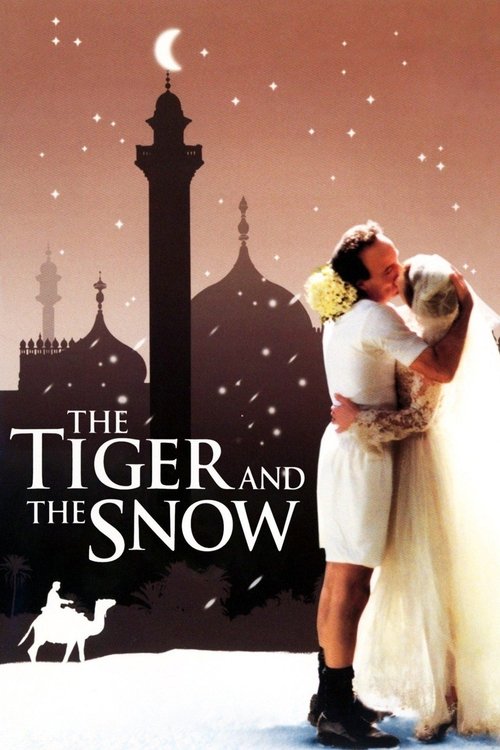
As the film approaches its conclusion, we find Attilio, played by Roberto Benigni, navigating the war-torn streets of Baghdad. The atmosphere is heavy with tension, the sounds of distant explosions and the sight of destruction surrounding him. Attilio's heart is filled with desperation as he searches for Vittoria, portrayed by Nicoletta Braschi, who has been injured in a bombing. His love for her drives him forward, despite the dangers that lurk in every corner.
In a poignant scene, Attilio finally arrives at the hospital where Vittoria is being treated. The stark, sterile environment contrasts sharply with the chaos outside. He rushes through the corridors, his heart racing, filled with a mix of hope and fear. When he reaches her bedside, he is met with the sight of Vittoria, pale and fragile, lying unconscious. The sight of her in such a state shatters him, and he struggles to hold back his tears.
Attilio kneels beside her, whispering sweet nothings and recounting memories of their time together, trying to reach her through the veil of unconsciousness. His voice is filled with love and longing, and he recalls moments of joy, laughter, and the beauty of their relationship. The emotional weight of his words hangs in the air, a testament to the depth of his feelings for her.
As he speaks, there is a flicker of recognition in Vittoria's eyes, and she slowly begins to regain consciousness. The moment is tender and filled with raw emotion, as Attilio's love seems to pull her back from the brink. They share a brief but powerful connection, a reminder of the bond that has endured despite the horrors surrounding them.
However, the reality of their situation is harsh. Vittoria's injuries are severe, and the medical staff is overwhelmed by the influx of casualties from the ongoing conflict. Attilio's determination to protect her and keep her safe is palpable, but he is also faced with the limitations of what he can do in such a dire environment.
In the final moments of the film, Attilio and Vittoria share a quiet moment together, reflecting on their love amidst the chaos. The camera captures their hands intertwined, a symbol of their connection and resilience. As the sounds of war continue outside, they find solace in each other, embodying the film's central theme of love as a powerful force that can endure even in the darkest of times.
The film concludes with a sense of hope, as Attilio's unwavering love for Vittoria shines through the despair. The final scenes leave the audience with a lingering sense of the enduring power of love, even in the face of overwhelming adversity. Attilio and Vittoria's journey, marked by struggle and heartache, ultimately highlights the strength of human connection and the possibility of redemption amidst chaos.
Is there a post-credit scene?
The movie "The Tiger and the Snow," directed by Roberto Benigni, does not have a post-credit scene. The film concludes with its narrative arc, focusing on the emotional journey of the main character, Attilio de Giovanni, as he navigates love, loss, and the chaos of war. After the credits roll, there are no additional scenes or content that extend the story or provide further insight into the characters. The film ends on a poignant note, encapsulating the themes of hope and resilience amidst the backdrop of conflict.
What motivates the character Attilio to travel to Iraq?
Attilio, a passionate and somewhat eccentric poet, is driven by his love for his estranged wife, Vittoria, who is in Iraq as a humanitarian worker. When he learns that she has been injured in a bombing, his deep emotional attachment and desire to protect her compel him to embark on a perilous journey to the war-torn country.
How does Attilio's relationship with his wife Vittoria evolve throughout the film?
Attilio's relationship with Vittoria is marked by a blend of love, longing, and misunderstanding. Initially, their marriage is strained, with Attilio's romantic gestures often falling flat. However, as he faces the dangers of war and the reality of her situation, he begins to understand the depth of his feelings for her, leading to a rekindling of their bond as he risks everything to reach her.
What role does the character of the tiger play in the story?
The tiger serves as a powerful symbol throughout the film, representing both the beauty and danger of life. It appears in Attilio's dreams and thoughts, embodying his fears and aspirations. The tiger's presence highlights the contrasts between love and war, safety and peril, and ultimately reflects Attilio's internal struggles as he navigates his feelings for Vittoria amidst the chaos of conflict.
How does the setting of war-torn Iraq impact the characters' experiences?
The setting of Iraq during the war creates a stark backdrop that heightens the emotional stakes for Attilio and Vittoria. The chaos, destruction, and danger of the environment force Attilio to confront his vulnerabilities and the fragility of life. It also amplifies the urgency of his quest to find Vittoria, as he must navigate not only physical obstacles but also the psychological toll of war on both himself and the people around him.
What is the significance of Attilio's poetic nature in the film?
Attilio's poetic nature is central to his character and the narrative. His love for poetry reflects his sensitivity and romantic ideals, which often clash with the harsh realities of life and war. Throughout the film, his attempts to express his feelings through poetry serve as a means of coping with his fears and uncertainties, ultimately revealing his deep emotional core and the transformative power of love in the face of adversity.
Is this family friendly?
"The Tiger and the Snow," directed by Roberto Benigni, is a romantic comedy-drama that contains several elements that may not be suitable for younger audiences or sensitive viewers. Here are some potentially objectionable or upsetting aspects:
-
War and Violence: The film is set against the backdrop of the Iraq War, featuring scenes that depict the chaos and destruction caused by conflict. This includes images of bombings and the aftermath of violence, which may be distressing.
-
Death and Injury: There are moments that involve characters facing life-threatening situations, injuries, and the emotional impact of loss. These scenes can evoke strong feelings of sadness and fear.
-
Emotional Turmoil: The protagonist, Attilio, experiences significant emotional struggles, including despair and longing. His journey through love and loss may resonate deeply, potentially overwhelming for sensitive viewers.
-
Mature Themes: The film explores complex themes such as love, sacrifice, and the human condition, which may be difficult for younger audiences to fully grasp or process.
-
Language and Humor: While the film contains comedic elements, some humor may be more suitable for adult audiences, and there are instances of language that could be considered inappropriate for children.
Overall, while "The Tiger and the Snow" has moments of warmth and humor, its serious themes and depictions of war may not make it entirely family-friendly.