
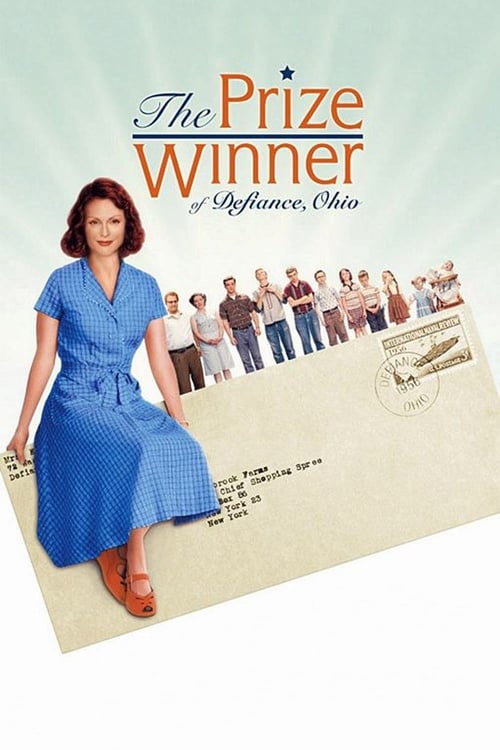














Popular
What motivates Evelyn to start entering contests?
How does Evelyn's husband, Kelly, react to her contest entries?
What are some of the significant prizes that Evelyn wins throughout the film?
How do Evelyn's children react to her contest wins?
What role does the setting of Defiance, Ohio play in the story?
Should I watch it?
Ask Your Own Question

What is the plot?
Sorry, we aren't able to watch and write up a full detailed plot yet. Check back in a few days.







What is the ending?
In the ending of "The Prize Winner of Defiance, Ohio," Evelyn Ryan, the protagonist, achieves a significant victory in her life through her writing and prize-winning contests. She manages to support her family despite the challenges posed by her alcoholic husband, Kelly. The film concludes with a sense of hope and resilience as Evelyn reflects on her journey, showcasing her determination and the impact of her creativity on her family's life.
As the film approaches its conclusion, we see Evelyn Ryan, portrayed by Julianne Moore, standing in her modest home, surrounded by her children. The atmosphere is filled with a mix of tension and anticipation as the family faces the ongoing struggles of their daily lives, particularly the financial strain caused by her husband Kelly's alcoholism. The children, each with their own dreams and aspirations, look to their mother for guidance and support.
In a pivotal scene, Evelyn receives a letter informing her that she has won a significant prize for one of her jingle submissions. The excitement in her eyes is palpable as she shares the news with her children, who erupt in joy. This moment is not just a personal victory for Evelyn; it symbolizes her ability to provide for her family and bring a sense of hope amidst their hardships. The jingle she created resonates with the values of perseverance and creativity, reflecting her inner strength.
As the family gathers to celebrate, we see Kelly, played by Woody Harrelson, in a moment of vulnerability. He struggles with his demons but is also touched by Evelyn's success. This scene highlights the complexity of their relationship; despite his flaws, there is a glimmer of pride in him for what Evelyn has accomplished. However, the tension remains as he grapples with his addiction, which continues to cast a shadow over their lives.
In the final moments of the film, Evelyn stands in front of her typewriter, a symbol of her resilience and creativity. She reflects on her journey, the challenges she has faced, and the victories she has achieved. The camera captures her determination as she types away, crafting new stories and jingles, embodying the spirit of a woman who refuses to be defeated by her circumstances.
The film closes with a montage of Evelyn's life, showcasing her continued success in writing and the positive impact it has on her family. Each of her children is seen pursuing their dreams, inspired by their mother's unwavering spirit. The final shot lingers on Evelyn, a woman who has transformed her struggles into triumphs, leaving the audience with a sense of hope and the message that creativity and resilience can lead to a brighter future, even in the face of adversity.
Is there a post-credit scene?
The movie "The Prize Winner of Defiance, Ohio" does not have a post-credit scene. The film concludes with the story of Evelyn Ryan, played by Julianne Moore, reflecting on her life and the impact of her prize-winning efforts on her family. The narrative wraps up with a sense of closure, focusing on the themes of resilience, creativity, and the importance of family, without any additional scenes after the credits.
What motivates Evelyn to start entering contests?
Evelyn, played by Julianne Moore, is motivated by her desire to provide for her ten children and to escape the financial struggles caused by her husband's alcoholism. She sees contests as a way to bring in extra income and to create a better life for her family.
How does Evelyn's husband, Kelly, react to her contest entries?
Kelly, portrayed by Woody Harrelson, initially shows skepticism and dismisses Evelyn's contest entries as a waste of time. His alcoholism and volatile behavior create tension in their marriage, leading to moments of conflict where he belittles her efforts, yet he also has moments of pride when she wins.
What are some of the significant prizes that Evelyn wins throughout the film?
Evelyn wins various prizes that significantly impact her family's life, including a new washing machine, a car, and cash prizes. Each win brings a moment of joy and hope, but also highlights the ongoing struggles her family faces.
How do Evelyn's children react to her contest wins?
Evelyn's children have mixed reactions to her contest wins. Some are excited and proud of their mother's achievements, while others are concerned about the family's instability and their father's behavior. The contests become a source of both pride and tension within the household.
What role does the setting of Defiance, Ohio play in the story?
The setting of Defiance, Ohio, during the 1950s and 1960s, plays a crucial role in shaping the family's experiences. The small-town atmosphere reflects the societal expectations of the time, and the economic struggles faced by many families, including Evelyn's, highlight the challenges she must overcome to support her children.
Is this family friendly?
"The Prize Winner of Defiance, Ohio" is generally considered family-friendly, but it does contain some themes and scenes that may be sensitive for children or those who are particularly sensitive. Here are a few aspects to consider:
-
Domestic Struggles: The film portrays the challenges of a family living in poverty, which may be upsetting for some viewers, especially children who may not fully understand the implications of financial hardship.
-
Alcoholism: The father's struggles with alcoholism are depicted, leading to moments of tension and conflict within the family. This may be distressing for younger viewers or those sensitive to issues of addiction.
-
Emotional Turmoil: There are scenes that showcase the emotional strain on the mother as she navigates her husband's behavior and the pressures of raising a large family. This may evoke feelings of sadness or discomfort.
-
Conflict and Tension: The film includes moments of conflict between family members, particularly involving the father's temper, which could be unsettling for some viewers.
-
Historical Context: The backdrop of the 1950s and the societal expectations of women during that time may present themes of gender roles and limitations that could prompt discussions about equality and women's rights.
Overall, while the film has uplifting moments and a positive message about resilience and creativity, these elements may require parental guidance for younger audiences.








