
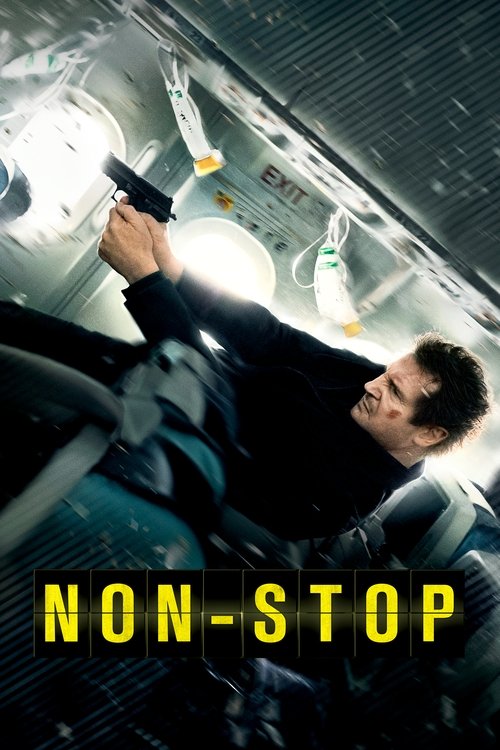





























Popular
What motivates Bill Marks to take action during the flight?
How does the character of Jen Summers contribute to the plot?
What is the significance of the text messages sent to Bill Marks?
How does the character of Captain David McMillan react to the crisis?
What role does the character of the hijacker play in the story?
Should I watch it?
Ask Your Own Question

What is the plot?
Sorry, we aren't able to watch and write up a full detailed plot yet. Check back in a few days.







What is the ending?
In the ending of "Non-Stop," Bill Marks, the air marshal, discovers that the real hijacker is a fellow passenger, Tom Bowen. After a tense confrontation, Marks manages to subdue Bowen and save the remaining passengers. The plane lands safely, and Marks is hailed as a hero. The film concludes with Marks reflecting on his actions and the emotional toll of the events.
As the climax of "Non-Stop" unfolds, the tension aboard the transatlantic flight escalates. Bill Marks, portrayed by Liam Neeson, is in a race against time to uncover the identity of the hijacker who has been threatening to kill passengers every 20 minutes unless a ransom is paid. The atmosphere is thick with fear and suspicion as Marks navigates through a cabin filled with anxious passengers, each of whom could potentially be the culprit.
In the final act, Marks confronts the reality that the hijacker is not just a faceless enemy but someone he has interacted with throughout the flight. The revelation comes when he realizes that Tom Bowen, a seemingly innocent passenger, is the mastermind behind the chaos. The confrontation is fraught with tension; Marks, driven by a mix of desperation and determination, engages Bowen in a physical struggle. The cabin is filled with the sounds of chaos as passengers scream and panic ensues.
As Marks and Bowen grapple, the stakes are incredibly high. Marks is not only fighting for his own life but for the lives of everyone on board. The emotional weight of the situation is palpable; Marks reflects on his past, his failures, and the burden of his role as an air marshal. The internal conflict he faces is mirrored in the external chaos of the plane.
In a pivotal moment, Marks manages to gain the upper hand. He subdues Bowen, using his training and instincts to outmaneuver the hijacker. The passengers, who have been gripped by fear, begin to realize that their savior is not just a figure of authority but a man who has faced his own demons. As Marks restrains Bowen, the tension in the cabin begins to dissipate, replaced by a sense of relief and gratitude.
The plane finally lands safely at the airport, and Marks is met with a mix of applause and disbelief from the passengers. They are grateful for his bravery, but the emotional toll of the ordeal is evident on Marks' face. He has saved lives, but the experience has left him shaken. The film closes with Marks reflecting on the events, hinting at the personal sacrifices he has made and the scars that will remain long after the physical danger has passed.
In the aftermath, the fate of the main characters is revealed. Bill Marks emerges as a reluctant hero, grappling with the trauma of the experience but finding a sense of purpose in his actions. Tom Bowen, the antagonist, is apprehended and taken into custody, his plans thwarted. The passengers, once strangers, share a bond forged through fear and survival, each carrying their own stories of resilience. The film ends on a note of reflection, emphasizing the fragility of life and the unexpected connections formed in moments of crisis.
Is there a post-credit scene?
The movie "Non-Stop," produced in 2014, does not have a post-credit scene. The film concludes with the resolution of the main plot, where the protagonist, Bill Marks, played by Liam Neeson, successfully thwarts the hijacking attempt and saves the passengers on the flight. After the climax, the film wraps up with a sense of closure, focusing on the aftermath of the events and the emotional state of the characters involved, particularly Marks, who reflects on the harrowing experience. The credits roll without any additional scenes or content following them.
What motivates Bill Marks to take action during the flight?
Bill Marks, played by Liam Neeson, is a U.S. Air Marshal who is haunted by the loss of his daughter and struggles with personal demons, including alcoholism. His motivation to take action during the flight stems from a deep sense of duty to protect the passengers and redeem himself from his past failures. As the situation escalates, his determination to save lives becomes intertwined with his quest for personal redemption.
How does the character of Jen Summers contribute to the plot?
Jen Summers, portrayed by Julianne Moore, plays a crucial role in the unfolding drama aboard the flight. Initially, she appears as a supportive passenger who helps Bill Marks navigate the chaos. As the plot progresses, her character becomes more complex, revealing her own vulnerabilities and motivations. Jen's interactions with Marks provide emotional depth and highlight the tension between trust and suspicion as they work together to uncover the identity of the hijacker.
What is the significance of the text messages sent to Bill Marks?
The text messages sent to Bill Marks serve as a catalyst for the entire plot. They begin with a threat to kill a passenger every 20 minutes unless a ransom is paid, creating immediate tension and urgency. These messages not only escalate the stakes but also force Marks to confront his own fears and insecurities. The anonymity of the sender adds to the suspense, as Marks must decipher who he can trust among the passengers while racing against time.
How does the character of Captain David McMillan react to the crisis?
Captain David McMillan, played by Anson Mount, is initially portrayed as a composed and professional leader. However, as the crisis unfolds, his reactions shift from confidence to concern as he realizes the gravity of the situation. McMillan's character embodies the struggle between maintaining control of the aircraft and ensuring the safety of the passengers. His interactions with Marks reveal a growing tension as they navigate the challenges posed by the hijacker's threats.
What role does the character of the hijacker play in the story?
The hijacker, whose identity is initially unknown, serves as the primary antagonist and driving force of the plot. His actions create a tense atmosphere aboard the flight, forcing the characters to confront their fears and suspicions. As the story unfolds, the hijacker's motivations are revealed, adding layers to the narrative and challenging the audience's perceptions of right and wrong. The psychological game he plays with Marks heightens the stakes and drives the emotional intensity of the film.
Is this family friendly?
"Non-Stop," produced in 2014, is primarily an action-thriller that contains several elements that may not be suitable for children or sensitive viewers. Here are some potentially objectionable or upsetting aspects:
-
Violence and Threats: The film features scenes of violence, including physical confrontations and threats against passengers. The tension escalates as the protagonist, Bill Marks, faces a mysterious hijacker.
-
Terrorism Themes: The plot revolves around a hijacking scenario, which may be distressing for some viewers, especially given the realistic portrayal of fear and panic among passengers.
-
Intense Emotional States: Characters experience high levels of stress, fear, and anxiety throughout the film. This emotional intensity may be unsettling for younger audiences.
-
Death and Injury: There are references to potential deaths and injuries, as well as scenes that depict the consequences of the hijacking, which could be disturbing.
-
Language: The film contains strong language that may not be appropriate for younger viewers.
-
Alcohol Use: The main character is shown drinking alcohol, which may not be suitable for children.
These elements contribute to the film's overall tone and may not be appropriate for a family-friendly viewing experience.







