







Popular
What specific events lead to the climax of the film?
What role does the ocean play in the characters' development throughout the film?
How does the relationship between Dr. Sarah and her colleague evolve throughout the film?
What motivates the main character, a marine biologist, to confront her fears in the film?
How does the film depict the theme of fear through the character interactions?
Should I watch it?
Ask Your Own Question

What is the plot?
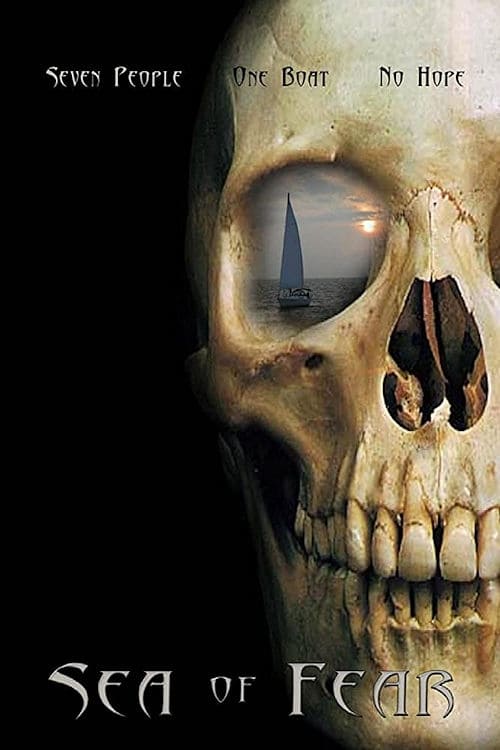
The film opens at a marina where Lance, a college athlete, arrives with his friend Tom to meet Tom's girlfriend Kate and her friend Ashley for what is supposed to be a carefree weekend sail, but the mood is uneasy almost immediately because the boat is not quite the simple rented pleasure craft they expect. Their skipper, the Captain, is already in place with his navigator and first mate Joel, and there is also a strange extra passenger named Derek whose presence is never properly explained, only justified by the Captain with the blunt suggestion that he needed the money. From the start, the trip feels wrong: too many people in too small a space, too much unspoken tension, and the sense that everyone has already agreed to something they do not fully understand.
Once the boat leaves the marina, the open sea swallows the group in isolation. The sailboat becomes both home and prison, a place of polished wood, tight corridors, salt air, and rising suspicion. The four friends try to settle into the trip, but the dynamic is awkward from the beginning. Lance and Tom are close enough to joke and bicker like old friends, while Kate and Ashley bring a more social, teasing energy that briefly masks the discomfort of being cooped up with strangers. The Captain remains guarded, Joel stays dutiful and quiet, and Derek hovers at the edge of the social circle like an unwelcome shadow. The fact that Derek is there at all keeps everyone a little on edge. He looks like a man who does not belong with the others, and the others know it.
The boat makes stops along the way, and the first of these interruptions becomes important later. At one point the ship anchors near an isolated island, and the group goes ashore for a firelit gathering. Night settles in around them, and the campfire becomes the only bright thing in the blackness. Here, with the sea murmuring beyond the shore and the island turning them into a tiny circle of flickering light, the conversation shifts in a way none of them can later escape. They start discussing fear and death, each person revealing the kind of death that terrifies them most. The moment is casual on the surface, almost like a drunken game, but the film treats it like a curse being spoken aloud. Every fear is confessed into the darkness and left hanging there. The fire throws orange light across their faces, and in that moment the audience can almost feel the trap being set.
What follows is a steady collapse of safety. The next morning, while the boat continues its route, Joel the navigator disappears. This is the first concrete rupture in the voyage's illusion of normality. Not only is Joel gone, but the equipment he needs for navigation is gone with him. The ship is left helpless, and the practical consequence of that disappearance is immediate: the group is stranded, or close enough to it that the distinction no longer matters. The boat that was supposed to carry them through a weekend of leisure has become a drifting sealed chamber with no reliable way home. The sea, once scenic, now feels infinite and hostile.
Panic does not arrive all at once. It comes in glances, in arguments, in small shifts of trust. The friends begin to notice that people are missing, that the quiet spaces on the boat are getting quieter, and that every absence feels like a warning. The Captain insists on maintaining control, but his authority erodes as the situation worsens. Derek's role becomes more suspicious with each passing hour, because he remains the least legible figure on board: an unplanned passenger, a financial concession, a man whose motives are never made clear. The question grows from simple discomfort into dread. Who invited him? Why was he allowed to stay? And now that the boat is stranded, who benefits from everyone's fear?
As the killings begin, the film transforms the earlier campfire conversation into a grim blueprint. The murders are not random. Each death is connected to the way the victims described their worst fear, turning their private confessions into execution methods. The horror lies not only in the deaths themselves but in the sadistic intimacy of the pattern. Someone aboard the boat has listened carefully and is now using each person's deepest terror against them. The group realizes, too late, that their own words have been weaponized.
The first shock is not merely that people are dying, but that each death seems tailored to a specific person. The film withholds a clean, simple answer to the identity of the killer for much of the run time, which makes every hallway, every deck, every shadowed corner feel like a possible ambush. On a boat in the middle of the sea, there is nowhere to run and no outside help to call. The violence becomes increasingly personal because the ship itself offers so little space to hide the truth. Doors slam, footsteps echo, and the characters begin to watch one another with the exhausted, frightened stare of people trapped in a sealed test they did not agree to take.
The deaths unfold one by one. Each time the victim is separated from the others, the tension tightens; each time a person vanishes, the survivors are left to look at one another and wonder who has changed, who is hiding something, and who may be next. The movie's structure turns the boat into a moving murder box, where every corridor leads only to another confrontation with death. The emotional effect is brutal: these are not strangers being picked off in an abstract slasher scenario, but a small group forced to witness the destruction of their own circle. Lance and Tom, who entered the story together, are increasingly forced apart by fear. Kate and Ashley, who began the trip as friends, are pushed into survival mode. The Captain, who should represent order, becomes another source of uncertainty. And Derek, who already felt like an intrusion, grows even more suspicious as bodies start disappearing around him.
The atmosphere grows uglier as the survivors argue about what is happening and who can be trusted. Every denial sounds like guilt. Every accusation sounds like desperation. The truth is concealed not by cleverness but by the panic of the living, who can no longer think clearly because they are too busy trying to survive the next hour. The boat's isolation magnifies everything. Salt spray clings to skin, metal rails feel cold and impersonal, and the horizon remains an empty line that offers no rescue. Daylight does not help. It only reveals how trapped they are.
As the killer continues to strike, the pattern of fear-based murder becomes the central revelation. The horror is not simply that someone is killing the passengers; it is that the killer knows them intimately enough to tailor each death to their deepest psychological weakness. The campfire scene stops being a character beat and becomes the story's fatal hinge. The group spoke about death as though it were entertainment, and now the sea answers them with exact and merciless irony. The film keeps pressing the same terrible idea: saying your fear out loud makes it real.
Derek's presence, once a nuisance, increasingly feels like the key to the entire mystery. He was never part of the original social arrangement, and his unexplained inclusion in the trip becomes the kind of detail that can no longer be ignored. The Captain's decision to bring him aboard now seems less like an odd business choice and more like a deliberate act of concealment. The boat's social order has been compromised from the beginning. Something rotten was already aboard before the first death occurred.
The confrontations become more direct as the survivors realize there is no safety in numbers. They search the boat, accuse each other, and retreat in turns, only to be cornered again. Each confrontation ends the same way: with another body, another absence, another layer of trust stripped away. The survivors can no longer distinguish between accident and design, between accident and sabotage, because everything around them has been bent toward murder. The boat may still sail in a technical sense, but narratively it is dead in the water, drifting through a nightmare of its own making.
The final stretch pushes the remaining characters into a last round of fear and exposure. One by one, the survivors are eliminated until only the truth, or something close to it, remains. The killer's identity is finally bound up with the earlier social tensions and the original reason Derek was aboard at all, though the story's primary force lies less in detective revelation than in the fatal inevitability of the pattern. The movie's climax pays off the central idea with bleak efficiency: the deaths are not random acts of violence but the literalization of the fears spoken around the campfire. The sea has become an engine for turning inward terrors into outward death.
The ending completes the sense of inescapability. By the time the final confrontation arrives, the boat is no longer a place of leisure or even a temporary prison; it is a tomb floating on black water. The remaining characters are hunted down in the same enclosed, lonely space where they first tried to make sense of the voyage. The last moments do not offer reassurance or a clean restoration of order. Instead, the film closes on the realization that the weekend trip was doomed from the moment the seven of them gathered and voiced what they feared most. The sequence of disappearances and murders fulfills that dark prophecy exactly, and the open sea, which once promised escape and novelty, becomes the final witness to their destruction.
By the end, the story has resolved into a vicious circle of confession and punishment. The marina, the campfire island, the stranded sailboat, and the empty horizon all connect into one continuous nightmare. The characters who survive long enough to understand what is happening do so only briefly, because understanding does not save anyone. The film's final impression is of inevitability: the group came together for pleasure, revealed their deepest fears in a moment of careless intimacy, and then watched those fears become the shape of their deaths.









What is the ending?
In the ending of "Sea of Fear," the main characters confront their deepest fears and the supernatural entity that has been haunting them. The climax reveals the true nature of the threat, leading to a final confrontation. Ultimately, the characters must face their own inner demons, and the resolution leaves them changed, with some surviving the ordeal while others do not.
As the film approaches its conclusion, the tension escalates. The group of friends, who initially set out for a weekend getaway, find themselves trapped in a nightmarish scenario. They are haunted by a malevolent force that preys on their fears. The atmosphere is thick with dread as they realize that the entity is not just a figment of their imagination but a real threat that has been stalking them throughout their journey.
In the penultimate scene, the characters gather in a dimly lit cabin, their faces etched with fear and desperation. They discuss their experiences, revealing the personal fears that have been brought to the surface. Each character's vulnerability is laid bare, showcasing their emotional states. The tension in the room is palpable as they debate whether to confront the entity or flee. The decision to face their fears is a pivotal moment, highlighting their growth and the bond they share.
As they venture into the dark woods, the atmosphere shifts. Shadows loom, and the sounds of the forest amplify their anxiety. The group splits up, each member confronting their own personal nightmare. The visuals are haunting, with flashes of the supernatural entity appearing to each character, embodying their fears. The cinematography captures their terror, with close-ups of their faces reflecting a mix of horror and determination.
In the final confrontation, the characters come together to face the entity. The climax is intense, filled with suspense as they fight not only for their lives but also for their sanity. The entity reveals its true form, a manifestation of their collective fears. The struggle is fierce, and the emotional stakes are high as they realize that their survival depends on overcoming their inner demons.
As the dust settles, the aftermath of the confrontation is stark. Some characters emerge from the ordeal changed, having faced their fears and found a sense of closure. Others, however, are not so fortunate. The fate of each character is revealed: one character succumbs to the entity, consumed by their fear, while another finds a newfound strength, having confronted their past. The remaining characters are left to grapple with the trauma of their experience, forever altered by the events that transpired.
The film concludes with a haunting silence, the forest now eerily calm. The surviving characters walk away, their expressions a mix of relief and sorrow. They have faced the darkness within themselves and emerged, but the scars of their experience will linger. The final shot lingers on the woods, a reminder of the fears that can haunt us, both seen and unseen.
Is there a post-credit scene?
The movie "Sea of Fear," produced in 2006, does not contain a post-credit scene. The film concludes its narrative without any additional scenes or content after the credits roll. The story wraps up with the resolution of the main plot, focusing on the characters' experiences and the emotional aftermath of their harrowing journey. As the credits begin to roll, viewers are left with the lingering tension and themes of fear and survival that permeate the film, but there are no further revelations or scenes to follow.
What specific events lead to the climax of the film?
The climax of 'Sea of Fear' occurs when the team encounters a massive, aggressive shark while conducting their research. Tensions rise as the shark begins to attack their boat, forcing the characters to confront their fears head-on. Dr. Sarah must make a critical decision to save her team, which tests her courage and resolve, culminating in a dramatic underwater confrontation.
What role does the ocean play in the characters' development throughout the film?
The ocean serves as both a setting and a character in itself, reflecting the internal struggles of the characters. For Dr. Sarah, the ocean represents her fears and the unknown, while for others, it symbolizes adventure and discovery. As the characters face the dangers of the sea, they also confront their personal demons, leading to significant growth and transformation by the film's conclusion.
How does the relationship between Dr. Sarah and her colleague evolve throughout the film?
Initially, Dr. Sarah's relationship with her colleague, Mark, is strained due to their differing views on marine life and the dangers they face. As they encounter various challenges during their expedition, including dangerous sea creatures and personal fears, their bond deepens. Mark becomes a source of support for Sarah, helping her confront her past, which ultimately leads to a romantic connection.
What motivates the main character, a marine biologist, to confront her fears in the film?
The main character, a marine biologist named Dr. Sarah, is driven by a deep-seated need to prove herself after a traumatic incident in her past involving a shark attack. This incident not only instilled a fear of the ocean but also a desire to understand and conquer that fear, leading her to embark on a research expedition despite her internal struggles.
How does the film depict the theme of fear through the character interactions?
Fear is depicted through the interactions between the characters, particularly in moments of crisis. For instance, when faced with the shark, the characters' reactions range from panic to bravery, showcasing their individual coping mechanisms. Dr. Sarah's initial fear contrasts with her eventual determination, highlighting how fear can either paralyze or empower individuals, depending on their choices and support from others.
Is this family friendly?
"Sea of Fear," produced in 2006, is a horror film that contains several elements that may not be suitable for children or sensitive viewers. Here are some potentially objectionable or upsetting aspects:
-
Violence and Gore: The film includes scenes of violence that may be graphic, with depictions of injuries and blood that could be disturbing to younger audiences.
-
Tension and Suspense: The atmosphere is filled with suspense and moments of intense fear, which could be unsettling for children or those who are sensitive to horror themes.
-
Supernatural Elements: The presence of supernatural forces and creatures may evoke fear and anxiety, particularly for viewers who are uncomfortable with horror tropes.
-
Themes of Isolation and Despair: The characters experience feelings of isolation and hopelessness, which could resonate negatively with sensitive viewers.
-
Mature Language: There may be instances of strong language that could be inappropriate for younger audiences.
Overall, the film's horror elements and emotional intensity suggest that it may not be family-friendly and could be upsetting for children or sensitive individuals.








