
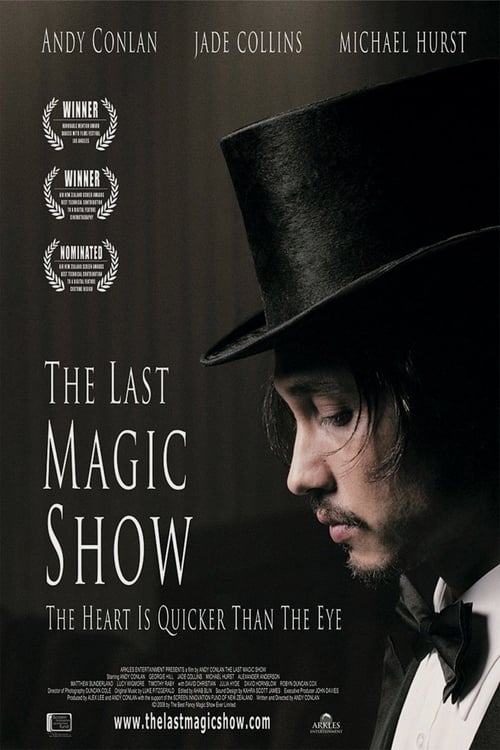




Popular
What motivates the main character, a magician, to perform one last show?
How does the relationship between Max and his daughter evolve throughout the film?
What role does the character of the assistant play in Max's final show?
What specific challenges does Max face while preparing for the last magic show?
How does the theme of legacy manifest in Max's character throughout the film?
Should I watch it?
Ask Your Own Question

What is the plot?
Sorry, we aren't able to watch and write up a full detailed plot yet. Check back in a few days.





What is the ending?
In the ending of "The Last Magic Show," the protagonist, a once-famous magician named Max, faces the reality of his fading career. He performs one last show, reflecting on his past and the relationships he has strained. The show is a mix of nostalgia and desperation, culminating in a heartfelt moment where he reconnects with his estranged daughter. The film concludes with Max accepting his limitations and finding peace in his legacy, while his daughter embraces her own path.
As the final act of "The Last Magic Show" unfolds, the atmosphere is thick with anticipation and a bittersweet sense of finality. The stage is set in a dimly lit theater, the audience buzzing with excitement, unaware of the emotional weight that this performance carries for Max. He stands backstage, his heart racing, a mix of anxiety and determination coursing through him. The memories of his past glories flash before his eyes--standing ovations, the thrill of the spotlight, and the laughter of his daughter, Lily, who once idolized him.
As the curtain rises, Max steps into the light, his face a mask of confidence, though his eyes betray a deep-seated vulnerability. He begins his act with classic tricks, pulling rabbits from hats and performing card illusions, but there's a palpable tension in the air. Each trick feels like a desperate grasp at the past, a longing for the days when he was at the pinnacle of his career. The audience is captivated, but Max's mind drifts to the strained relationship with Lily, who has distanced herself from him due to his obsession with magic and neglect of their bond.
Midway through the performance, Max pauses, the weight of his regrets crashing down on him. He looks out into the audience, searching for Lily's face. When he finally spots her, sitting in the back, her expression is a mix of disappointment and concern. This moment becomes a turning point for Max. He decides to break the fourth wall, speaking directly to the audience about the importance of family and the sacrifices he made for his art. His voice trembles with emotion as he reveals his fears of being forgotten, of leaving nothing behind but illusions.
The show takes a poignant turn as Max incorporates a personal story into his act, recounting the moments he missed with Lily--birthdays, school plays, and simple family dinners. The audience is drawn in, not just by the magic, but by the raw honesty of his words. As he performs his final trick, a grand illusion that symbolizes his desire to reconnect with Lily, he invites her on stage. The moment is charged with emotion; the audience holds its breath as father and daughter stand face to face.
Lily hesitates, but ultimately steps forward, her eyes glistening with unshed tears. Max takes her hand, and in that instant, the barriers between them begin to crumble. He performs the trick, but it's not just about the magic; it's about their reconciliation. The audience erupts in applause, but for Max and Lily, the real magic lies in their renewed bond. They embrace, and in that embrace, both characters find a sense of closure.
As the show concludes, Max takes a bow, his heart lighter than it has been in years. He acknowledges the audience, but his gaze is fixed on Lily, who smiles back at him, a silent promise of a new beginning. The lights dim, and the curtain falls, leaving the audience in a reflective silence.
In the aftermath, we see Max stepping away from the stage, no longer the desperate magician clinging to his past. He has accepted that his time in the spotlight is over, but he has gained something far more valuable--his daughter's love and understanding. Lily, inspired by her father's vulnerability, decides to pursue her own dreams, no longer overshadowed by his legacy. The film closes with a shot of Max and Lily walking out of the theater together, hand in hand, ready to face the future, not as a magician and his daughter, but as a family rediscovering each other.
Is there a post-credit scene?
The Last Magic Show, produced in 2007, does not feature a post-credit scene. The film concludes its narrative without any additional scenes or content after the credits roll. The story wraps up with a poignant resolution, focusing on the themes of loss, redemption, and the enduring power of magic in the face of life's challenges. The absence of a post-credit scene allows the audience to reflect on the emotional journey of the characters and the impact of the magic show itself.
What motivates the main character, a magician, to perform one last show?
The main character, a once-renowned magician named Max, is driven by a deep sense of nostalgia and a desire to reclaim his lost glory. As he faces the reality of aging and fading fame, he feels compelled to perform one last magic show to prove to himself and his audience that he still possesses the talent and passion that once captivated crowds. This motivation is intertwined with his personal struggles, including his relationship with his estranged daughter, which adds emotional weight to his performance.
How does the relationship between Max and his daughter evolve throughout the film?
Initially, Max's relationship with his daughter, Lily, is strained due to years of neglect and disappointment. As the story unfolds, Max's determination to reconnect with her becomes a central theme. Through a series of heartfelt conversations and shared experiences leading up to the magic show, they begin to understand each other's perspectives. Lily's initial resentment gradually transforms into empathy as she witnesses her father's vulnerability and passion for magic, ultimately leading to a reconciliation that is both poignant and cathartic.
What role does the character of the assistant play in Max's final show?
Max's assistant, a young and ambitious performer named Sarah, plays a crucial role in both the magic show and Max's personal journey. Initially, she is eager to step into the spotlight and prove herself, but as the story progresses, she becomes a source of support for Max. Her admiration for his craft and her own struggles with self-doubt mirror Max's journey, creating a bond between them. During the final show, Sarah's presence not only enhances the performance but also symbolizes the passing of the torch, as she learns valuable lessons from Max about the true essence of magic and artistry.
What specific challenges does Max face while preparing for the last magic show?
As Max prepares for his final magic show, he encounters several challenges that test his resolve. Physically, he grapples with the effects of aging, struggling to execute complex tricks that once came easily to him. Emotionally, he battles self-doubt and the fear of failure, haunted by memories of past performances and the audience's expectations. Additionally, he faces logistical issues, such as securing a venue and gathering the necessary props, all while trying to mend his fractured relationship with Lily. These challenges create a sense of urgency and tension, driving the narrative forward as Max strives to overcome them.
How does the theme of legacy manifest in Max's character throughout the film?
Max's character is deeply intertwined with the theme of legacy, as he grapples with what he will leave behind after his final performance. Throughout the film, he reflects on his past successes and failures, questioning whether he has made a meaningful impact on his audience and his family. His desire to create a memorable show is not just about personal redemption; it is also about ensuring that his artistry and passion for magic are remembered. This quest for legacy culminates in his interactions with Lily and Sarah, as he seeks to impart wisdom and inspire the next generation, ultimately redefining what legacy means to him.
Is this family friendly?
"The Last Magic Show," produced in 2007, is a film that blends elements of drama and fantasy, centering around themes of loss, redemption, and the power of belief. While it has a heartwarming core, there are several aspects that may be considered objectionable or upsetting for children or sensitive viewers.
-
Themes of Loss: The film deals with the emotional weight of loss, particularly the loss of a loved one, which may be difficult for younger audiences to process.
-
Depictions of Grief: Characters express deep sorrow and struggle with their emotions, which could be intense for children to witness.
-
Magical Realism: Some scenes involve illusions and magic that may be unsettling or confusing, especially for younger viewers who might not distinguish between reality and fantasy.
-
Emotional Conflict: There are moments of tension and conflict between characters that may evoke feelings of anxiety or discomfort.
-
Mature Themes: The film touches on themes of regret and the consequences of choices made in life, which may resonate more with older audiences.
Overall, while "The Last Magic Show" has a positive message, its exploration of complex emotional themes may not be suitable for all children or sensitive viewers.








