











Popular
What is the significance of the giant transformations that the protagonist undergoes?
How does Daisato's relationship with his grandfather influence his character?
What role do the various monsters play in Daisato's journey?
How does the public's perception of Daisato change throughout the film?
What is the significance of the documentary style of the film?
Should I watch it?
Ask Your Own Question

What is the plot?
Sorry, we aren't able to watch and write up a full detailed plot yet. Check back in a few days.
More Movies Like This
Browse All Movies →





What is the ending?
In the ending of "Big Man Japan," the protagonist, Daisato, faces a final confrontation with a giant monster. After a series of battles that have left him physically and emotionally drained, he ultimately loses the fight. The film concludes with Daisato's defeat, leaving him in a state of despair and isolation, reflecting on his life and the futility of his role as a superhero.
As the film approaches its climax, we find Daisato, the reluctant hero, grappling with the weight of his responsibilities. The scene opens with him in his dilapidated home, surrounded by the remnants of his past glories and the burden of his current failures. He is visibly weary, both physically and emotionally, as he prepares for yet another battle against a monstrous threat to Japan.
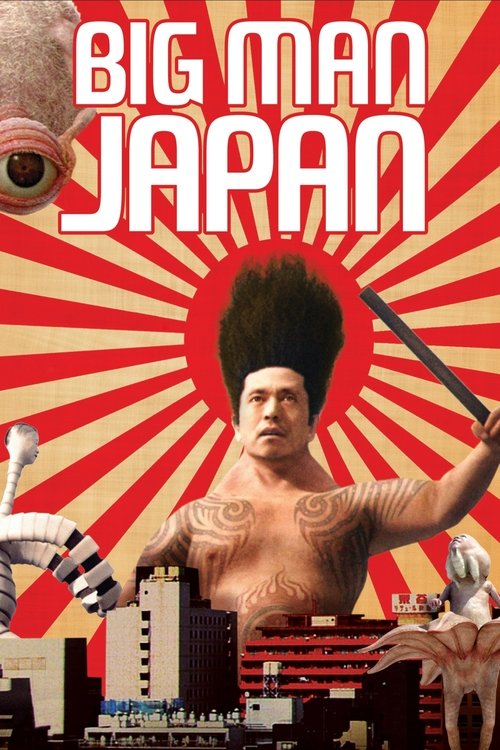
The atmosphere is tense as Daisato transforms into Big Man Japan, growing to an enormous size. The visual spectacle of his transformation is juxtaposed with his internal struggle; he feels the pressure of public expectation and the ridicule he faces from society. As he steps out to confront the latest monster, a colossal creature wreaking havoc, the streets are filled with onlookers, some cheering, others jeering. Daisato's heart is heavy with the knowledge that he is not the hero they want him to be.
The battle begins with a chaotic clash between Daisato and the monster. The animation captures the sheer scale of the confrontation, with buildings crumbling and debris flying as they exchange blows. Daisato fights valiantly, but it is clear that he is outmatched. The monster, a grotesque and powerful being, seems to embody all the frustrations and failures Daisato has faced throughout his life. Each hit he takes is not just physical but also a blow to his self-worth.
As the fight progresses, Daisato's desperation grows. He recalls moments from his past, flashes of his family, his estranged relationships, and the loneliness that has plagued him. The audience sees him not just as a giant fighting a monster, but as a man wrestling with his own demons. The emotional weight of his struggles is palpable, and the stakes feel personal.
In a climactic moment, Daisato attempts a final, desperate move to defeat the monster. However, he is met with overwhelming force, and the creature ultimately overpowers him. The scene is heart-wrenching as Daisato is thrown to the ground, defeated and broken. The camera lingers on his face, capturing the despair and resignation that washes over him. He realizes that despite his efforts, he cannot fulfill the role of the hero that society demands.
The film concludes with Daisato lying defeated, the city in ruins around him. The public's reaction is mixed; some express disappointment, while others seem indifferent. Daisato's fate is sealed as he is left to reflect on his life, the choices he made, and the loneliness that comes with being a misunderstood hero. The final scenes show him returning to his home, a shadow of the man he once was, embodying the film's themes of isolation, the burden of expectation, and the often unrecognized struggles of those who are tasked with being heroes.
Is there a post-credit scene?
In the movie "Big Man Japan," there is indeed a post-credit scene. After the credits roll, the scene opens with a shot of a desolate landscape, hinting at the aftermath of the chaos that has unfolded throughout the film. The camera pans to reveal a small, seemingly abandoned building. Inside, we see a group of scientists or researchers gathered around a table, examining various documents and data.
As they discuss the events that have transpired, their conversation reveals a sense of urgency and concern about the future. They speculate about the potential for new threats and the implications of the giant battles that have occurred. The atmosphere is tense, filled with a mix of anxiety and determination.
One of the scientists suddenly points to a monitor displaying a series of readings, indicating that something unusual is happening. The scene ends on a cliffhanger, leaving viewers with a sense of foreboding and curiosity about what might come next, suggesting that the world of "Big Man Japan" is far from over and that new challenges may arise. This post-credit scene serves to deepen the narrative and hint at future developments in the story.
What is the significance of the giant transformations that the protagonist undergoes?
In 'Big Man Japan', the protagonist, Daisato, transforms into a giant to combat various monsters threatening Japan. Each transformation is not just a physical change but also represents Daisato's internal struggles with his identity, societal expectations, and the burden of heroism. The transformations are often accompanied by a sense of reluctance and fatigue, highlighting his emotional state and the toll that being a giant takes on him.
How does Daisato's relationship with his grandfather influence his character?
Daisato's relationship with his grandfather is complex and deeply influential. His grandfather was also a giant and had a significant impact on Daisato's life choices. Daisato often reflects on his grandfather's legacy, feeling both pride and pressure to live up to it. This relationship adds layers to Daisato's character, as he grapples with the expectations placed upon him and his desire to forge his own path.
What role do the various monsters play in Daisato's journey?
The monsters in 'Big Man Japan' serve as both physical adversaries and symbolic representations of Daisato's personal demons. Each monster embodies different societal issues or personal fears, forcing Daisato to confront not only the external threats but also his own insecurities and failures. The battles are often chaotic and absurd, reflecting the unpredictability of Daisato's life and the challenges he faces.
How does the public's perception of Daisato change throughout the film?
Initially, Daisato is seen as a hero by the public, but as the story progresses, their perception shifts dramatically. The media portrays him as a failure, and public opinion turns against him, leading to feelings of isolation and despair. This change highlights the fickle nature of fame and the pressure Daisato feels to meet the expectations of society, ultimately affecting his mental state and motivation.
What is the significance of the documentary style of the film?
The documentary style of 'Big Man Japan' serves to create a sense of realism and intimacy with Daisato's character. It allows the audience to witness his mundane life juxtaposed with the extraordinary events of his giant battles. This format emphasizes the absurdity of his situation and invites viewers to empathize with his struggles, making his moments of vulnerability and frustration more impactful.
Is this family friendly?
"Big Man Japan," directed by Hitoshi Matsumoto, is not considered family-friendly due to several potentially objectionable elements. Here are some aspects that might be upsetting for children or sensitive viewers:
-
Violence and Destruction: The film features scenes of giant monsters attacking cities, leading to significant destruction and chaos. The violence is often exaggerated and presented in a comedic manner, but it may still be distressing.
-
Body Humor: There are instances of crude humor, including bodily functions and physical comedy that may not be suitable for younger audiences.
-
Mature Themes: The film explores themes of loneliness, societal pressure, and the struggles of the protagonist, which may be difficult for children to understand or relate to.
-
Adult Language: The dialogue includes profanity and adult language that may not be appropriate for younger viewers.
-
Emotional Distress: The main character, Masaru Daisato, experiences feelings of isolation, failure, and existential angst, which could be heavy for sensitive viewers.
Overall, the film's blend of humor and darker themes may not be suitable for children or those who are easily upset by such content.








