

















Popular
What motivates Samir Horn to become involved with the terrorist group?
How does the FBI's investigation into Samir Horn unfold throughout the film?
What role does the character of the terrorist leader, Omar, play in Samir's journey?
How does Samir's relationship with his father influence his actions throughout the film?
What is the significance of the final confrontation between Samir and the FBI?
Should I watch it?
Ask Your Own Question

What is the plot?
Sorry, we aren't able to watch and write up a full detailed plot yet. Check back in a few days.






What is the ending?
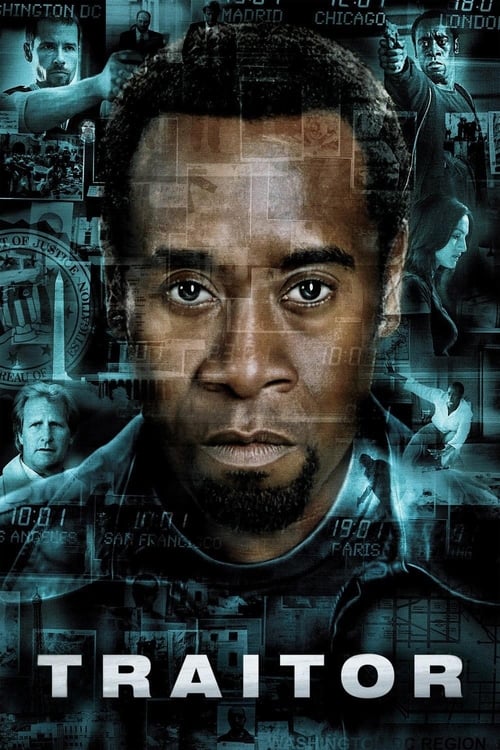
In the ending of "Traitor," Samir Horn, a former U.S. Army officer turned undercover operative, successfully orchestrates a plan to expose a terrorist cell while also ensuring his own safety. He confronts the complexities of loyalty and betrayal, ultimately leading to a tense standoff. The film concludes with Samir's fate left ambiguous, as he walks away from the chaos, leaving viewers to ponder his true allegiance.
As the climax unfolds, the scene shifts to a bustling marketplace in a Middle Eastern city. Samir Horn, portrayed by Don Cheadle, is seen moving through the crowd, his demeanor calm yet alert. He is aware that the stakes are high; he has been working undercover to infiltrate a terrorist organization. The tension in the air is palpable as he prepares to execute a plan that could either save lives or lead to catastrophic consequences.
In the next scene, we see Samir meeting with the terrorist leader, who is unaware of Samir's true intentions. The leader, played with a menacing presence, discusses their plans for an imminent attack. Samir listens intently, his internal conflict evident as he grapples with the moral implications of his role. He knows that he must gain their trust to gather crucial information, but he is also aware of the danger that comes with it.
As the plot thickens, the scene transitions to a U.S. government operations room, where agents are monitoring Samir's movements. They are anxious, aware that he is walking a tightrope between loyalty to his country and the trust he has built with the terrorists. The tension escalates as they prepare to intervene, but they must wait for the right moment to avoid jeopardizing Samir's cover.
The climax reaches its peak when Samir is forced to make a split-second decision during a terrorist meeting. He realizes that the attack is imminent and that innocent lives are at stake. In a moment of bravery, he reveals his true identity to the terrorists, leading to a chaotic confrontation. The scene is filled with frantic energy as gunfire erupts, and chaos ensues in the marketplace. Samir's determination to prevent the attack shines through as he fights to protect the civilians around him.
In the aftermath of the confrontation, we see the consequences of Samir's actions. The terrorist leader is apprehended, but not without significant loss. Samir, battered but resolute, manages to escape the scene. The camera captures his weary expression, reflecting the weight of his choices and the lives affected by the events that unfolded.
As the film draws to a close, Samir is seen walking away from the chaos, his fate uncertain. The audience is left with a lingering sense of ambiguity regarding his true allegiance. Has he fully embraced his role as a protector, or does he still harbor connections to the world he infiltrated? The final shot lingers on his face, a mixture of relief and contemplation, leaving viewers to ponder the complexities of loyalty, betrayal, and the moral gray areas that define his character.
In summary, the fates of the main characters are as follows: Samir Horn survives the ordeal, but his future remains uncertain as he walks away from the scene. The terrorist leader is captured, and the U.S. government agents, who had been monitoring Samir, are left to assess the fallout of the operation. The film concludes with a powerful sense of ambiguity, emphasizing the intricate web of trust and betrayal that defines the characters' journeys.
Is there a post-credit scene?
The movie "Traitor," produced in 2008, does not have a post-credit scene. The film concludes with its final scenes, focusing on the resolution of the main character's journey and the implications of his actions. After the credits roll, there are no additional scenes or content that extend the story or provide further insight into the characters. The film wraps up its narrative without any additional material following the credits.
What motivates Samir Horn to become involved with the terrorist group?
Samir Horn, played by Don Cheadle, is initially portrayed as a former U.S. Special Forces operative who has become disillusioned with his life. His motivations are complex; he is driven by a desire to find a sense of belonging and purpose, which he believes he can achieve by connecting with the extremist group. His background and experiences lead him to question his own identity and loyalties, ultimately pushing him towards the radical ideology.
How does the FBI's investigation into Samir Horn unfold throughout the film?
The FBI, led by Agent Roy Clayton, portrayed by Guy Pearce, becomes increasingly suspicious of Samir as he becomes more involved with the terrorist group. The investigation unfolds through a series of tense scenes where the FBI tracks Samir's movements and communications. Agent Clayton is determined to uncover the truth, leading to a cat-and-mouse dynamic between him and Samir, filled with moments of tension and moral ambiguity as Clayton grapples with the implications of his pursuit.
What role does the character of the terrorist leader, Omar, play in Samir's journey?
Omar, played by Saïd Taghmaoui, serves as a pivotal figure in Samir's transformation. He embodies the radical ideology that Samir is drawn to, and their relationship is marked by a mix of mentorship and manipulation. Omar's charismatic leadership and persuasive rhetoric challenge Samir's beliefs and push him deeper into the world of extremism, while also forcing Samir to confront his own values and the consequences of his choices.
How does Samir's relationship with his father influence his actions throughout the film?
Samir's relationship with his father is strained and complex, serving as a significant emotional anchor for his character. His father, a devout Muslim, represents a more traditional and peaceful interpretation of faith, contrasting sharply with the violent extremism that Samir encounters. This relationship influences Samir's internal conflict, as he grapples with his father's expectations and the path he is choosing, ultimately leading to moments of reflection and regret.
What is the significance of the final confrontation between Samir and the FBI?
The final confrontation between Samir and the FBI is charged with tension and moral complexity. It serves as a culmination of Samir's internal struggle and the external pressures from law enforcement. In this moment, Samir must make a choice that reflects his true beliefs and loyalties, highlighting the themes of betrayal and redemption. The confrontation is not just a physical clash but also an emotional reckoning, as Samir confronts the consequences of his actions and the impact on those around him.
Is this family friendly?
"Traitor," produced in 2008, is a film that delves into themes of terrorism, espionage, and moral ambiguity. While it offers a gripping narrative, it contains several elements that may not be suitable for children or sensitive viewers.
-
Violence and Terrorism: The film includes scenes depicting acts of violence, including bombings and shootings, which can be intense and distressing.
-
Mature Themes: The storyline revolves around complex issues such as betrayal, loyalty, and the moral dilemmas faced by individuals involved in terrorism, which may be difficult for younger audiences to grasp.
-
Language: There are instances of strong language throughout the film that may not be appropriate for children.
-
Emotional Turmoil: Characters experience significant emotional distress, including fear, guilt, and betrayal, which could be upsetting for sensitive viewers.
-
Cultural and Religious Tensions: The film explores themes related to Islamic extremism and the impact of these ideologies, which may be sensitive topics for some audiences.
Overall, "Traitor" is more suited for mature viewers due to its serious subject matter and intense scenes.








