











Popular
What role does the character of the prison warden play in the story?
What motivates Frank to plan his escape from prison?
How does Frank's relationship with his fellow inmates evolve throughout the film?
What is the significance of the flashbacks in Frank's journey?
How does the film depict the theme of hope through Frank's character?
Should I watch it?
Ask Your Own Question

What is the plot?
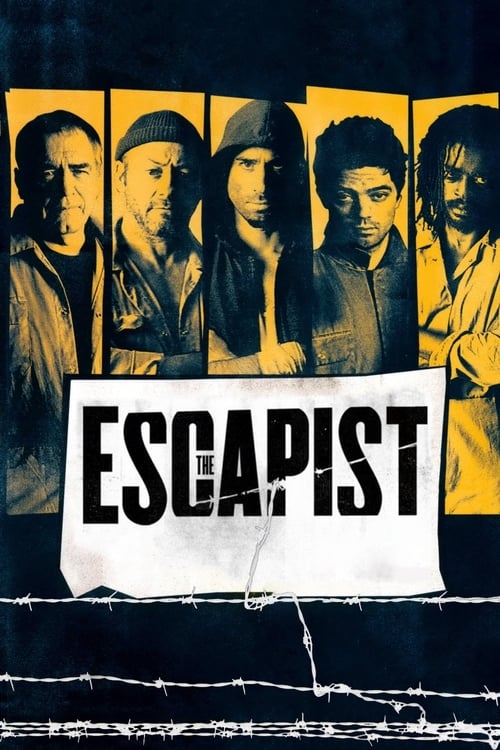
Frank Perry is already an old hand at prison life when the story opens, a lifer who has spent so long inside the London prison that he has stopped imagining any other world. Then a letter arrives after fourteen years of silence, and it tears open the seal on the life he has buried: his estranged daughter has overdosed on drugs and is critically ill, and Frank realizes with a sudden, panicked clarity that if he does nothing, he may lose her forever. That news becomes the story's emotional engine. Frank's goal is no longer freedom for its own sake; he wants to reach his daughter before she dies, and the film begins to move with the tense, determined energy of a man who has finally found a reason to break out.
The prison itself is a brutal, enclosed hierarchy, a place where violence, drugs, status, and fear govern every interaction. Frank has learned to survive by staying quiet and keeping his head down, but now that survival instinct transforms into a plan. He starts gathering the men he needs, each chosen for a specific skill and each carrying his own history of distrust and damage. Lenny Drake is the first crucial recruit, a thief with the ability to get almost any tools together; Brodie follows, because he knows the tunnel system beneath the prison; and Viv Baptista joins because his skill in cooking drugs can be used to buy silence and compliance from the men who might otherwise expose them. The plan is practical on the surface, but emotionally it is fragile from the start, because none of these men truly trust one another, and every favor in prison has a price.
At the same time, the film begins intercutting two timelines: the painstaking preparation for the escape and the escape itself, which will eventually converge on the same violent endpoint. That structure creates constant suspense, because the audience is never allowed to settle into a single line of time. The prison planning scenes are full of furtive looks, coded conversations, and tiny acts of improvisation, while the escape scenes appear as fragments of motion through hidden spaces, suggesting a route that has not yet fully been revealed. Frank is not just planning to leave through the front gate; he is thinking in terms of the prison's hidden anatomy, the spaces under the visible order, the drains, vents, and tunnel systems beneath the official surface of confinement. The route matters because it reflects the film's central idea: the only way out is through what the prison itself hides.
Into this already unstable structure comes James Lacey, a younger new arrival who immediately attracts attention. Lacey is handsome, vulnerable, and conspicuous in the way young prisoners often are in a brutal environment, and that makes him both a liability and, eventually, a source of leverage. His arrival stirs something in Frank as well, because Lacey reminds him of youth, lost time, and all the years he has spent becoming a man the outside world has forgotten. Lacey's presence also draws the eye of Tony, the sadistic, drug-addled brother of the prison's real power broker, Rizza. Tony is the immediate face of menace inside the prison, loud and cruel, moving through the hierarchy with the confidence of someone backed by stronger force. Rizza, his brother, is the wing king and broader criminal authority behind him, the figure whose power makes Tony dangerous even before he acts.
As Frank's plan takes shape, the prison's everyday brutality keeps intruding. Men are beaten, manipulated, humiliated, and used. The film's world is one of constant threat, where weakness is punished and information is currency. Frank knows he cannot move openly, so he works through indirect pressure and layered compromise. He recruits, bargains, and withholds. He brings Viv Baptista into the circle when Tony's interest begins to threaten the secrecy of the plan, because Viv's drug-cooking skill can be used to bribe Tony and keep him from revealing what Frank is doing to Rizza. This is one of the film's crucial moral turns: the escape is never a clean, heroic operation, but a desperate act carried out in a corrupt system where survival often requires feeding the corruption you want to escape.
Meanwhile, the emotional core of the story keeps tightening around Frank's daughter. The letter does more than give him a reason to flee; it forces him to confront his failure as a father. He has been absent for fourteen years, and now the first message he receives from her is a disaster report: she is a junkie, she has overdosed, and she may be dying. The film lingers on Frank's quiet devastation, not as melodrama but as a kind of internal collapse. He is no longer planning an abstract jailbreak; he is racing against death, and the possibility that he will arrive too late makes every subsequent scene feel urgent. Some summaries indicate that when Frank learns his daughter has died, his plan changes again, shifting from rescue to something more like acceptance and sacrifice. That revelation is one of the story's most devastating twists: the escape is no longer about a reunion that can still happen, but about whether Frank can do anything meaningful at all before the prison consumes him.
The preparation grows more precarious as Tony starts to sniff around the conspirators. He is not simply a random thug; he is an active destabilizing force, the kind of man who can turn suspicion into lethal pressure in seconds. When he notices James Lacey, his interest becomes dangerous and invasive, and the new prisoner's vulnerability threatens to expose the others' secrets. Tony's involvement shifts the escape from careful planning into crisis management. Frank's group must improvise, lie, and move faster than they intended. The film repeatedly emphasizes that the plan depends on cooperation among men who dislike each other, and that mutual distrust could destroy them at any moment. Every alliance is temporary. Every silence is tactical. Every gesture may conceal betrayal.
The prison's hidden infrastructure eventually becomes the path forward. The men use a grating in the showers as their point of entry, breaking into the concealed spaces that run beneath the institution. In the film's symbolic logic, the showers--an exposed, vulnerable public space--become the gateway to the buried system under the prison's official face. Brodie's knowledge of the tunnels and the underground network is indispensable here, because without him the others would only have a fantasy of escape rather than a route. Once they breach the grating, they descend into the ventilation and sewage passages beneath the prison, a dark underworld of filth, rust, and narrowing concrete that physically mirrors the moral corruption above them. It is a claustrophobic, nerve-shredding transition from the prison's visible hierarchy into its hidden anatomy.
But the film keeps cutting away from that movement to show the planning phase still unfolding, and the result is a mounting sense that the escape is both imminent and impossibly fragile. Frank is not just organizing bodies; he is managing threat, grief, and timing. He is also trying to hold together a group whose loyalties are unstable. Lenny's theft expertise, Brodie's tunnel knowledge, and Viv's chemistry each solve one problem while creating another. Lacey, meanwhile, becomes the emotional wild card: he is young enough to symbolize lost time, yet dangerous enough to attract the worst attention in the prison. Frank's focus on him suggests a deeper identification, as if Frank sees in Lacey a younger version of himself or the life he once had before prison hardened him into resignation.
As the escape scenes intensify, the outside world starts to intrude on the prison story in a way that deepens the tragedy. Frank receives the terrible confirmation that his daughter has died, and that news does not liberate him emotionally so much as strip away the last practical reason for optimism. Yet even this does not make him stop. Instead, the film reframes his mission as something closer to sacrifice. The escape is still happening, but now it is shadowed by the awareness that he may be moving toward his own death rather than his daughter's bedside. The emotional fuel of the film changes from hope to endurance. He keeps going because there is nothing left to do except complete what he started.
Tony's threat peaks when he becomes directly entangled with the conspiracy and the prisoners' fragile web of deception starts to tear. The sources agree that Tony dies as a result of the escalating conflict, and that his death becomes a pivotal turning point in the plot. In the broad outline of the film, Tony's death is not an accident; it is the consequence of the prison's violent logic collapsing inward on him. He has pushed too far, threatened too many people, and become too much of a liability to the escape. His death removes one immediate obstacle, but it also provokes the larger force behind him: Rizza. Because Tony is Rizza's brother, the killing does not merely solve a problem; it creates a blood debt.
That debt becomes the engine of the climax. Rizza is no longer just a background authority figure; he becomes the man whose wrath shapes the final movement of the story. The prison's social order, which had been threatening throughout, now hardens into a final confrontation between Frank's doomed bid for freedom and the power structure that rules the prison. In one account, Frank is so heavily wounded at the start of the escape attempt by Rizza, in revenge for Tony's death, that he ultimately collapses and bleeds out on the way to freedom. In another telling of the ending, the escape scenes have been Frank's hallucinations while he is actually dying, and the final prison sequence reveals him offering himself to be killed by Rizza in order to distract the guards and let the others escape. Taken together, these sources point to the same essential truth: Frank does not get a clean victory. His escape is inseparable from his death or near-death, and his final act is one of sacrifice.
That sacrifice clarifies the film's ending. The audience has been watching two stories at once--the outward motion through tunnels and the inward story of a man facing the death of his last meaningful relationship--and the climax reveals that Frank's freedom is not really the point. He sacrifices himself to create the distraction that allows the other prisoners to escape. In the final stretch, he climbs toward what appears to be a London Underground exit, one of the film's last images of ascent and possibility, but that image is unstable because the film then snaps back to the prison and exposes the truth: Frank is actually being offered up to Rizza, or dying from the violence inflicted in revenge for Tony. The escape route, which seemed concrete and external, is revealed as psychologically charged and perhaps entirely filtered through Frank's dying mind. If the escape scenes are hallucinations, then the film's final trick is brutal and elegant: Frank gets the freedom he wanted only as an inner vision while his body remains trapped inside the prison's final act of violence.
The emotional meaning of that ending lands hard because it redefines Frank's journey. He starts as a man who has accepted prison as permanent, then becomes a father desperate to see his daughter, and finally becomes a sacrificial figure whose death buys life for others. His daughter's death, rather than ending the story cleanly, strips away the fantasy of reunion and leaves behind an even starker act of human connection: he gives his life so someone else can get out. The other prisoners' escape is the only material success of the plan, and even that success is bought at terrible cost. The prison does not lose its brutality; it merely claims one man while being fooled by the chaos he helps create.
The final scene and resolution are thus deeply tragic. Frank's body is left behind, bleeding out after Rizza's revenge, or effectively dies as the escape is realized in the space of his last hallucinated climb. The others get away because Frank turns himself into the distraction that the prison machine cannot ignore. James Lacey, Lenny Drake, Brodie, and Viv Baptista survive the plan insofar as the escape succeeds for them, but the film refuses any easy triumph. The cost of freedom is the life of the man who made it possible, and the cost of meaning is the realization that Frank will never see the daughter he tried so desperately to reach. The last emotional note is not victory but a grim, luminous act of final purpose: after years of passivity, Frank chooses one last thing to do, and in doing it he breaks open the prison long enough for others to run.



What is the ending?
In the ending of "The Escapist," Frank, the protagonist, successfully escapes from prison but faces a tragic fate. He finds himself in a confrontation with the gang that has been pursuing him. In a desperate attempt to protect his daughter, he sacrifices himself, leading to a violent showdown. The film concludes with Frank's fate left ambiguous, as he is shot, and the screen fades to black.
Now, let's delve into the ending in a more detailed narrative fashion:
As the climax of "The Escapist" unfolds, Frank Perry, portrayed by Brian Cox, has meticulously planned his escape from the prison where he has been incarcerated. The tension is palpable as he and his fellow inmates, including the volatile and unpredictable Lenny, played by Joseph Fiennes, execute their plan under the cover of darkness. The atmosphere is thick with anticipation and fear, as each man grapples with the weight of their choices and the hope of freedom.
The escape is fraught with danger. Frank leads the group through the labyrinthine corridors of the prison, their hearts racing with the thrill of potential freedom. They navigate through the shadows, avoiding guards and surveillance, each step echoing the desperation of their situation. Frank's determination is fueled by the thought of reuniting with his estranged daughter, a driving force that propels him forward despite the risks.
As they reach the outer walls, the group encounters a series of obstacles. Tension escalates when they are confronted by a gang that has been waiting for them, led by a menacing figure who embodies the chaos of the outside world. The confrontation is intense, with Frank's instincts kicking in as he fights to protect not only himself but also his fellow escapees. The stakes are high, and the air is thick with the scent of fear and adrenaline.
In a heart-stopping moment, Frank realizes that the gang is not just a threat to him but also to his daughter, who is unknowingly caught in the crossfire of his past decisions. This realization ignites a fierce protective instinct within him. As the violence escalates, Frank makes a fateful choice. He confronts the gang leader, engaging in a brutal struggle that showcases his desperation and resolve. The fight is raw and visceral, a culmination of Frank's journey through despair and hope.
In the chaos, Frank is shot, and the world around him begins to blur. The camera captures the moment in slow motion, emphasizing the weight of his sacrifice. As he falls, the realization of his fate sinks in, leaving the audience with a haunting sense of loss. The screen fades to black, leaving Frank's ultimate fate ambiguous, a poignant reminder of the sacrifices made in the name of love and redemption.
The other characters, including Lenny and the other inmates, are left to grapple with the aftermath of the escape. Lenny, who has been a source of both conflict and camaraderie, is left to reflect on the choices that led them to this moment. The film closes on a note of uncertainty, highlighting the fragility of hope and the harsh realities of their lives.
In summary, the ending of "The Escapist" encapsulates the themes of sacrifice, the complexity of human relationships, and the relentless pursuit of freedom, leaving the audience to ponder the true cost of escape.
Is there a post-credit scene?
The movie "The Escapist," produced in 2008, does not have a post-credit scene. The film concludes its narrative without any additional scenes or content after the credits roll. The story wraps up with the main character, Frank Perry, having completed his journey, leaving the audience with a sense of closure regarding his escape and the emotional weight of his experiences.
What role does the character of the prison warden play in the story?
The prison warden, portrayed by David Schofield, represents the oppressive authority within the prison system. He is suspicious of Frank and his intentions, creating an atmosphere of tension. The warden's interactions with Frank highlight the power dynamics at play and serve as a constant reminder of the obstacles Frank must overcome to achieve his escape.
What motivates Frank to plan his escape from prison?
Frank, played by Brian Cox, is driven by a deep desire to reconnect with his estranged daughter, whom he has not seen in years. His impending release from prison is overshadowed by the knowledge that he may not have much time left to make amends, as he is suffering from terminal cancer. This urgency fuels his determination to escape.
How does Frank's relationship with his fellow inmates evolve throughout the film?
Initially, Frank is somewhat isolated, but as he begins to share his escape plan, he forms a bond with fellow inmates, particularly with the young and impulsive inmate, Lenny, played by Jack O'Connell. Their relationship is marked by a mix of camaraderie and tension, as Lenny's reckless nature contrasts with Frank's more calculated approach.
What is the significance of the flashbacks in Frank's journey?
The flashbacks serve as a poignant contrast to Frank's current life in prison, revealing his past mistakes and the relationships he has lost, particularly with his daughter. These memories provide insight into his motivations and regrets, deepening the emotional weight of his quest for redemption and freedom.
How does the film depict the theme of hope through Frank's character?
Frank's character embodies hope as he meticulously plans his escape, despite the grim realities of his situation. His determination to reclaim his life and seek forgiveness from his daughter illustrates a profound yearning for redemption. This hope is further emphasized through his interactions with other inmates, as he inspires them to believe in the possibility of a better future.
Is this family friendly?
"The Escapist," produced in 2008, is not considered family-friendly due to its mature themes and content. Here are some potentially objectionable or upsetting aspects that may affect children or sensitive viewers:
-
Violence: The film contains scenes of physical altercations and violence, including prison fights that can be intense and graphic.
-
Language: There is frequent use of strong language throughout the film, which may not be suitable for younger audiences.
-
Themes of Despair and Hopelessness: The narrative explores heavy themes such as despair, loss, and the struggle for redemption, which may be emotionally challenging for some viewers.
-
Drug Use: There are depictions of drug use and addiction, which could be distressing for sensitive viewers.
-
Prison Environment: The setting of a prison brings with it a sense of danger and tension, showcasing the harsh realities of incarceration.
-
Emotional Turmoil: Characters experience significant emotional pain and trauma, which may resonate deeply and be upsetting for some audiences.
Overall, the film's dark tone and mature content make it more suitable for adult viewers.









