




















Popular
What is the significance of the time management system that Frank uses in the movie?
How does Frank's relationship with his wife, Susan, evolve throughout the film?
What role does the character of the daughter, Jess, play in the story?
How does the theme of chaos manifest in Frank's life after the car accident?
What is the impact of Frank's decision to confront his best friend, and how does it affect their relationship?
Should I watch it?
Ask Your Own Question

What is the plot?
Sorry, we aren't able to watch and write up a full detailed plot yet. Check back in a few days.


What is the ending?
In the ending of "Chaos Theory," Frank, after a series of tumultuous events, reconciles with his wife, Susan, and they reaffirm their commitment to each other. Frank also comes to terms with his relationship with his daughter, who has been struggling with her own issues. The film concludes with a sense of hope and renewal as Frank embraces the unpredictability of life.
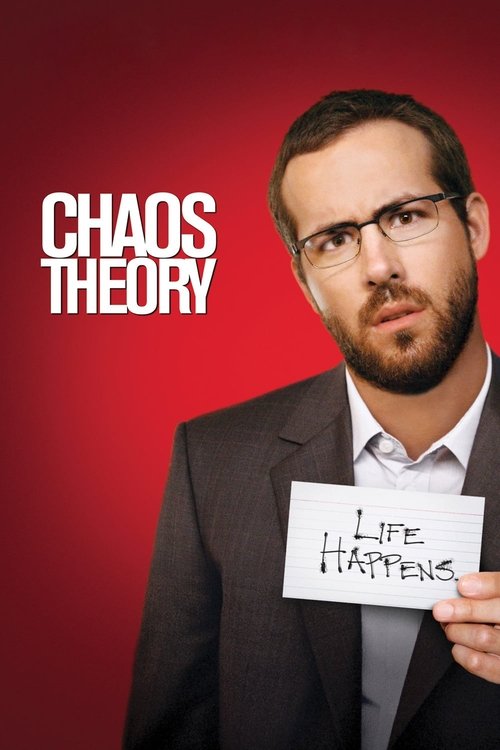
As the film approaches its climax, Frank Allen, played by Ryan Reynolds, finds himself in a whirlwind of emotional turmoil. After discovering that his wife, Susan, has been unfaithful, he grapples with feelings of betrayal and confusion. The tension escalates when Frank confronts Susan about her affair with his best friend, which has been a significant source of his distress.
In a pivotal scene, Frank, feeling lost and desperate, takes a moment to reflect on his life. He stands alone in his home, surrounded by the remnants of his once orderly existence. The chaos of his emotions mirrors the disarray of his surroundings. He realizes that he has been overly controlling, trying to predict every outcome in his life, which has led to his current predicament.
As the narrative unfolds, Frank's daughter, who has been struggling with her own issues, becomes a focal point. She has been feeling neglected and misunderstood, and her relationship with her father has been strained. In a heartfelt moment, Frank reaches out to her, attempting to bridge the gap that has formed between them. He listens to her concerns and acknowledges her feelings, which marks a significant turning point in their relationship.
The climax reaches its peak when Frank and Susan have a raw and honest conversation about their marriage. They confront the pain and misunderstandings that have built up over time. In this emotionally charged scene, both characters express their vulnerabilities, and Frank realizes that he must let go of his need for control. He understands that life is inherently unpredictable, and embracing this chaos is essential for their relationship to heal.
In the final moments of the film, Frank and Susan share a tender embrace, symbolizing their renewed commitment to each other. They acknowledge the challenges they have faced but express a willingness to move forward together. Frank's journey has led him to a place of acceptance, where he understands that love requires trust and the ability to navigate life's uncertainties.
As the credits roll, the audience is left with a sense of hope. Frank has not only reconciled with Susan but has also begun to mend his relationship with his daughter. The film closes on a note of optimism, suggesting that while chaos is an inevitable part of life, it can also lead to growth, understanding, and deeper connections among loved ones. Each character, having faced their own struggles, emerges with a renewed sense of purpose and a commitment to embrace the unpredictability of their lives.
Is there a post-credit scene?
The movie "Chaos Theory," produced in 2008, does not have a post-credit scene. The film concludes its narrative without any additional scenes or content after the credits roll. The story wraps up with the main character, Frank Allen, having navigated through a series of personal and relational challenges, ultimately leading to a resolution that reflects on the themes of control, chaos, and the unpredictability of life. The absence of a post-credit scene aligns with the film's focus on the emotional journey and the lessons learned throughout the plot.
What is the significance of the time management system that Frank uses in the movie?
Frank, played by Ryan Reynolds, uses a meticulous time management system to structure his life and maintain control. This system reflects his personality as a planner and a control freak, which is crucial to understanding his character's journey. The system is visually represented through his daily planner, where he color-codes tasks and schedules, emphasizing his need for order in a chaotic world.
How does Frank's relationship with his wife, Susan, evolve throughout the film?
Frank's relationship with Susan, portrayed by Emily Mortimer, begins as a stable and loving partnership. However, as the plot unfolds, their relationship is tested by secrets and revelations. Frank's discovery of Susan's infidelity leads to emotional turmoil, showcasing his feelings of betrayal and confusion. The tension between them escalates, revealing deeper issues of trust and communication, ultimately forcing them to confront their feelings and the state of their marriage.
What role does the character of the daughter, Jess, play in the story?
Jess, played by Mia Tyler, serves as a pivotal character who embodies innocence and the impact of adult decisions on children. Her interactions with Frank highlight his struggle to balance his responsibilities as a father with his personal crises. Jess's perspective adds emotional depth to the narrative, as she navigates her own challenges while witnessing her father's unraveling life. Her relationship with Frank becomes a catalyst for his self-reflection and growth.
How does the theme of chaos manifest in Frank's life after the car accident?
After the car accident, Frank's life spirals into chaos, symbolizing the unpredictability of life. The accident serves as a turning point, leading to a series of events that unravel his carefully constructed world. Visually, the chaos is depicted through disarray in his personal and professional life, as he struggles to regain control. Emotionally, Frank experiences confusion, anger, and a sense of loss, forcing him to confront the fragility of his existence and the consequences of his previous choices.
What is the impact of Frank's decision to confront his best friend, and how does it affect their relationship?
Frank's decision to confront his best friend, played by Stuart Townsend, is a critical moment in the film. This confrontation stems from feelings of betrayal and anger after discovering the affair with his wife. The emotional intensity of the scene is palpable, as Frank grapples with feelings of hurt and the desire for resolution. The fallout from this confrontation strains their friendship, highlighting themes of loyalty, trust, and the complexities of adult relationships, ultimately leading to a reevaluation of what it means to be a friend.
Is this family friendly?
"Chaos Theory," produced in 2008, is not considered family-friendly due to several potentially objectionable or upsetting scenes. Here are some aspects that may be concerning for children or sensitive viewers:
-
Infidelity: The film explores themes of marital infidelity, which may be uncomfortable for younger audiences or those sensitive to relationship issues.
-
Emotional Turmoil: Characters experience significant emotional distress, including anxiety and depression, which could be upsetting for viewers who are sensitive to mental health topics.
-
Strong Language: The dialogue includes instances of strong language that may not be suitable for children.
-
Adult Themes: The film delves into complex adult themes such as trust, betrayal, and the consequences of choices, which may be difficult for younger viewers to understand.
-
Intense Situations: There are moments of heightened tension and conflict that could be distressing, particularly for sensitive viewers.
Overall, the film's mature themes and emotional depth make it more appropriate for an adult audience.








