





Popular
What rare footage of The Beatles is featured in the film?
How does the film portray the relationship between John Lennon and Paul McCartney?
What specific events from The Beatles' early career are highlighted in the documentary?
Are there any interviews with The Beatles or people close to them in the film?
What emotional moments are captured in the film regarding The Beatles' breakup?
Should I watch it?
Ask Your Own Question

What is the plot?
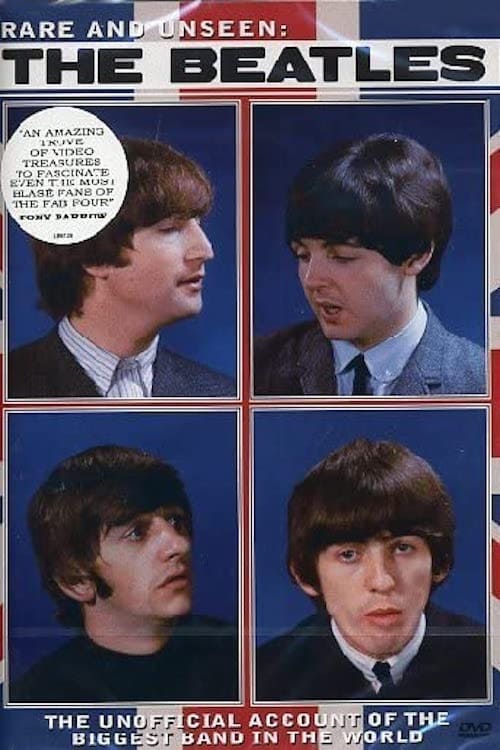
Rare and Unseen: The Beatles opens by presenting the group as four young men from Liverpool who somehow become the most famous band on earth, and the documentary immediately frames that rise as both thrilling and suffocating. It does not begin with a fictionalized scene or a single time-stamped event; instead, it draws you into a collage of rare film, home movies, concert footage, newsreels, photographs, and interviews that makes the Beatles feel simultaneously intimate and untouchable. The first images and testimonies carry the story back to Liverpool, where John Lennon, Paul McCartney, George Harrison, and Ringo Starr are still just working-class lads making music in small spaces, long before the world starts screaming for them. From the beginning, the film's point is clear: the magic is real, but so is the pressure that comes with it.
As the documentary moves forward, the band's momentum becomes the story's pulse. The Beatles are shown rising from local fame into a frenzy that no ordinary career can contain, and the archival material emphasizes how quickly their world shifts from excitement to chaos. The narration and interviews describe the mounting storm around them: crowds pressing in, constant public scrutiny, death threats, plane travel under strain, diplomatic headaches, and an increasingly toxic lack of privacy. What begins as a celebration of success gradually becomes a portrait of exhaustion. The rare footage gives that transformation emotional force because the viewer can watch them smiling, joking, and performing while knowing that the pressure is steadily closing in on all sides.
The documentary repeatedly returns to the contrast between the band's public image and their private reality. On the surface, the Beatles are the unstoppable phenomenon, the face of youth culture itself. Underneath, the film shows the cost of living inside a machine that never stops. Tony Barrow and Tony Bramwell, two of the most important voices in the documentary, help explain the machinery around the group and how quickly it becomes impossible to manage. Their recollections, along with contributions from others who were there from the start, make the story feel less like a distant history lesson and more like a lived experience told by witnesses who saw the collapse of normal life begin in real time.
A major turning point comes as the band's internal disillusionment becomes impossible to ignore. The documentary identifies George Harrison as the first member to openly say he wants to quit, and that revelation lands like a crack in the group's armor. The frustration is not presented as sudden drama but as the inevitable result of years of relentless pressure, endless performing, and growing alienation from the madness surrounding them. The rare footage and interviews underline how the band's fame no longer feels like a dream; it feels like a trap. The emotional temperature drops as the story makes clear that the Beatles are no longer four young men advancing together in one direction. They are becoming individuals with separate needs, separate limits, and separate forms of exhaustion.
That tension sharpens as the film moves toward what it treats as a key historical hinge: the Beatles' final live performance at Candlestick Park in San Francisco on August 29, 1966. The documentary builds this moment with a sense of mounting inevitability, even though no one in the audience or onstage realizes at the time that the performance will be their last. The date and location become loaded with meaning only in hindsight, and the film leans into that tragic irony. The atmosphere around the concert carries both spectacle and fatigue; the Beatles are still the biggest band in the world, but they are already pulling away from the very public arena that made them mythic. Candlestick Park is shown not as a triumphant climax but as a threshold, the final point of contact between the band and the live audience that once defined them.
John Lennon's decision follows as the documentary's most important emotional development after George Harrison's earlier refusal to continue in the same way. After Candlestick Park, Lennon follows Harrison in rejecting the life of endless touring. The film does not stage this as a dramatic breakup scene with shouted arguments; instead, it treats the decision as the quiet end of an era, a turning inward after years of external noise. That subtlety makes it more painful. The Beatles are not blown apart by a single catastrophe. They are worn down by fame itself, by a system that turns every appearance into a trial and every success into another demand.
The documentary's greatest revelation is not a hidden scandal or a secret betrayal but the scale of the illusion surrounding the band's public image. The Beatles look effortless from the outside, but the film reveals the depth of their disillusionment, especially as fame intensifies and privacy disappears. The rare archival materials function like a correction to the myth: instead of the polished legend alone, the viewer sees playful, tired, human, uncertain young men caught in the machinery of a global obsession. The documentary uses that material to show that the band's rise was not a straight ascent into happiness. It was a rapid climb into a kind of golden captivity.
The ending does not offer a conventional dramatic resolution because the story itself is the end of the Beatles as a live-performing unit. The final emotional movement centers on the recognition that the era of public concerts is over. George Harrison's desire to quit and John Lennon's decision after Candlestick Park mark the documentary's closing emotional beat, and the film leaves the viewer with the sense that the Beatles' greatest public chapter has already passed before the world fully understands it. There is no death scene, no murder, and no literal on-screen demise in the documentary's narrative. Instead, the "death" is symbolic: the death of the live Beatles, the death of innocence, and the death of any illusion that fame can remain joyful when it becomes total. The film closes in the shadow of that realization, using the rare footage to preserve the brilliance of the band even as it shows that the cost of being The Beatles is ultimately the loss of a normal life.
In the final stretch, the documentary leaves the audience with a double image: the Beatles as they were seen by the world, and the Beatles as they increasingly understood themselves to be. The public sees greatness; the film reveals strain. The public sees unity; the film reveals withdrawal. The public sees a thrilling ascent; the film ends in the quiet knowledge that the ascent has already turned into an ending. By the time the story reaches its close, the Beatles are no longer heading toward more concerts, more appearances, or more crowd noise. They are moving away from all of it, and that retreat is the documentary's final, aching note.
More Movies Like This
Browse All Movies →




What is the ending?
The ending of "Rare and Unseen: The Beatles" showcases a collection of rare footage and interviews that highlight the band's legacy and impact on music and culture. The film concludes with a montage of their most iconic moments, celebrating their journey and the indelible mark they left on the world.
As the film approaches its conclusion, the screen transitions to a series of clips that encapsulate the essence of The Beatles' journey. The audience is taken through a visual tapestry of their early performances, showcasing their youthful exuberance and the raw energy that captivated fans. The footage is interspersed with interviews from music historians and contemporaries who reflect on the band's revolutionary influence on the music industry.
In one poignant scene, the film presents a rare interview with Paul McCartney, who reminisces about the camaraderie and creative synergy that defined their time together. His eyes glisten with nostalgia as he recalls the joy of creating music with John, George, and Ringo. The emotional weight of his words resonates, revealing the deep bond they shared, even amidst the pressures of fame.
The narrative then shifts to a montage of their later years, highlighting the evolution of their music and the personal struggles they faced. Clips of their final public performance on the rooftop of Apple Corps serve as a powerful reminder of their unity, even as they began to drift apart. The scene captures the raw emotion of the moment, with the band members exchanging glances filled with both joy and an unspoken sense of impending change.
As the film draws to a close, the screen fills with images of fans from around the world, celebrating The Beatles' enduring legacy. The final moments are underscored by the haunting strains of "Let It Be," evoking a sense of hope and reflection. The film ends with a simple yet profound message: the music of The Beatles will continue to inspire generations, a testament to their timeless artistry.
In this way, the film encapsulates the journey of The Beatles, from their rise to fame to their lasting impact, leaving the audience with a sense of closure and appreciation for the band's remarkable story. Each member's fate is subtly acknowledged; Paul McCartney continues to create music, Ringo Starr remains active in the industry, while John Lennon and George Harrison's legacies live on through their contributions to music and culture. The film serves as a celebration of their lives and the music that changed the world.
Is there a post-credit scene?
The movie "Rare and Unseen: The Beatles," produced in 2008, does not feature a post-credit scene. The film primarily focuses on showcasing rare footage and unseen moments of The Beatles, providing an in-depth look at their journey, music, and the cultural impact they had during their time. The narrative concludes with a reflection on their legacy, leaving viewers with a sense of nostalgia and appreciation for the band's influence, but it does not include any additional scenes or content after the credits roll.
What rare footage of The Beatles is featured in the film?
The film showcases a variety of rare and unseen footage of The Beatles, including early performances, candid moments, and behind-the-scenes clips that highlight their personalities and interactions.
How does the film portray the relationship between John Lennon and Paul McCartney?
The film delves into the dynamic between John Lennon and Paul McCartney, illustrating their creative partnership, moments of tension, and the deep bond that influenced their songwriting and public personas.
What specific events from The Beatles' early career are highlighted in the documentary?
The documentary highlights key events from The Beatles' early career, such as their first performances in Liverpool, their rise to fame in the UK, and their groundbreaking appearance on The Ed Sullivan Show.
Are there any interviews with The Beatles or people close to them in the film?
Yes, the film includes interviews with various individuals who were close to The Beatles, providing personal anecdotes and insights into their lives, music, and the cultural impact they had during their peak.
What emotional moments are captured in the film regarding The Beatles' breakup?
The film captures emotional moments surrounding The Beatles' breakup, including reflections on their individual aspirations, the strain of fame, and the poignant sense of loss felt by the band members as they pursued solo careers.
Is this family friendly?
"Rare and Unseen: The Beatles" is a documentary that explores the lives and careers of the iconic band through rare footage and interviews. While the film primarily focuses on their music and cultural impact, there are a few aspects that may be considered potentially objectionable or upsetting for children or sensitive viewers:
-
Historical Context: The film touches on the tumultuous social and political climate of the 1960s, including references to war and civil unrest, which may be difficult for younger audiences to fully understand.
-
Personal Struggles: There are segments that discuss the personal challenges faced by the band members, including issues related to fame, mental health, and relationships, which may evoke emotional responses.
-
Substance Use: The documentary includes references to the band's experimentation with drugs during their career, which may not be suitable for all viewers.
-
Loss and Tragedy: The film addresses the tragic events surrounding the lives of the band members, particularly John Lennon's assassination, which could be distressing for some viewers.
Overall, while the film is primarily a celebration of The Beatles' legacy, these elements may require parental guidance for younger audiences.