














Popular
What motivates the main character, Elijah, to pursue a career in wine?
How does Elijah's relationship with his father impact his journey?
What challenges does Elijah face while trying to become a sommelier?
How does Elijah's passion for wine affect his relationships with others?
What role does the sommelier exam play in the story?
Should I watch it?
Ask Your Own Question

What is the plot?
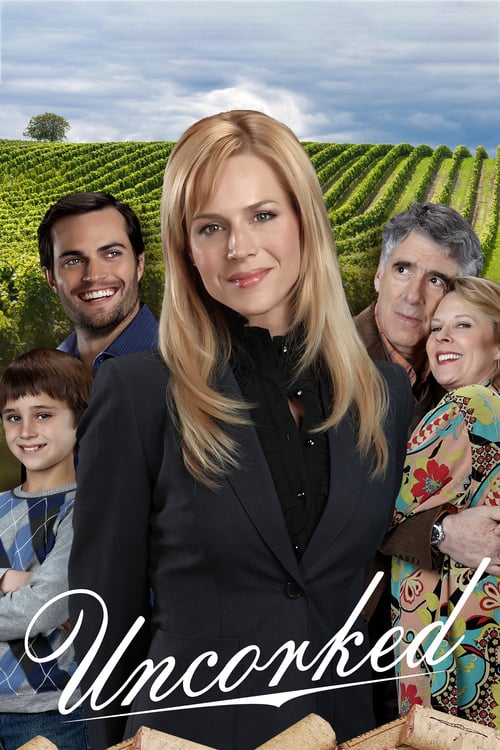
Johnetta "Johnny" Prentice starts the film as a polished, high-powered executive whose entire identity is built around work, status, and control. In the opening stretch, she is fully absorbed in the corporate world, and even her boyfriend, Christopher Stanley, belongs to that same fast-moving, success-obsessed life. Their relationship feels more like a partnership of ambition than a romance, and Johnny seems to be living exactly the life she chose: demanding, efficient, and emotionally sealed off. When her company sends her to a conference in California wine country to help close an important deal with an investor, the trip is supposed to be just another business obligation. Instead, it becomes the moment her life starts to tilt in a completely different direction.
Wine country is presented as an entirely different world from the one Johnny knows. The light is softer, the pace is slower, and the scenery itself seems to invite her to breathe differently. At the conference and around the vineyard, she meets Andrew Browning, a warm, handsome widower who is tied to a family winery and carries himself with the easy, grounded calm that Johnny lacks. Andrew is not just charming; he is rooted. He has a son, Luke Browning, and parents, Sophia Browning and Paul Browning, who are deeply involved in the winery and in each other's lives. The Browning family feels intimate and welcoming in a way Johnny's corporate world never does. At first, she is still all business, but Andrew's steadiness and the family's warmth begin to crack open the rigid shell around her.
Then Johnny's professional world abruptly collapses beneath her. She loses her job, and the loss is not just financial or practical; it is existential. The career she thought defined her is suddenly gone, and the woman who always knew what the next step would be is left adrift in a place she barely knows. That shift changes the tone of the story completely. No longer there on a strict work schedule, she is pulled into Andrew's orbit, and what begins as a temporary interruption becomes something much more personal. Andrew invites her closer to his family and into the everyday life of the winery, and Johnny accepts, partly because she has nowhere else to go and partly because some part of her is already drawn to the life unfolding around her.
As Johnny helps at the Browning family winery, the film slows into a story of emotional rediscovery. She works beside Sophia and Paul, gets to know Luke, and sees how the family depends on one another in practical, affectionate ways. The winery is not glamorous in the way her old career is glamorous, but it is real, and that reality starts to matter to her. She begins to see how much she has sacrificed for success and how little of her life has been lived for joy, love, or connection. Andrew's grief as a widower gives him depth, and Johnny's growing attraction to him is not based on fantasy; it is based on watching a man build a life around love, memory, responsibility, and care. Their connection grows through small moments rather than sweeping declarations, and the chemistry between them builds as she becomes part of his family's rhythms.
One of the most important tensions in the film comes from the fact that Johnny's old life is not fully dead. Christopher Stanley still represents everything she used to value: ambition, momentum, the status-driven world of corporate success. He is the living reminder that she has another path waiting for her if she chooses to return. That pressure intensifies when a new job offer comes into play later in the story. The offer is not just a professional opportunity; it is a test of identity. It asks Johnny to decide whether she wants to go back to the life she once believed she wanted or stay with Andrew and the more emotionally satisfying world she has discovered in wine country.
The conflict is not played as a thriller or a melodrama; it is quieter and more painful than that. Johnny's real battle is internal. She has to confront the fact that she has built a life that looks successful from the outside but feels empty from within. Every scene at the winery, every conversation with Andrew, and every moment with his family gently forces her to see what she has been missing. She is no longer simply a woman whose job has been interrupted. She is a woman standing in the middle of two futures. One future is familiar, prestigious, and safe in the way routine can be safe. The other is uncertain but alive.
No deaths occur in the film. There are no fatal accidents, no murders, no secret killings, and no tragedy of that kind driving the plot. The emotional stakes are the whole story: Johnny is not trying to survive danger, but rather to survive the possibility of wasting her life. Andrew's status as a widower is important because it gives his family life an ache and a tenderness, but the death of his spouse is part of his backstory rather than a present-day event shown in the film. The story stays focused on love, family, and choice rather than loss through violence.
As Johnny spends more time with Andrew, the romance deepens into something that feels surprising even to her. What begins as a chance meeting in wine country becomes a genuine emotional attachment. She sees the way Andrew cares for Luke, the way Sophia and Paul support their son, and the way the winery functions as both a business and a home. That balance is the opposite of everything she has known. Her relationship with Christopher, by contrast, feels increasingly hollow. He stands for the life she thought she should want, but Andrew represents the life she is quietly beginning to need.
The film builds toward its central revelation: Johnny has changed. This is not a secret twist in the conventional sense, but it is the story's true turning point. She realizes that she can no longer measure her worth only by her job title or salary. Helping at the winery has shown her another version of herself, one that is calmer, warmer, and more emotionally open. The job offer forces that revelation into a decision. She must choose between the old ladder of success and the new, uncertain possibility of love and belonging. Christopher's presence sharpens the dilemma, because he embodies her previous identity so completely that being with him would almost mean restoring the person she used to be.
The climax comes from Johnny's confrontation with that choice. She does not simply drift into a decision; she has to actively face the life she is leaving behind. The emotional pressure comes from realizing that the future she once chased may not actually be the future that will make her happy. Andrew, for his part, is not framed as a fantasy prize. He is the man who has opened his family and his life to her, and his love is tied to the place and people she has come to care about. That makes the choice feel rooted and sincere rather than convenient. Johnny has to decide whether love is worth giving up the corporate identity that has defined her for so long.
By the end, the story resolves around Johnny choosing Andrew and the life she has found in wine country rather than returning fully to her old career path. The ending is emotionally affirmative, shaped like a Hallmark romance, where self-discovery and love finally align. The winery, the Browning family, and Andrew's patient presence become the emotional destination of the film. Johnny's arc closes with a sense that she has finally learned to value connection over status, and belonging over the empty triumphs of corporate success. The final scene leaves her transformed, no longer the woman who arrived at the conference expecting to close a deal and leave, but someone who has stepped into a different life entirely.








What is the ending?
In the ending of "Uncorked," the main character, Elijah, faces a pivotal moment in his journey as he prepares for a wine tasting competition. He ultimately decides to pursue his passion for wine rather than conform to his father's expectations of taking over the family barbecue business. The film concludes with Elijah successfully participating in the competition, showcasing his growth and commitment to his dreams.
As the final act unfolds, we find Elijah in a state of nervous anticipation. The scene opens with him standing backstage at the wine tasting competition, surrounded by the buzz of excitement and the clinking of glasses. His heart races as he recalls the journey that brought him here, from his humble beginnings in his father's barbecue restaurant to this moment where he is about to showcase his knowledge and passion for wine.
Elijah's father, Louis, is present in the audience, a mixture of pride and apprehension etched on his face. He has always envisioned Elijah taking over the family business, and the tension between their differing dreams hangs heavy in the air. As Elijah steps onto the stage, he takes a deep breath, channeling the support of his friends and the lessons he learned along the way. The camera captures the intensity of his emotions--his determination to prove himself, not just to his father but to himself.
The competition begins, and Elijah is faced with a series of challenges that test his knowledge of wine. Each question and tasting is a reflection of his hard work and dedication. The cinematography highlights the intricate details of the wines, the swirling colors, and the rich aromas, immersing the audience in the sensory experience. Elijah's confidence grows with each round, and he begins to find his rhythm, showcasing his expertise and passion.
As the competition progresses, we see flashbacks of Elijah's journey--his late-night study sessions, the moments of doubt, and the encouragement from his mentor, who believed in his potential. These memories serve as a backdrop to his current triumphs, illustrating the sacrifices he made to reach this point.
In a climactic moment, Elijah faces the final challenge, a blind tasting that will determine the winner. The tension is palpable as he carefully analyzes the wine, recalling the nuances he learned from his experiences. With a steady hand, he provides his answer, and the judges deliberate. The audience holds its breath, and the camera shifts to Louis, who watches with a mix of hope and concern.
Finally, the results are announced. Elijah is declared the winner, and a wave of emotion washes over him. He stands in disbelief, tears welling in his eyes as he realizes that he has not only won the competition but has also validated his passion and dreams. The applause from the audience is thunderous, and he scans the crowd until his eyes meet his father's. In that moment, Louis stands up, pride radiating from him, and the two share a look of understanding and acceptance.
The film concludes with Elijah celebrating his victory with friends and family, a sense of fulfillment enveloping him. He has chosen his path, and while it diverges from his father's expectations, it is a path that is true to himself. The final scene captures Elijah raising a glass of wine, a symbol of his journey and the new chapter ahead, as the screen fades to black, leaving the audience with a sense of hope and possibility for the future.
Is there a post-credit scene?
The movie "Uncorked," produced in 2009, does not have a post-credit scene. The film concludes without any additional scenes or content after the credits roll. The story wraps up with the main characters' arcs resolved, leaving the audience with a sense of closure regarding their journeys and relationships.
What motivates the main character, Elijah, to pursue a career in wine?
Elijah is driven by a deep passion for wine that he discovered while working at his family's barbecue restaurant. His fascination with the complexities of wine and its ability to enhance culinary experiences fuels his desire to become a sommelier, despite the expectations placed on him by his father to take over the family business.
How does Elijah's relationship with his father impact his journey?
Elijah's relationship with his father, who has high expectations for him to run the family restaurant, creates a significant internal conflict. His father's traditional views clash with Elijah's aspirations, leading to tension and emotional struggles as Elijah seeks to assert his independence and pursue his dreams in the wine industry.
What challenges does Elijah face while trying to become a sommelier?
Elijah faces numerous challenges, including the rigorous training and knowledge required to pass the sommelier exam, the skepticism from his father and peers about his unconventional career choice, and the financial strain of pursuing his passion while balancing his responsibilities at the family restaurant.
How does Elijah's passion for wine affect his relationships with others?
Elijah's passion for wine creates both connections and rifts in his relationships. It brings him closer to his mentor, who recognizes his potential, but it also strains his relationship with his father, who feels neglected and disheartened by Elijah's ambitions. Additionally, his dedication to wine sometimes alienates him from friends who do not share his enthusiasm.
What role does the sommelier exam play in the story?
The sommelier exam serves as a pivotal plot point that encapsulates Elijah's journey. It represents both a personal challenge and a professional milestone. The pressure of preparing for the exam tests his knowledge, resilience, and commitment to his dream, ultimately leading to moments of self-discovery and growth as he confronts his fears and aspirations.
Is this family friendly?
"Uncorked," produced in 2009, is a film that revolves around the world of wine and the personal journey of its characters. While it is not explicitly aimed at children, it does contain themes and scenes that may be sensitive for younger audiences or those who are particularly sensitive.
-
Alcohol Consumption: The film prominently features wine tasting and the culture surrounding alcohol, which may not be suitable for children or those who are uncomfortable with depictions of drinking.
-
Family Conflict: There are scenes that depict tension and conflict within the family, particularly regarding expectations and aspirations. These moments can be emotionally charged and may resonate with viewers who have experienced similar familial struggles.
-
Personal Struggles: Characters face personal challenges and disappointments, which may evoke feelings of sadness or frustration. The emotional weight of these struggles could be upsetting for sensitive viewers.
-
Mature Themes: The film touches on themes of ambition, failure, and the pursuit of dreams, which may be complex for younger audiences to fully grasp.
Overall, while "Uncorked" is not overtly inappropriate, its themes and content may require parental discretion for younger viewers.








