
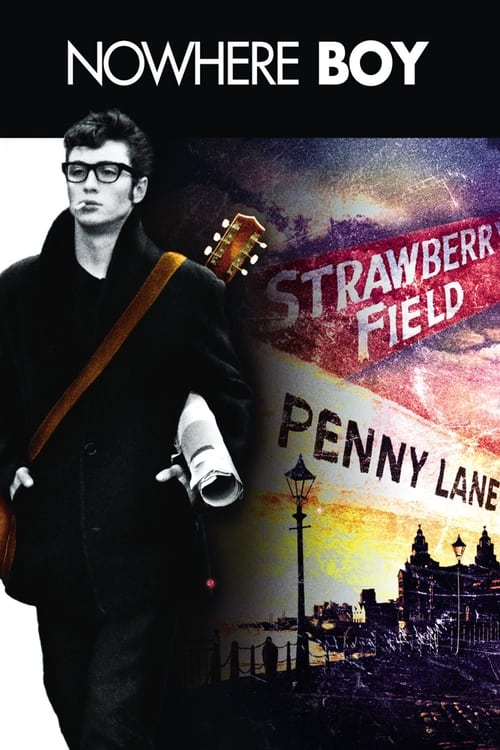























Popular
What is the relationship between John Lennon and his mother Julia in Nowhere Boy?
How does John's relationship with his Aunt Mimi evolve throughout the film?
What role does music play in John's life during his teenage years in the film?
How does the film depict John's relationship with his father?
What impact does Julia's death have on John in the film?
Should I watch it?
Ask Your Own Question

What is the plot?
Sorry, we aren't able to watch and write up a full detailed plot yet. Check back in a few days.






What is the ending?
In the ending of "Nowhere Boy," John Lennon reconciles with his mother, Julia, and they share a moment of connection before he leaves for a new chapter in his life. The film concludes with John embracing his musical future, hinting at the iconic journey that lies ahead for him.
As the film approaches its conclusion, we find John Lennon at a pivotal moment in his life. The scene opens with John, now a young man, grappling with the complexities of his relationships. He has just experienced a tumultuous period marked by the tension between his mother, Julia, and his aunt, Mimi, who raised him. The emotional weight of his past is palpable as he navigates his feelings of abandonment and longing for connection.
In a significant scene, John visits Julia at her home. The atmosphere is charged with unspoken words and unresolved feelings. Julia, who has been a source of both inspiration and pain for John, expresses her desire to be a part of his life. They share a heartfelt conversation, where Julia reveals her own struggles and regrets. This moment is crucial as it allows John to see her not just as his mother, but as a flawed human being trying to find her way.
As they talk, the camera captures the subtle shifts in their expressions, highlighting the emotional stakes of their reunion. John, who has often felt torn between his loyalty to Mimi and his yearning for Julia, begins to understand the complexities of their relationship. The scene is filled with a sense of hope and reconciliation, as they both acknowledge their past mistakes and the love that still exists between them.
After this poignant exchange, John leaves Julia's home, stepping out into the world with a renewed sense of purpose. The film transitions to a montage of John's burgeoning music career, showcasing his passion for rock and roll. He is seen performing with his band, The Quarrymen, and the energy of the music reflects his excitement and determination to carve out his identity as an artist.
The final scenes depict John surrounded by his friends and bandmates, a stark contrast to the loneliness he felt earlier in the film. The camaraderie and shared dreams of the group symbolize John's acceptance of his past and his commitment to his future. As the screen fades to black, the audience is left with the understanding that John Lennon is on the brink of becoming a cultural icon, ready to embrace the challenges and triumphs that lie ahead.
In terms of the fates of the main characters, John emerges with a sense of clarity and direction, having reconciled with Julia and embraced his musical aspirations. Julia, having reconnected with her son, finds a sense of peace, albeit knowing that their relationship will always be complicated. Mimi, who has been a steadfast figure in John's life, remains a source of support, though her protective nature is challenged by John's growing independence. The film closes on a note of optimism, suggesting that while the past may be fraught with pain, the future holds the promise of creativity and connection.
Is there a post-credit scene?
The movie "Nowhere Boy," released in 2009, does not have a post-credit scene. The film concludes with a poignant moment that encapsulates the emotional journey of John Lennon during his teenage years, focusing on his relationships with his mother, Julia, and his aunt, Mimi. The ending leaves viewers with a sense of reflection on John's formative years and the complexities of his family dynamics, but there are no additional scenes or content after the credits.
What is the relationship between John Lennon and his mother Julia in Nowhere Boy?
In 'Nowhere Boy', John Lennon's relationship with his mother, Julia, is complex and deeply emotional. Julia is portrayed as a free-spirited woman who has a tumultuous life, often oscillating between being a nurturing figure and a source of pain for John. After being separated from him during his childhood, she re-enters his life when he is a teenager, and their bond grows as they share a love for music. However, Julia's struggles with her own issues, including her relationships and her mental health, create tension and conflict, leaving John feeling both loved and abandoned.
How does John's relationship with his Aunt Mimi evolve throughout the film?
John's relationship with Aunt Mimi is initially strained, as she represents the strict, conventional side of his upbringing. She is protective and tries to instill discipline in John, often clashing with his rebellious nature. As the film progresses, their relationship deepens; Mimi begins to understand John's passion for music and his need for independence. This evolution is marked by moments of vulnerability, such as when Mimi supports John's aspirations, ultimately leading to a more affectionate and supportive bond.
What role does music play in John's life during his teenage years in the film?
Music is a central theme in 'Nowhere Boy', serving as both an escape and a means of self-expression for John Lennon. As a teenager, he discovers rock and roll, which ignites his passion and shapes his identity. The film showcases key moments where John forms his first band, The Quarrymen, and his interactions with fellow musicians, highlighting how music becomes a vital outlet for his emotions and a way to connect with others, particularly with Julia and his friends.
How does the film depict John's relationship with his father?
In 'Nowhere Boy', John's relationship with his father is largely absent and shrouded in mystery. John grows up without his father, who left the family when he was young, and this absence profoundly affects him. The film reveals John's longing for paternal connection, which is compounded by the conflicting feelings he has towards his mother and Aunt Mimi. When John learns more about his father's identity, it adds layers to his character, fueling his desire for acceptance and understanding.
What impact does Julia's death have on John in the film?
Julia's death is a pivotal moment in 'Nowhere Boy', profoundly impacting John Lennon. Her sudden passing leaves him devastated and feeling a deep sense of loss and abandonment. This tragedy forces John to confront his emotions and the complexities of their relationship, as he grapples with unresolved feelings of love and anger. The event serves as a catalyst for his artistic expression, influencing his music and shaping his identity as he channels his grief into creativity.
Is this family friendly?
"Nowhere Boy," produced in 2009, is a biographical drama that explores the early life of John Lennon before he became famous. While the film is rich in emotional depth and character development, it does contain several elements that may not be suitable for children or sensitive viewers.
-
Family Conflict: The film portrays significant family strife, including tension between John and his mother, Julia, as well as issues with his aunt, Mimi. These conflicts can be emotionally intense and may be upsetting for younger viewers.
-
Depictions of Loss: The narrative touches on themes of loss and abandonment, particularly regarding John's relationship with his parents. This can evoke strong feelings and may be distressing for some.
-
Substance Use: There are scenes that depict smoking and drinking, which may not be appropriate for younger audiences.
-
Emotional Turmoil: John experiences a range of emotions, including anger, confusion, and sadness, as he navigates his complicated family dynamics. These emotional scenes may be heavy for sensitive viewers.
-
Romantic Relationships: The film includes elements of romantic relationships that may involve mature themes, which could be uncomfortable for younger audiences.
Overall, while "Nowhere Boy" offers a poignant look at John Lennon's formative years, its themes and content may not be suitable for all children or sensitive viewers.







