
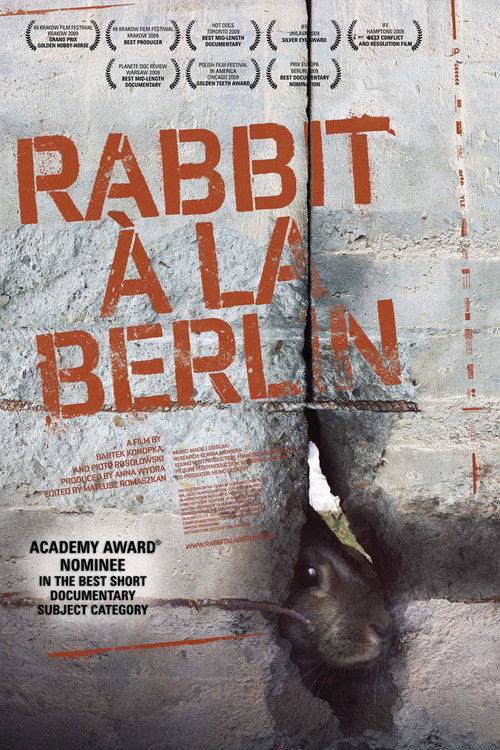



Popular
What role do the rabbits play in the story of Rabbit à la Berlin?
How do the rabbits interact with the environment of Berlin?
What is the significance of the Berlin Wall in the lives of the rabbits?
How do the rabbits' experiences reflect the emotions of the people in Berlin?
What events lead to the rabbits' eventual fate in the film?
Should I watch it?
Ask Your Own Question

What is the plot?
Sorry, we aren't able to watch and write up a full detailed plot yet. Check back in a few days.






What is the ending?
In the ending of "Rabbit à la Berlin," the film culminates with the fate of the rabbits, who have been living in the divided city of Berlin. As the wall falls, the rabbits face a new reality, symbolizing the changes in the city and the lives of its inhabitants. The film closes with a poignant reflection on freedom and the consequences of division.
As the final scenes unfold, the camera captures the rabbits in their enclosure, a stark representation of their existence within the confines of the Berlin Wall. The atmosphere is tense, filled with the sounds of the city around them, a city that has been marked by division and conflict. The rabbits, once symbols of innocence and vulnerability, now find themselves at a crossroads as the wall begins to crumble.
The scene shifts to the moment when the wall falls. The rabbits, initially unaware of the significance of this event, begin to sense a change in their environment. The sounds of celebration and chaos from the human world seep into their enclosure, creating a juxtaposition between their sheltered existence and the tumultuous reality outside. The rabbits' instincts kick in, and they start to explore their surroundings, driven by a newfound curiosity and a desire for freedom.
As they venture out, the rabbits encounter the remnants of the wall, a physical barrier that has defined their lives. They navigate through the debris, their movements filled with a mix of caution and excitement. The visual imagery of the rabbits against the backdrop of the fallen wall serves as a powerful metaphor for the breaking down of barriers, both physical and emotional.
In the final moments, the rabbits are seen moving freely in the open space, a stark contrast to their previous confinement. The camera lingers on their movements, capturing the essence of liberation and the instinctual drive to explore. The film concludes with a sense of ambiguity, leaving the audience to ponder the implications of freedom and the responsibilities that come with it.
The fate of the main characters, represented by the rabbits, is one of transformation. They transition from a life of captivity to one of exploration and potential, embodying the broader themes of change and the impact of societal shifts. The ending resonates with the idea that while freedom brings opportunities, it also comes with uncertainty and the need to navigate a new world.
Is there a post-credit scene?
"Rabbit à la Berlin," a 2009 documentary by Bartek Konopka and Piotr Rosołowski, does not feature a post-credit scene. The film focuses on the story of wild rabbits living in the no-man's land of the Berlin Wall, exploring themes of survival, freedom, and the impact of human conflict on nature. The narrative is built around the rabbits' experiences and the historical context of Berlin during the Cold War, rather than including any additional scenes or content after the credits. The film concludes with a poignant reflection on the rabbits' existence in a divided city, leaving viewers with a sense of contemplation rather than a traditional cinematic twist or additional narrative.
What role do the rabbits play in the story of Rabbit à la Berlin?
In Rabbit à la Berlin, the rabbits symbolize the division of Berlin and the impact of the Berlin Wall on the lives of the city's inhabitants. They are depicted as innocent creatures navigating a harsh environment, reflecting the struggles of people living in a divided city.
How do the rabbits interact with the environment of Berlin?
The rabbits in Rabbit à la Berlin are shown foraging for food and trying to survive in the urban landscape of Berlin, which is marked by the presence of the Berlin Wall. Their interactions with the environment highlight the stark contrast between their natural instincts and the man-made barriers that disrupt their lives.
What is the significance of the Berlin Wall in the lives of the rabbits?
The Berlin Wall serves as a physical barrier that confines the rabbits to a limited space, mirroring the restrictions placed on the people of Berlin during the Cold War. The wall's presence creates a sense of danger and uncertainty for the rabbits, as they must navigate the threats posed by both the wall and the human inhabitants of the city.
How do the rabbits' experiences reflect the emotions of the people in Berlin?
The experiences of the rabbits in Rabbit à la Berlin evoke feelings of fear, isolation, and resilience, paralleling the emotional states of the people living in a divided Berlin. Their struggles to find food and safety resonate with the human desire for freedom and connection in a fractured society.
What events lead to the rabbits' eventual fate in the film?
Throughout Rabbit à la Berlin, the rabbits face various challenges, including the dangers posed by humans and the harsh realities of their environment. Their fate is ultimately sealed by the changing political landscape, as the fall of the Berlin Wall alters their habitat and the dynamics of survival in the city.
Is this family friendly?
"Rabbit à la Berlin" is a documentary that explores the lives of rabbits living in the no-man's land of the Berlin Wall. While it is not a traditional family film, it does not contain explicit content. However, there are some potentially objectionable or upsetting aspects that may affect children or sensitive viewers:
-
Themes of War and Division: The film discusses the historical context of the Berlin Wall, which may be difficult for younger viewers to understand. The implications of division and conflict can evoke feelings of sadness or confusion.
-
Animal Struggles: The documentary depicts the harsh realities of the rabbits' lives in a war-torn environment, including their struggles for survival. This may be distressing for viewers who are sensitive to animal welfare issues.
-
Visuals of Desolation: The imagery of the Berlin Wall and the surrounding desolate landscape can be stark and somber, potentially evoking feelings of despair or melancholy.
-
Existential Themes: The film touches on themes of existence, freedom, and survival in a divided world, which may be heavy for younger audiences to process.
Overall, while "Rabbit à la Berlin" does not contain graphic content, its themes and emotional weight may not be suitable for all children or sensitive viewers.







