
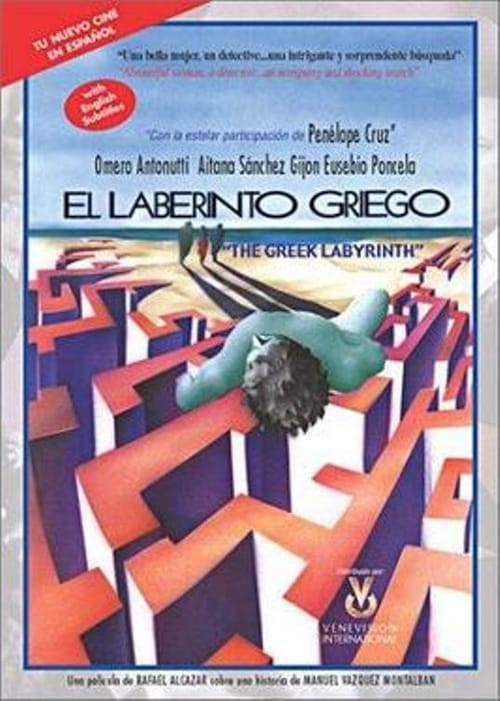









Popular
What is the significance of the labyrinth in the story?
How does the character of Theseus evolve throughout the film?
What role does the Minotaur play in the protagonist's journey?
How does the relationship between Theseus and Ariadne develop throughout the film?
What is the significance of the sacrifices made by the characters in the labyrinth?
Should I watch it?
Ask Your Own Question

What is the plot?
Sorry, we aren't able to watch and write up a full detailed plot yet. Check back in a few days.









What is the ending?
In the ending of "The Greek Labyrinth," the protagonist, Alex, confronts the truth about his family's past and the labyrinthine secrets that have haunted him. He ultimately finds a way to escape the emotional and physical confines of his heritage, leading to a resolution that allows him to move forward with his life. The film concludes with a sense of closure as Alex embraces his newfound freedom.
As the final act unfolds, the tension escalates within the labyrinthine setting that symbolizes Alex's internal struggles. The scene opens with Alex standing at the entrance of the labyrinth, a place that has been both a physical and metaphorical representation of his family's dark history. The air is thick with anticipation, and shadows dance along the stone walls, echoing the secrets that have been buried for generations.
Alex takes a deep breath, his heart racing as he steps inside. The dim light flickers, casting eerie shapes that remind him of the fears he has carried for so long. Each turn he takes in the labyrinth feels like a confrontation with his past, and he is haunted by memories of his family--particularly his father, whose oppressive presence looms large in his mind. As he navigates the twists and turns, Alex's internal conflict becomes palpable; he is torn between the loyalty to his family and the desire to break free from their legacy.
In a pivotal moment, Alex encounters a series of visions that reveal the truth about his father's actions and the impact they had on their family. These visions are vivid and emotionally charged, showcasing moments of betrayal, love, and loss. Alex's face reflects a mixture of anger and sorrow as he grapples with the realization that he must confront his father's legacy head-on. The labyrinth becomes a battleground for his emotions, and with each revelation, he grows more determined to reclaim his identity.
As he reaches the heart of the labyrinth, Alex finds himself face-to-face with a manifestation of his father. This confrontation is intense, filled with raw emotion as Alex expresses his pain and frustration. The dialogue is charged, revealing the deep-seated issues that have plagued their relationship. Alex's voice trembles with a mix of defiance and vulnerability as he declares his intention to break free from the cycle of fear and control that has defined his family.
In a climactic moment, Alex makes a choice that symbolizes his liberation. He rejects the darkness that his father represents, choosing instead to embrace his own path. The labyrinth begins to shift around him, the walls crumbling as he steps away from the shadows of his past. This transformation is visually striking, with light flooding the space as the labyrinth collapses, signifying the end of the hold his family's legacy has on him.
As the dust settles, Alex emerges from the ruins of the labyrinth, a look of determination etched on his face. He stands in the sunlight, a stark contrast to the darkness he has just escaped. The emotional weight of his journey is evident in his expression; he has faced his fears and emerged stronger. The final scenes show him reconnecting with loved ones, symbolizing a new beginning. He is no longer bound by the labyrinth of his family's history but is instead ready to forge his own path.
The film concludes with a sense of hope and renewal. Alex's journey through the labyrinth has not only been a physical one but also a profound emotional journey toward self-acceptance and freedom. The fate of the main characters is clear: Alex has broken free from the chains of his past, while the remnants of his family's legacy are left behind in the crumbling labyrinth, a testament to his resilience and growth.
Is there a post-credit scene?
The movie "The Greek Labyrinth," produced in 1993, does not feature a post-credit scene. The film concludes its narrative without any additional scenes or content after the credits roll. The story wraps up with a sense of resolution, focusing on the characters' journeys and the themes explored throughout the film. As such, viewers are left with the final moments of the film, which encapsulate the emotional and thematic essence of the story without any further developments or surprises in the credits.
What is the significance of the labyrinth in the story?
The labyrinth in 'The Greek Labyrinth' serves as a physical and metaphorical representation of the characters' journeys. It symbolizes the complex paths they must navigate in their lives, filled with challenges and choices that reflect their inner struggles and desires.
How does the character of Theseus evolve throughout the film?
Theseus begins as a confident and ambitious young man, eager to prove himself. As he navigates the labyrinth and confronts various challenges, he experiences moments of doubt and fear, leading to a deeper understanding of his own limitations and the weight of his responsibilities.
What role does the Minotaur play in the protagonist's journey?
The Minotaur represents the darker aspects of Theseus's psyche and the fears he must confront. As he faces the creature, it becomes a pivotal moment of self-discovery, forcing him to reconcile his ambitions with the consequences of his actions.
How does the relationship between Theseus and Ariadne develop throughout the film?
The relationship between Theseus and Ariadne begins with mutual attraction and shared goals. However, as the story progresses, their bond is tested by the challenges of the labyrinth and the sacrifices they must make, leading to moments of tension and emotional depth as they navigate their feelings for each other.
What is the significance of the sacrifices made by the characters in the labyrinth?
The sacrifices made by the characters highlight the themes of love, loyalty, and the cost of ambition. Each character faces a choice that reflects their values and desires, ultimately shaping their destinies and the outcomes of their journeys within the labyrinth.
Is this family friendly?
"The Greek Labyrinth," produced in 1993, is a film that intertwines elements of adventure and mythology. While it is generally suitable for a family audience, there are a few aspects that may be considered objectionable or upsetting for children or sensitive viewers:
-
Dark Themes: The film explores themes of sacrifice, betrayal, and the struggle against fate, which may be intense for younger viewers.
-
Violence: There are scenes that depict confrontations and battles, which may include mild violence or perilous situations that could be frightening.
-
Mythological Creatures: The presence of mythological beings, such as the Minotaur, may be unsettling for some children due to their monstrous nature.
-
Emotional Turmoil: Characters experience significant emotional distress, including fear, loss, and desperation, which could be heavy for sensitive audiences.
-
Mature Concepts: The film touches on complex ideas about destiny and moral choices that may be difficult for younger viewers to fully grasp.
Overall, while "The Greek Labyrinth" can be enjoyed by families, parental guidance is recommended for younger children or those who may be sensitive to the aforementioned themes.









