






Popular
What is the significance of the White Rabbit in Alice's journey?
How does Alice's encounter with the Caterpillar influence her character development?
What role does the Mad Hatter play in Alice's understanding of Wonderland?
How does the Queen of Hearts represent authority in Wonderland?
What is the significance of the Cheshire Cat's appearances in the story?
Should I watch it?
Ask Your Own Question

What is the plot?
Sorry, we aren't able to watch and write up a full detailed plot yet. Check back in a few days.



What is the ending?
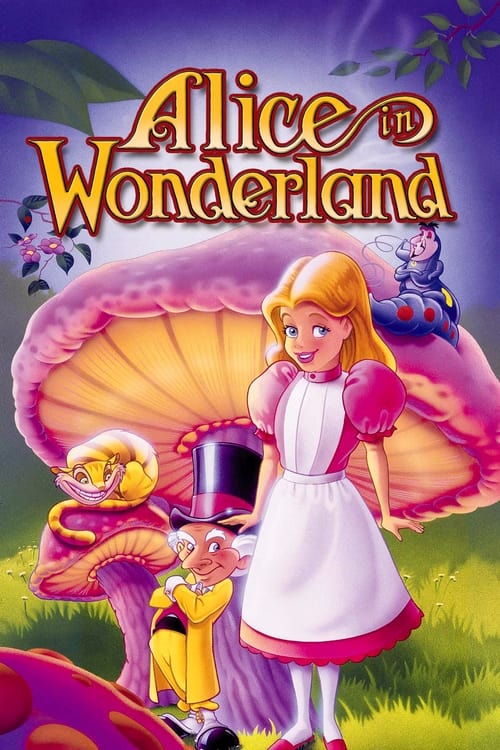
In the 1995 film "Alice in Wonderland," the ending sees Alice confront the Queen of Hearts in a trial where the Knave of Hearts is accused of stealing tarts. As the trial unfolds, Alice grows in confidence and challenges the absurdity of the court. Ultimately, she declares that the Queen is nothing but a pack of cards, leading to a chaotic climax where the cards fly at her. Alice then wakes up from her dream, realizing it was all a fantastical adventure.
Now, let's delve into the ending in a more detailed narrative fashion:
As the trial begins, the courtroom is filled with a cacophony of noise and chaos. The Queen of Hearts, with her imposing presence and fierce demeanor, presides over the proceedings, demanding order. Alice, still a young girl but now more assertive, stands as a witness. The Knave of Hearts, accused of stealing the Queen's tarts, sits nervously, glancing at the Queen, who is quick to anger.
The trial is absurd, filled with nonsensical rules and illogical testimonies. The Mad Hatter and the March Hare are called to testify, but their answers only confuse the court further. Alice watches, her frustration growing as the Queen's tyranny becomes evident. The Queen, with her booming voice, frequently shouts, "Off with their heads!" at anyone who dares to question her authority.
As the trial progresses, Alice's internal conflict becomes clear. She feels small and powerless in this bizarre world, yet she is determined to stand up for what is right. The more she witnesses the injustice around her, the more her confidence builds. She begins to speak out against the absurdity of the trial, challenging the Queen's authority and the nonsensical nature of the proceedings.
In a pivotal moment, Alice stands tall and declares that the Queen is nothing but a pack of cards. This bold statement sends shockwaves through the courtroom. The Queen, enraged, orders her guards to seize Alice, but the cards begin to flutter and fly around her, creating a whirlwind of chaos. The scene is filled with vibrant colors and frantic movement, symbolizing Alice's awakening and empowerment.
As the cards swirl around her, Alice feels a sense of liberation. The dreamlike quality of Wonderland begins to dissolve, and she finds herself waking up in her sister's lap, back in the real world. The transition from the chaotic courtroom to the serene garden is stark, highlighting the contrast between the absurdity of Wonderland and the familiarity of her own life.
In the final moments, Alice reflects on her adventure, a smile playing on her lips as she recalls the whimsical characters she met. Her sister, still reading, encourages Alice to share her story, and Alice expresses her desire to remember the lessons learned in Wonderland. The film closes with a sense of wonder and possibility, as Alice embraces her imagination and the adventures that lie ahead.
In terms of character fates, the Queen of Hearts remains a tyrant, her authority challenged but not diminished. The Knave of Hearts is left in a state of uncertainty, his fate tied to the Queen's whims. The Mad Hatter and the March Hare return to their nonsensical lives, forever caught in the absurdity of Wonderland. Alice, however, emerges transformed, having gained confidence and a deeper understanding of herself and the world around her. She leaves Wonderland behind but carries its lessons with her into reality.
Is there a post-credit scene?
The 1995 adaptation of "Alice in Wonderland" does not contain a post-credit scene. The film concludes with Alice's journey through Wonderland and her eventual return to reality, leaving the story wrapped up without any additional scenes after the credits. The focus remains on her adventures and the whimsical characters she encounters throughout her time in Wonderland, emphasizing her growth and the lessons learned during her fantastical experiences.
What is the significance of the White Rabbit in Alice's journey?
The White Rabbit serves as the catalyst for Alice's adventure in Wonderland. He is the first character she encounters, dressed in a waistcoat and fretting about being late. His hurried demeanor and the mysterious nature of his existence pique Alice's curiosity, prompting her to follow him down the rabbit hole. This act of following the White Rabbit symbolizes Alice's initial leap into the unknown, setting the stage for her exploration of a fantastical world.
How does Alice's encounter with the Caterpillar influence her character development?
Alice's meeting with the Caterpillar is a pivotal moment in her journey. The Caterpillar, sitting atop a mushroom and smoking a hookah, challenges Alice's identity by asking her, 'Who are you?' This question forces Alice to confront her own sense of self, which is particularly tumultuous as she navigates the bizarre rules of Wonderland. The Caterpillar's advice about the mushroom, which can make her grow or shrink, symbolizes the choices she must make regarding her identity and her place in the world.
What role does the Mad Hatter play in Alice's understanding of Wonderland?
The Mad Hatter embodies the chaos and absurdity of Wonderland. His nonsensical tea party with the March Hare and the Dormouse illustrates the illogical nature of the world Alice has entered. Through her interactions with the Hatter, Alice begins to grasp the concept of madness and the fluidity of time, as the Hatter's riddles and paradoxes challenge her perceptions. His whimsical yet erratic behavior reflects the theme of identity and the struggle to find meaning in a nonsensical environment.
How does the Queen of Hearts represent authority in Wonderland?
The Queen of Hearts is a tyrannical figure who embodies the arbitrary and often cruel nature of authority in Wonderland. Her frequent exclamations of 'Off with their heads!' highlight her volatile temperament and the fear she instills in others. Alice's encounters with the Queen force her to confront the absurdity of power and the consequences of defiance. The Queen's character serves as a foil to Alice's growing assertiveness, as Alice learns to stand up for herself and challenge the Queen's unjust rule.
What is the significance of the Cheshire Cat's appearances in the story?
The Cheshire Cat plays a crucial role in guiding Alice through Wonderland. With his enigmatic grin and ability to appear and disappear at will, he represents the fluidity of reality in this strange world. The Cat's philosophical insights, particularly about the nature of madness and the importance of choosing one's path, resonate deeply with Alice as she navigates her identity crisis. His presence serves as a reminder that in Wonderland, nothing is fixed, and understanding oneself is a journey filled with uncertainty.
Is this family friendly?
The 1995 adaptation of "Alice in Wonderland" is generally considered family-friendly, but it does contain some scenes that may be unsettling for younger viewers or sensitive individuals. Here are a few aspects to consider:
-
Dark Imagery: The film features some surreal and dark visual elements that may be disconcerting, such as the Queen of Hearts' intimidating presence and her harsh demeanor.
-
Themes of Isolation: Alice experiences feelings of confusion and isolation as she navigates the strange world, which may resonate with children who are sensitive to themes of loneliness.
-
Characters in Distress: Some characters, like the Mad Hatter and the March Hare, exhibit erratic behavior that could be interpreted as distressing or unsettling.
-
Absurdity and Frustration: The nonsensical nature of Wonderland can lead to moments of frustration for Alice, which might be difficult for younger viewers to understand or relate to.
-
Potentially Scary Creatures: Certain creatures and characters, such as the Jabberwocky, may appear frightening due to their unusual designs and behaviors.
While these elements may not be overtly objectionable, they could evoke strong emotions or discomfort in some children. Parental guidance is recommended for younger audiences.









