












Popular
What motivates the main character, Fatty, to go on a diet?
How does the relationship between Fatty and Ah Choi develop throughout the film?
What role does the character of the personal trainer play in Fatty's journey?
What challenges does Fatty face while trying to lose weight?
How does Fatty's family react to her weight loss and transformation?
Should I watch it?
Ask Your Own Question

What is the plot?
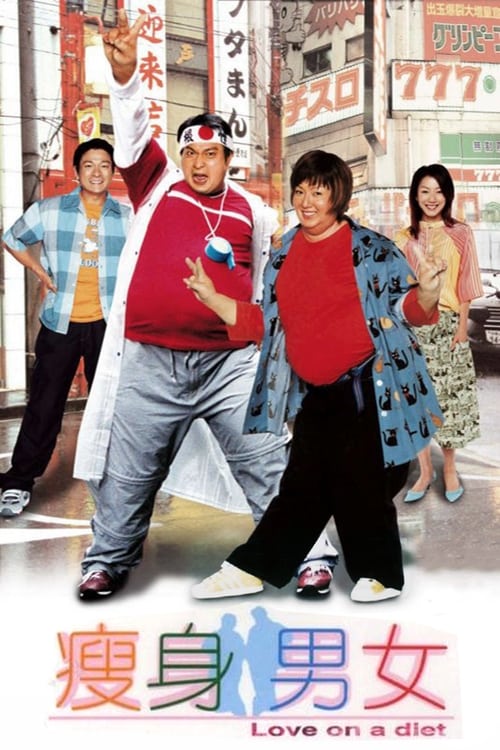
Mini Mo first appears in Japan as a woman so crushed by loneliness that her life has collapsed into binge eating, self-loathing, and a desperate, almost hopeless isolation. Ten years earlier, she has fallen in love with Kurokawa, a promising pianist she meets while living in Japan, and the two make a promise that sounds romantic enough to survive time itself: they will meet again ten years later at the foot of Yokohama Marine Tower. That promise becomes the emotional spine of her entire life, but the years do not pass kindly. Kurokawa leaves Japan to pursue music, eventually becoming a world-famous pianist, and Mini, abandoned and unable to bear the separation, turns to food as consolation. The film opens with her already transformed by grief into extreme obesity, her apartment and daily life reflecting a total retreat from the world. She is not simply overweight; she is emotionally stranded, living as though the years since the breakup have been swallowed whole by pain.
Her despair reaches its breaking point when she attempts suicide. That failed attempt becomes the moment that changes the course of the story, because it brings her into contact with Fatso, a Hong Kong salesman who is working in Japan. Fatso is himself obese, awkward, and initially defensive, and he has no desire to become entangled in a stranger's emotional crisis. Yet he is the only person who stays near Mini after the attempt, and his reluctant presence becomes the first thread of real support in her life. At first, he is irritated by her dependence and by how easily she latches onto him, but the film quickly establishes that he cannot remain indifferent once he understands how broken she is. Mini's pain is visible in every movement and every embarrassed glance; Fatso's own weight makes him a natural target for the film's comic tone, but underneath the humor he becomes a quiet, loyal guardian. He begins helping her simply because no one else will.
Kurokawa's fame complicates everything. Mini still thinks of him not as a distant celebrity, but as the young man who once loved her and whose memory has frozen into the most important promise of her life. When she learns that he is returning to public attention, her buried hope resurfaces with a force almost painful to watch. He remains the idealized figure around whom she measures her worth, and the film carefully shows that she does not just want reunion; she wants vindication. If he can still recognize her, still love her, then her suffering will have meant something. But that hope is fragile, because the version of Mini that Kurokawa knew no longer exists. Her body has changed so drastically that even the possibility of being recognized feels like a miracle.
Fatso becomes, in effect, the engineer of that miracle. Once he understands the history behind Mini's misery, he commits himself to helping her lose weight so she can meet Kurokawa at the promised time. The arrangement is not presented as a simple makeover; it is a rescue mission, emotionally and physically punishing, and often absurd in the way it swings between comedy and anguish. Mini tries every extreme method she can grasp, from punishing exercise routines to grotesque quick-fix ideas, including swallowing tapeworms. These scenes are played with a mix of slapstick and desperation, but the emotional logic is serious: she believes her entire future depends on becoming small enough to be worthy of the past. Fatso, meanwhile, becomes the practical engine of her transformation, constantly improvising ways to keep the process going even as money and patience run out.
When the cost of helping her becomes too much, Fatso opens a street boxing operation to raise cash, allowing strangers to punch him for money. It is a brutally comic concept, but it reveals something important about him: he is willing to turn his own body into a punching bag if it means keeping Mini's dream alive. That sacrifice deepens the bond between them. What began as annoyance and obligation starts to feel like companionship, then trust, then something much more dangerous. Fatso sees the real Mini beneath the shame and binge eating, and he begins to respond to her warmth, vulnerability, and stubbornness. She, for her part, still keeps her gaze fixed on Kurokawa, but the emotional center of the story is quietly shifting. Fatso is present for every humiliating setback, every burst of hope, and every fragile victory. He is the one who sees her not as a spectacle but as a person trying to claw her way back to herself.
Kurokawa's return brings the story to a sharper point. He is now a famous pianist, a man with a polished public image and a life that seems to have moved far beyond the abandoned promise of youth. Yet the film does not make him a simple villain. The revelation that matters most is that he still carries feelings for Mini and has not forgotten the pact they made years ago. That discovery renews the urgency of her weight-loss effort and gives her a concrete deadline: she has only months to become the person she once was. The emotional stakes become more intense because now the dream is no longer imaginary. The reunion is possible. It is almost within reach. Mini pushes harder, and Fatso pushes with her, helping her through an expensive and grueling diet program that finally succeeds. She loses the weight. The woman who began the story nearly crushed by grief slowly emerges again, slim and transformed, almost unrecognizable from the one who first stumbled into Fatso's life.
Yet the transformation does not produce the simple happiness that Mini expects. Instead, it exposes the central irony of the film: the body she wanted to reclaim was never the real measure of her future. The closer she comes to the reunion with Kurokawa, the more the story quietly emphasizes everything Fatso has done for her. He has spent his own money, endured public humiliation, and sacrificed his body and dignity so she can stand at the place where her old love is waiting. The film builds toward the promised meeting at the foot of the tower, but it is the emotional cost of that journey, not the romance itself, that becomes the true climax.
The reunion takes place at Tokyo Tower, where Fatso drops Mini off on the night of her meeting with Kurokawa. Under the gaze of the local media, Mini finally stands before the man she once loved. The moment should be triumphant, and for a few seconds it seems as if the whole story has been steering toward exactly this image: the lost lovers meeting again after ten years, the fantasy fulfilled under bright public scrutiny. Kurokawa is there, and Mini is there, and the promise that seemed impossible has at last been honored. But the scene does not stay in that register for long. While the pair are being interviewed, Mini notices another broadcast showing Fatso's street boxing operation, and the sight hits her with devastating force. Suddenly she sees, in full and undeniable detail, the extent of Fatso's devotion. He has been hurting himself, publicly and physically, to support her dream. The realization breaks through the romantic haze surrounding Kurokawa. Mini understands that the man who has truly been there for her, the one who has carried the weight of her despair with her, is Fatso.
That revelation is the turning point of the entire film. Mini is overwhelmed, moved to tears, and in that emotional flood she turns away from Kurokawa. She does not choose the polished ideal of the past over the living sacrifice of the present. Instead, she apologizes and leaves hastily, abandoning the reunion she has spent the whole story pursuing. There is no dramatic argument, no prolonged confession, just a sudden reversal driven by the truth of what she has seen. The film's tension peaks in that moment because Mini's long-cherished fantasy is not simply delayed or complicated; it is openly rejected. What she thought was love turns out to be memory, while the person she overlooked has become the one who matters most.
The story does not end there, because the aftermath matters. Months pass, and Mini emerges not only as a changed woman but as a public success. She publishes a bestseller on dieting, which signals that she has turned her ordeal into a narrative of transformation that others want to read. The book marks the completion of her reinvention: her suffering has become a story she can tell, and her body has become only one part of a much larger journey. Then comes the final scene, gentle and emotionally decisive. In a park, Mini finds a slimmed-down Fatso carrying her book. The sight is both surprising and deeply satisfying, because it shows that he too has changed, though the film keeps the exact mechanics of his transformation light and understated. They look at each other with the accumulated tenderness of everything they have survived together. At last, Mini kisses him, and the two promise never to leave each other again.
The ending closes the circle of the film in a way that is both romantic and quietly corrective. The promise that once belonged to Mini and Kurokawa is not erased, but it is replaced by a more truthful bond, one built not on idealized memory but on shared suffering, practical devotion, and real emotional presence. No one dies in the story. The only true losses are illusions: the fantasy that the past can be recovered unchanged, and the belief that love only counts when it arrives in the form first imagined. By the end, Mini and Fatso have both become lighter, not just in body but in spirit, and the film resolves with the simplest and strongest emotional statement it can make: the person who stayed is the person she chooses.




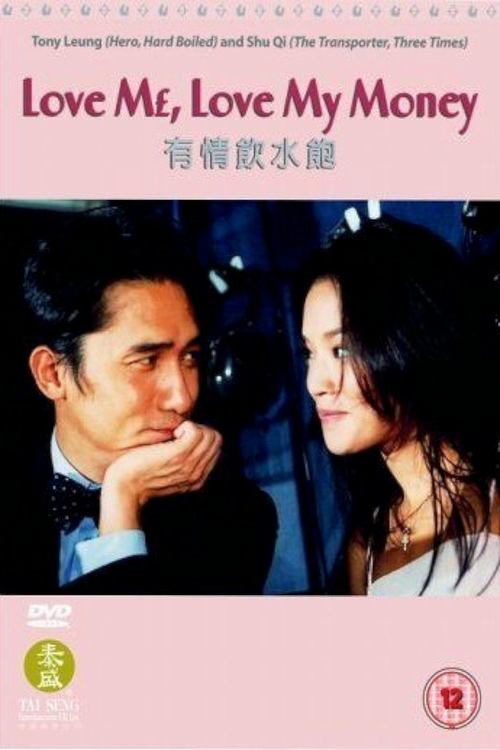




What is the ending?
In the ending of "Love on a Diet," the main characters, Fatty and her love interest, the handsome but troubled man, finally confront their feelings for each other. After a series of comedic and heartfelt moments, they realize that true love transcends physical appearances. The film concludes with them embracing their love, suggesting a hopeful future together.
As the film approaches its conclusion, the narrative unfolds with a series of pivotal scenes that encapsulate the characters' journeys.
Scene 1: The Weight Loss Challenge Fatty, who has been on a weight loss journey throughout the film, stands in front of a mirror, reflecting on her transformation. She has lost a significant amount of weight, but her internal struggle with self-acceptance remains. The camera captures her mixed emotions--pride in her achievements but also anxiety about how her love interest will perceive her now.
Scene 2: The Confrontation In a climactic moment, Fatty and her love interest find themselves at a local park, where they had shared many moments together. The atmosphere is charged with tension as they confront their feelings. Fatty, still grappling with her insecurities, expresses her fears about being loved for who she is, rather than her appearance. Her love interest, who has been dealing with his own issues, reassures her that he values her for her personality and spirit.
Scene 3: The Realization As they talk, the sun begins to set, casting a warm glow around them. Fatty's love interest shares a heartfelt confession about his own struggles with self-image and how he has been inspired by Fatty's determination. This moment of vulnerability allows Fatty to see him in a new light, and she begins to understand that love is not solely based on physical attributes.
Scene 4: The Embrace In a tender moment, they embrace, symbolizing their acceptance of each other's flaws and strengths. The camera zooms in on their faces, capturing the joy and relief that washes over them. They laugh together, a sound that echoes through the park, signifying a turning point in their relationship.
Scene 5: The Future The film concludes with a montage of Fatty and her love interest enjoying life together. They are seen engaging in various activities--cooking, dancing, and spending time with friends. The final shot shows them walking hand in hand, radiating happiness and confidence. The screen fades to black, leaving the audience with a sense of hope and the message that love can flourish when one embraces their true self.
In the end, Fatty finds not only love but also self-acceptance, while her love interest learns to appreciate the beauty of vulnerability. Their journey together highlights the importance of inner beauty and the strength found in genuine connections.
Is there a post-credit scene?
In the movie "Love on a Diet," there is no post-credit scene. The film concludes with its final moments, focusing on the resolution of the main characters' journeys and their evolving relationship. The story wraps up without any additional scenes or content after the credits roll, leaving the audience with the emotional closure of the characters' arcs.
What motivates the main character, Fatty, to go on a diet?
Fatty, played by Sammi Cheng, is motivated to go on a diet primarily due to her desire to win the affection of her childhood crush, a handsome man named Ah Choi. She believes that losing weight will make her more attractive and help her gain his attention, which drives her to embark on a rigorous weight-loss journey.
How does the relationship between Fatty and Ah Choi develop throughout the film?
Initially, Fatty is infatuated with Ah Choi, who is unaware of her feelings. As Fatty undergoes her transformation, she becomes more confident and begins to interact with him more. Their relationship evolves from one-sided admiration to a deeper connection as they share personal struggles and experiences, ultimately leading to romantic feelings.
What role does the character of the personal trainer play in Fatty's journey?
The personal trainer, played by Andy Lau, serves as both a mentor and a source of motivation for Fatty. He pushes her to challenge her limits and helps her develop a healthier lifestyle. His encouragement and belief in her potential not only aid her physical transformation but also contribute to her emotional growth and self-acceptance.
What challenges does Fatty face while trying to lose weight?
Fatty faces numerous challenges during her weight-loss journey, including temptations from food, societal pressures, and her own insecurities. She struggles with moments of self-doubt and frustration, especially when she encounters setbacks or when her efforts do not yield immediate results. These challenges test her resolve and force her to confront her relationship with food and body image.
How does Fatty's family react to her weight loss and transformation?
Fatty's family has mixed reactions to her weight loss. While some family members support her efforts and encourage her to pursue her goals, others express concern about her health and the extreme measures she takes. This dynamic adds emotional complexity to her journey, as she navigates the expectations and opinions of her loved ones while trying to find her own identity.
Is this family friendly?
"Love on a Diet," produced in 2001, is a romantic comedy that centers around themes of love, body image, and self-acceptance. While the film is generally light-hearted and comedic, there are a few aspects that may be considered objectionable or upsetting for children or sensitive viewers:
-
Body Image Issues: The film prominently features characters struggling with weight and body image, which may be sensitive topics for some viewers, particularly children who are impressionable about their own self-image.
-
Dieting and Weight Loss: There are scenes that depict extreme dieting and the lengths to which characters go to lose weight, which could be concerning for viewers who may interpret these actions as promoting unhealthy behaviors.
-
Romantic Relationships: The film includes romantic elements that may involve misunderstandings and emotional conflicts, which could be confusing for younger audiences.
-
Physical Comedy: Some comedic scenes involve physical humor related to weight and dieting that may not be suitable for all viewers, as they could be perceived as making fun of body types.
-
Emotional Struggles: Characters experience moments of insecurity and emotional distress related to their appearance and relationships, which may resonate deeply with sensitive viewers.
Overall, while "Love on a Diet" is intended to be a comedic and uplifting film, these elements may warrant consideration for family viewing, especially for younger children or those sensitive to issues surrounding body image and self-esteem.






