

Popular
Should I watch it?
Ask Your Own Question

What is the plot?
Sorry, we aren't able to watch and write up a full detailed plot yet. Check back in a few days.




What is the ending?
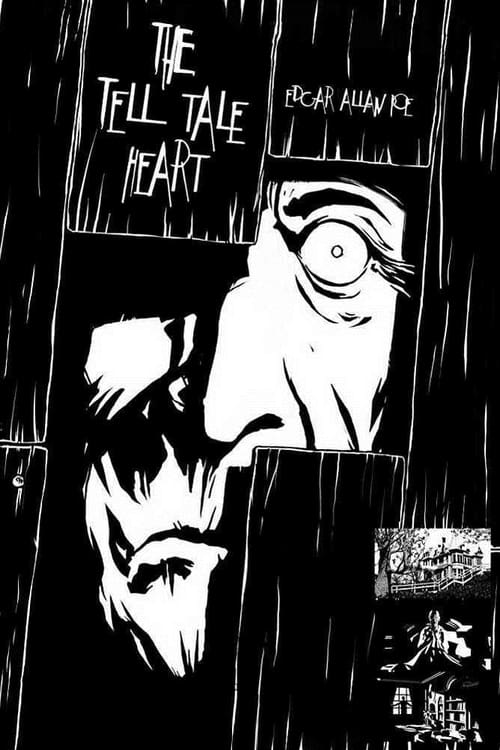
In the ending of "The Tell Tale Heart" (2005), the protagonist, disturbed by his guilt and paranoia, ultimately confesses to the murder he committed. He is overwhelmed by the sound of the old man's heart, which he believes is still beating beneath the floorboards where he hid the body. This confession leads to his arrest, sealing his fate as he succumbs to his own madness.
As the film approaches its climax, we find the protagonist, a man deeply troubled by his own mind, pacing nervously in his dimly lit room. The atmosphere is thick with tension, and the shadows seem to dance around him, reflecting his inner turmoil. He is haunted by the memory of the old man he murdered, a crime he committed in a fit of irrational fear and obsession over the old man's vulture-like eye.
Scene by scene, the protagonist's mental state deteriorates. He hears the incessant thumping of what he believes to be the old man's heart, a sound that grows louder and more insistent with each passing moment. This auditory hallucination becomes a manifestation of his guilt, echoing in his mind and driving him to the brink of insanity. The camera captures his frantic expressions, beads of sweat forming on his brow, and his hands trembling as he clutches his head in despair.
In a moment of desperation, he decides to confront his guilt. He stands in the center of the room, the floorboards creaking beneath him, and he begins to speak aloud, as if trying to reason with the phantom of the old man. The sound of the heartbeat crescendos, drowning out his thoughts and amplifying his fear. He is trapped in a cycle of paranoia, convinced that the heart is a living entity, demanding recognition and justice.
Finally, in a fit of panic, he can no longer bear the weight of his conscience. He rushes to the police officers who have come to investigate, his face a mask of anguish. With wild eyes, he confesses to the murder, exclaiming that he buried the old man beneath the floorboards. The officers, initially taken aback by his sudden outburst, exchange glances of disbelief. They had come to question him, but now they are witnesses to his unraveling.
As he leads them to the spot where he concealed the body, the tension reaches its peak. The protagonist, still hearing the relentless heartbeat, becomes increasingly agitated. He insists that they listen, that they too can hear the sound that torments him. The officers, confused but intrigued, lean in closer. In a moment of dramatic irony, the protagonist believes he is revealing the truth, but instead, he is sealing his own fate.
When the officers pry up the floorboards, they discover the lifeless body of the old man, confirming the protagonist's confession. The protagonist's face falls, a mixture of relief and horror washing over him as he realizes that his madness has led him to this inevitable conclusion. The sound of the heartbeat fades, replaced by the grim reality of his actions. The police take him into custody, and as he is led away, the weight of his guilt hangs heavy in the air, a haunting reminder of the consequences of his unchecked obsession.
In the end, the protagonist is left to grapple with the consequences of his actions, trapped in a cycle of guilt and madness, while the old man's fate is sealed in death, a victim of the protagonist's irrational fears. The film closes on a somber note, emphasizing the tragic outcome of a mind consumed by paranoia and the inability to escape the repercussions of one's own choices.
Is there a post-credit scene?
The 2005 film "The Tell Tale Heart" does not have a post-credit scene. The movie concludes with a focus on the psychological unraveling of the protagonist, who is haunted by his actions and the consequences of his crime. The ending leaves viewers with a sense of unease and reflection on the themes of guilt and madness, but there are no additional scenes or content after the credits roll.
What drives the narrator to commit murder in The Tell Tale Heart?
The narrator is driven by an overwhelming obsession with the old man's eye, which he describes as a 'vulture eye.' This fixation grows into a mania, leading him to believe that the only way to rid himself of the eye's torment is to kill the old man.
How does the narrator feel after committing the murder?
After the murder, the narrator initially feels a sense of triumph and relief, believing he has successfully hidden the body beneath the floorboards. However, this quickly turns to paranoia and guilt as he becomes increasingly haunted by the sound of the old man's heartbeat, which he perceives as a manifestation of his own guilt.
What role does the police officer play in the story?
The police officer arrives at the narrator's home to investigate the old man's disappearance. He is calm and polite, engaging the narrator in conversation. However, as the narrator's guilt intensifies, he becomes increasingly agitated, ultimately leading to his confession.
What is the significance of the heartbeat sound in the film?
The heartbeat sound serves as a powerful symbol of the narrator's guilt and mental unraveling. It grows louder and more insistent, reflecting his inner turmoil and inability to escape the consequences of his actions, ultimately driving him to confess.
How does the old man's character contribute to the story?
The old man is portrayed as a vulnerable figure, whose 'vulture eye' becomes the focal point of the narrator's madness. His fear and confusion heighten the tension in the story, as the audience witnesses the tragic consequences of the narrator's obsession and the old man's fate.
Is this family friendly?
The 2005 film "The Tell Tale Heart" is not considered family-friendly due to its dark themes and intense psychological elements. Here are some potentially objectionable or upsetting aspects that may affect children or sensitive viewers:
-
Violence: The film contains scenes of murder and violence, which are depicted in a graphic manner that may be disturbing.
-
Psychological Distress: The protagonist experiences severe mental anguish and paranoia, which could be unsettling for viewers, particularly those sensitive to themes of mental illness.
-
Death and Guilt: The narrative revolves around themes of guilt and the consequences of one's actions, including the haunting effects of a crime, which may be heavy for younger audiences.
-
Dark Atmosphere: The overall tone of the film is grim and foreboding, with a focus on fear and dread that may not be suitable for children.
-
Mature Themes: The exploration of obsession, madness, and moral conflict may be complex and distressing for younger viewers to comprehend.
These elements contribute to a viewing experience that is more appropriate for mature audiences.









