



















































Popular
What are the main characteristics of the two lead characters, FDR and Tuck?
How do FDR and Tuck find out they are dating the same woman?
What tactics do FDR and Tuck use to sabotage each other's dates with Lauren?
What role does Lauren's character play in the conflict between FDR and Tuck?
How does the relationship between FDR and Tuck evolve throughout the film?
Should I watch it?
Ask Your Own Question

What is the plot?
Sorry, we aren't able to watch and write up a full detailed plot yet. Check back in a few days.








What is the ending?
In the ending of "This Means War," Tuck and FDR realize that their rivalry over Lauren has gone too far. They decide to put their friendship first and agree to end their competition. Ultimately, Tuck and Lauren end up together, while FDR accepts the situation and moves on.
As the climax of the film unfolds, the tension between Tuck and FDR reaches its peak. After a series of escalating pranks and sabotage aimed at one another, both men find themselves at a crossroads. They have been using their CIA resources to outdo each other in their attempts to win over Lauren, but the consequences of their actions begin to weigh heavily on them.
In a pivotal scene, Tuck and FDR confront each other in a tense standoff. They are both aware that their friendship is at stake, and the realization hits them that their competition has spiraled out of control. They share a moment of vulnerability, acknowledging the damage they have done not only to their friendship but also to Lauren, who has been caught in the middle of their feud.
Meanwhile, Lauren, who has been trying to navigate her feelings for both men, becomes increasingly frustrated with the situation. She confronts both Tuck and FDR, demanding honesty and clarity about their intentions. This confrontation serves as a turning point for all three characters. Lauren expresses her desire for a genuine connection rather than a competition, prompting Tuck and FDR to reassess their priorities.
In the final act, Tuck makes a heartfelt decision to step back and allow Lauren to choose who she truly wants to be with. He realizes that their friendship is more important than winning her affection. FDR, too, comes to terms with the fact that he cannot force a relationship and decides to respect Tuck's choice.
The film culminates in a scene where Lauren ultimately chooses Tuck, recognizing the depth of their connection and the sincerity of his feelings. Tuck and Lauren share a tender moment, solidifying their relationship. FDR, while initially hurt, accepts the outcome with grace, showing maturity and understanding. He walks away with a sense of closure, ready to move on from the rivalry.
In the final moments, Tuck and Lauren are seen together, happy and in love, while FDR is shown embracing his single status, hinting at new beginnings for him as well. The film closes on a note of friendship and the importance of prioritizing genuine relationships over competition, leaving the audience with a sense of resolution for all characters involved.
Is there a post-credit scene?
In the movie "This Means War," there is indeed a post-credit scene. After the main credits roll, the scene opens with Tuck (played by Tom Hardy) and FDR (played by Chris Pine) sitting in a bar, reflecting on their recent romantic escapades and the chaos that ensued from their rivalry over Lauren (played by Reese Witherspoon).
As they share a drink, they engage in light-hearted banter, showcasing their camaraderie despite the competitive nature of their earlier actions. The atmosphere is relaxed, and both characters seem to have moved past their previous animosity.
Suddenly, the scene shifts when a woman approaches their table, and it becomes clear that she is interested in FDR. Tuck, noticing this, playfully nudges FDR to make a move. FDR, with a confident smirk, prepares to charm her, but just as he does, Tuck's phone rings.
The call is from Lauren, and Tuck answers it, leading to a humorous moment where FDR is left hanging, trying to impress the woman while Tuck engages in a conversation with Lauren. The scene ends with a comedic twist, highlighting the ongoing dynamics of their friendships and romantic pursuits, leaving the audience with a light-hearted feeling as the credits conclude.
What are the main characteristics of the two lead characters, FDR and Tuck?
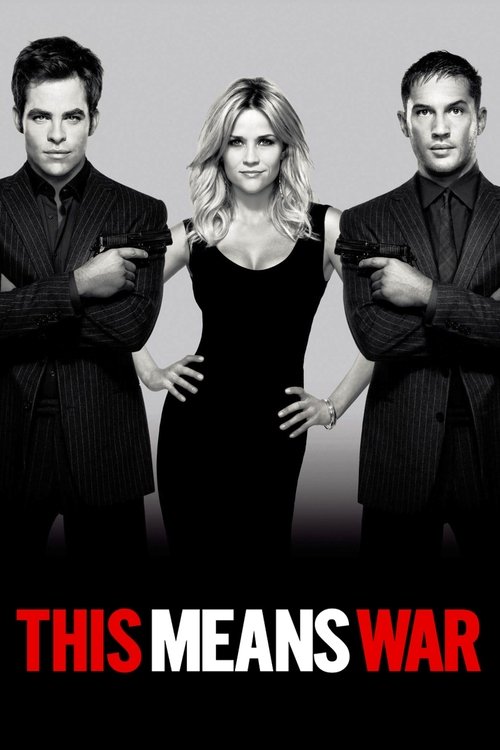
FDR, played by Chris Pine, is charming, confident, and a bit of a playboy. He thrives on excitement and is often impulsive in his decisions. Tuck, portrayed by Tom Hardy, is more grounded, sensitive, and earnest, seeking a genuine connection in his romantic life. Their contrasting personalities set the stage for their rivalry over the same woman.
How do FDR and Tuck find out they are dating the same woman?
FDR and Tuck, who are best friends and CIA operatives, discover they are dating the same woman, Lauren, when they both show up at a restaurant for a date with her. The realization hits them when they see each other at the same table, leading to a comedic yet tense confrontation.
What tactics do FDR and Tuck use to sabotage each other's dates with Lauren?
FDR and Tuck engage in a series of escalating pranks and sabotage tactics to undermine each other's romantic pursuits. FDR uses technology to track Tuck's movements and even plants false information to create misunderstandings, while Tuck employs more physical tactics, such as showing up unexpectedly to ruin FDR's dates.
What role does Lauren's character play in the conflict between FDR and Tuck?
Lauren, played by Reese Witherspoon, is the object of affection for both FDR and Tuck, and her character is central to the conflict. She is initially unaware of the rivalry and is drawn to both men for different reasons. As the story progresses, she becomes increasingly frustrated with their childish behavior and seeks to find clarity in her feelings.
How does the relationship between FDR and Tuck evolve throughout the film?
Initially, FDR and Tuck's friendship is strong, but as they compete for Lauren's affection, their relationship becomes strained. They engage in a series of one-upmanship that tests their loyalty and camaraderie. Ultimately, they are forced to confront the consequences of their rivalry, leading to a moment of reconciliation and a deeper understanding of their friendship.
Is this family friendly?
"This Means War," produced in 2012, is a romantic action-comedy that features several elements that may not be considered family-friendly. Here are some potentially objectionable or upsetting aspects:
-
Violence: The film includes action sequences with gunfights, chases, and physical confrontations. While the tone is comedic, there are moments of intense action that may be unsettling for younger viewers.
-
Romantic Content: There are multiple romantic scenes, including suggestive dialogue and situations that may not be appropriate for children. The characters engage in flirtation and dating, which may include innuendos.
-
Language: The film contains some strong language and mild profanity, which could be inappropriate for younger audiences.
-
Themes of Deception: The central premise involves two best friends competing for the affection of the same woman, leading to manipulation and deceit, which may not convey positive messages about relationships.
-
Emotional Conflict: The characters experience jealousy, betrayal, and emotional turmoil, which could be distressing for sensitive viewers.
Overall, while the film has comedic elements, its content may not be suitable for children or those who are sensitive to violence, romantic themes, and strong language.







