













Popular
What motivates Jamie Shannon to take on the mission in Zangaro?
How does the character of Jamie Shannon evolve throughout the film?
What role does the character of Colonel Tarrant play in the story?
What is the significance of the weapons deal in the plot?
How does the film portray the local population of Zangaro?
Should I watch it?
Ask Your Own Question

What is the plot?
Sorry, we aren't able to watch and write up a full detailed plot yet. Check back in a few days.
More Movies Like This
Browse All Movies →

What is the ending?
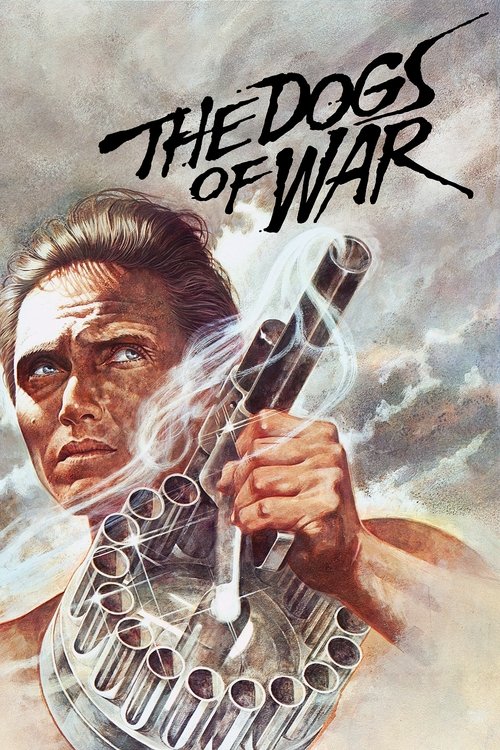
In the ending of "The Dogs of War," the mercenary Jamie Shannon successfully completes his mission in the fictional African country of Zangaro. After a series of violent confrontations, he ultimately decides to betray his employers and expose their corrupt intentions. The film concludes with Shannon escaping the chaos, leaving behind the mercenary life.
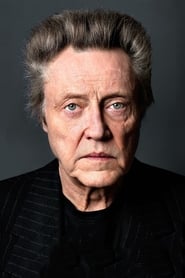
As the film approaches its climax, Jamie Shannon, played by Christopher Walken, finds himself deeply entrenched in the conflict in Zangaro. The tension escalates as he and his team of mercenaries prepare for the final assault on the dictator's stronghold. The air is thick with anticipation and the weight of their mission hangs heavily on Shannon, who is increasingly aware of the moral implications of their actions.
In the first scene of the ending, Shannon and his team are gathered in a makeshift command center, poring over maps and strategizing their next move. The atmosphere is charged with adrenaline and fear, as they know that the stakes are high. Shannon's internal conflict is palpable; he is a man torn between the lucrative rewards of mercenary work and the growing realization of the human cost involved. His eyes reflect a mix of determination and doubt, hinting at his struggle with the morality of their mission.
As they launch their attack, the scene shifts to the chaotic battlefield. Gunfire erupts, and the mercenaries engage in fierce combat with the dictator's forces. Explosions rock the landscape, sending debris flying and creating a cacophony of chaos. Shannon fights valiantly alongside his comrades, but the brutality of the violence weighs heavily on him. He witnesses the suffering of innocent civilians caught in the crossfire, which deepens his internal turmoil.
In a pivotal moment, Shannon confronts the reality of his employers' true intentions. He learns that the mission is not just about overthrowing the dictator but also about securing valuable resources for corporate interests. This revelation ignites a fierce sense of betrayal within him. The camera captures the moment of realization in Shannon's eyes, a mix of anger and resolve. He understands that he cannot be complicit in this exploitation any longer.
As the battle rages on, Shannon makes a critical decision. He chooses to turn against his employers, opting to expose their corrupt motives rather than continue to serve their interests. This act of defiance is a turning point for his character, showcasing his transformation from a mercenary driven by profit to a man seeking redemption. The scene is intense, filled with the sounds of gunfire and the cries of the wounded, as Shannon fights his way through the chaos to confront the corporate leaders who orchestrated the conflict.
In the final moments, Shannon manages to escape the battlefield, leaving behind the violence and the mercenary life he once embraced. He walks away from the destruction, a solitary figure against the backdrop of the war-torn landscape. The camera lingers on his face, capturing a mix of relief and sorrow. He has chosen a path of integrity, but it comes at a great cost.
The fates of the other main characters are intertwined with Shannon's journey. The mercenaries who fought alongside him face their own consequences; some are killed in the battle, while others are left to grapple with the aftermath of their choices. The corporate leaders, who initially seemed untouchable, are left exposed and vulnerable due to Shannon's revelations. The film closes with a sense of ambiguity, leaving the audience to ponder the true cost of war and the moral complexities of mercenary work.
In the end, Shannon's escape signifies a break from the cycle of violence and exploitation, but it also leaves him with the burden of what he has witnessed and the lives lost. The final shot of him walking away serves as a poignant reminder of the personal toll of conflict, encapsulating the film's exploration of morality, loyalty, and the human condition amidst the chaos of war.
Is there a post-credit scene?
The movie "The Dogs of War," produced in 1980, does not have a post-credit scene. The film concludes with its final moments, focusing on the aftermath of the protagonist's actions and the implications of mercenary warfare. The narrative wraps up without any additional scenes or content after the credits roll.
What motivates Jamie Shannon to take on the mission in Zangaro?
Jamie Shannon, played by Christopher Walken, is a mercenary who is initially motivated by financial gain and the thrill of adventure. However, as he delves deeper into the political complexities of Zangaro, his motivations shift towards a sense of duty and the moral implications of his actions, particularly as he witnesses the suffering of the local population.
How does the character of Jamie Shannon evolve throughout the film?
Throughout 'The Dogs of War,' Jamie Shannon evolves from a self-serving mercenary to a more introspective character who grapples with the consequences of his actions. Initially, he is focused on the lucrative aspects of his job, but as he becomes more involved in the conflict in Zangaro, he begins to question the morality of his role and the impact of his decisions on innocent lives.
What role does the character of Colonel Tarrant play in the story?
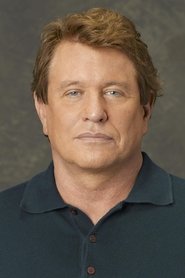
Colonel Tarrant, portrayed by Tom Berenger, serves as a key figure in the mercenary operation. He represents the military's strategic interests and often clashes with Shannon's more personal motivations. Tarrant's character embodies the cold, calculated approach to warfare, contrasting with Shannon's growing moral conflict, and ultimately influences the direction of the mission.
What is the significance of the weapons deal in the plot?
The weapons deal is central to the plot of 'The Dogs of War,' as it serves as the catalyst for the mercenaries' involvement in Zangaro. The deal highlights the corrupt nature of international arms trading and the exploitation of conflict for profit. It also sets the stage for the moral dilemmas faced by the characters, particularly Shannon, as they navigate the consequences of their actions in a war-torn country.
How does the film portray the local population of Zangaro?
The film portrays the local population of Zangaro as victims of the political turmoil and violence that engulf their country. Their suffering is depicted through various scenes that showcase the impact of the mercenaries' actions and the broader conflict. This portrayal serves to humanize the locals and emphasizes the moral stakes of the mercenaries' mission, particularly for Shannon, who becomes increasingly aware of their plight.
Is this family friendly?
"The Dogs of War," produced in 1980, is not considered family-friendly due to its mature themes and content. Here are some potentially objectionable or upsetting aspects that may affect children or sensitive viewers:
-
Violence and Warfare: The film depicts graphic scenes of war, including combat, gunfire, and the aftermath of violence, which can be intense and disturbing.
-
Death and Injury: There are scenes showing the consequences of war, including injuries and fatalities, which may be upsetting for younger audiences.
-
Mature Themes: The narrative explores themes of mercenary work, betrayal, and moral ambiguity, which may be complex and unsettling for children.
-
Language: The film contains strong language that may not be appropriate for younger viewers.
-
Adult Situations: There are instances of adult relationships and situations that may not be suitable for children.
Overall, the film's serious tone and content make it more appropriate for mature audiences.







