













Popular
What are the key health challenges faced by F.D.R. in the film?
How does Eleanor Roosevelt's character evolve throughout the film?
What role does Harry Hopkins play in F.D.R.'s final year?
How does the film portray the relationship between F.D.R. and Winston Churchill?
What significant political decisions does F.D.R. make in the film?
Should I watch it?
Ask Your Own Question

What is the plot?
Sorry, we aren't able to watch and write up a full detailed plot yet. Check back in a few days.
More Movies Like This
Browse All Movies →



What is the ending?
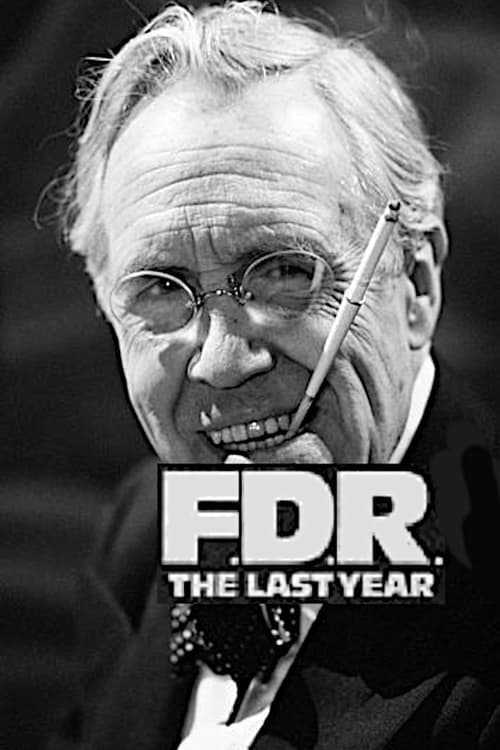
In the ending of "F.D.R.: The Last Year," President Franklin D. Roosevelt's health deteriorates significantly, leading to his eventual death. The film concludes with a poignant reflection on his legacy and the impact he had on the nation, as well as the emotional responses of those closest to him.
As the film approaches its conclusion, we see a series of scenes that depict the final days of F.D.R. His physical condition worsens, and he becomes increasingly reliant on his aides and family. Eleanor Roosevelt, portrayed with deep emotional resonance, grapples with her own feelings of helplessness as she watches her husband struggle. The tension between their personal and public lives is palpable, as F.D.R. continues to engage with political matters despite his declining health.
In a particularly moving scene, F.D.R. is shown in a moment of vulnerability, reflecting on his life and the challenges he has faced. His determination to continue serving the country is evident, but it is overshadowed by the reality of his illness. The film captures the weight of his responsibilities and the emotional toll it takes on him and those around him.
As the final moments unfold, F.D.R. passes away, leaving behind a legacy that is both celebrated and mourned. The reactions of his family, particularly Eleanor, are filled with sorrow and a sense of loss, but also a recognition of the profound impact he had on the nation. The film closes with a somber acknowledgment of the end of an era, highlighting the emotional and historical significance of his presidency.
In summary, the ending of "F.D.R.: The Last Year" encapsulates the personal struggles of Franklin D. Roosevelt and the emotional responses of his loved ones as they confront his mortality and the legacy he leaves behind.
Is there a post-credit scene?
The movie "F.D.R.: The Last Year," produced in 1980, does not contain a post-credit scene. The film concludes with a poignant portrayal of Franklin D. Roosevelt's final days, focusing on his health struggles and the political landscape of the time. The narrative wraps up with a sense of reflection on his legacy and the impact of his leadership during a tumultuous period in American history. The absence of a post-credit scene aligns with the film's serious tone and historical context, leaving viewers to contemplate the weight of Roosevelt's contributions and the challenges faced by the nation.
What are the key health challenges faced by F.D.R. in the film?
In 'F.D.R.: The Last Year', Franklin D. Roosevelt grapples with the debilitating effects of polio, which severely limits his mobility and strength. The film poignantly depicts his struggles with physical therapy, the use of leg braces, and the emotional toll of his declining health. His determination to maintain his public image and continue his presidential duties despite these challenges is a central focus.
How does Eleanor Roosevelt's character evolve throughout the film?
Eleanor Roosevelt is portrayed as a strong and independent figure who becomes increasingly involved in political and social issues. Throughout the film, her character evolves from being a supportive spouse to a more assertive advocate for civil rights and social justice. Her emotional struggles with her husband's health and her own ambitions are depicted with depth, showcasing her resilience and commitment to her ideals.
What role does Harry Hopkins play in F.D.R.'s final year?
Harry Hopkins, a close advisor and friend to F.D.R., plays a crucial role in the film as a confidant and strategist. His unwavering support and counsel during Roosevelt's declining health highlight the deep bond between the two men. Hopkins is depicted as a pragmatic and loyal figure, often pushing F.D.R. to confront the realities of his condition while also helping to navigate the political landscape.
How does the film portray the relationship between F.D.R. and Winston Churchill?
The film illustrates the complex relationship between F.D.R. and Winston Churchill, emphasizing their mutual respect and camaraderie during World War II. Their interactions are filled with a blend of humor and seriousness, showcasing their shared commitment to the Allied cause. The film captures moments of strategic discussions, personal anecdotes, and the emotional weight of their leadership during a tumultuous time.
What significant political decisions does F.D.R. make in the film?
In 'F.D.R.: The Last Year', significant political decisions include his continued support for the United Nations and efforts to solidify alliances with other nations as World War II progresses. The film depicts F.D.R. grappling with the challenges of maintaining unity among Allied leaders while also addressing domestic issues. His determination to leave a lasting legacy is evident as he navigates the complexities of wartime diplomacy.
Is this family friendly?
"F.D.R.: The Last Year" is a historical drama that delves into the final year of President Franklin D. Roosevelt's life, focusing on his health struggles, political challenges, and personal relationships. While the film is not overtly graphic or violent, there are several aspects that may be considered objectionable or upsetting for children or sensitive viewers:
-
Health Decline: The film portrays F.D.R.'s deteriorating health, including scenes of him in physical distress, which may be unsettling for younger audiences.
-
Death and Mortality: Themes of mortality are prevalent, as the film deals with the impending death of a prominent historical figure, which could be heavy for sensitive viewers.
-
Political Tension: There are scenes depicting political conflict and the pressures of leadership during a tumultuous time, which may be intense for some viewers.
-
Emotional Struggles: The film explores the emotional weight carried by F.D.R. and those around him, including moments of sadness and despair that may resonate deeply.
-
Historical Context: The backdrop of World War II and its impact on the nation may introduce complex themes of loss and sacrifice.
Overall, while the film is a significant historical portrayal, its themes and emotional depth may not be suitable for all children or sensitive individuals.








