



Popular
What motivates Pancho to pursue his dreams despite the challenges he faces?
How does the relationship between Pancho and his father evolve throughout the film?
What role does the character of the mentor play in Pancho's journey?
What challenges does Pancho face in his pursuit of a music career?
How does Pancho's friendship with other musicians influence his character development?
Should I watch it?
Ask Your Own Question

What is the plot?
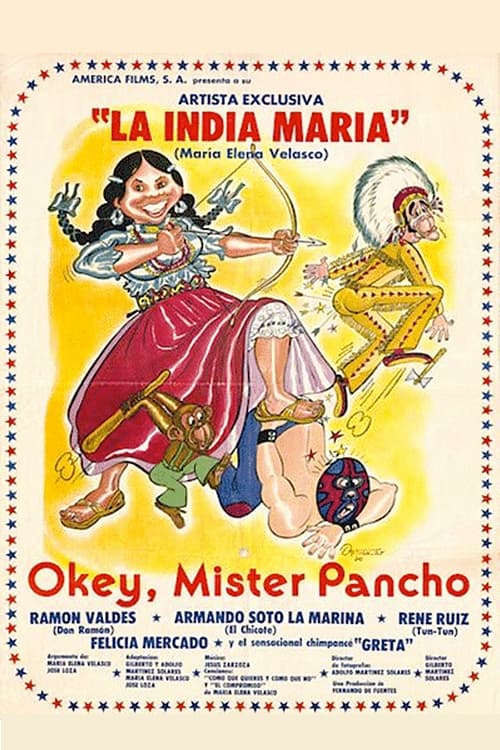
María Nicolasa Cruz lives high in the Mexican sierra with her grandfather, her burro, and a mischievous monkey, in a world so isolated and simple that the outside world feels almost mythical to her. Her life changes in an instant when a small plane crashes near the ranch, tearing through the quiet with smoke, noise, and chaos. María rushes to the wreckage and finds an injured American pilot named Frankie, barely alive and badly hurt; one source says he has lost his vision in the crash, which makes his dependence on her even greater. She brings him back to the ranch and nurses him through his recovery, and in those intimate days of caregiving, the comedy turns into something softer and more dangerous: Frankie teaches her a little English, María begins to dream about him, and the lonely ranch woman falls hard for the handsome foreigner she starts calling "Pancho."
The nickname itself becomes part of the joke and part of the seduction, because María treats "Frankie" and "Pancho" as if they are simply two versions of the same man, while the film quietly builds a lie around her trust. Frankie notices how naïve she is, and instead of correcting that innocence, he uses it. He tells her that he needs her to take a bag of "medicine" to his ailing mother in Houston, Texas, and María believes him completely. The story later reveals that this is the central deception of the film: the bag contains not medicine but diamonds, part of a contraband operation tied to a larger diamond heist, and the "mother" is not a mother at all. At this point, María still thinks she is performing a simple act of kindness for the man she adores, and the emotional irony is sharp because the audience can see she is being led into a criminal scheme before she can.
Once Frankie sends her on the errand, the film shifts into a border-crossing odyssey that turns every step into a joke, a trap, or both. María first tries to get into the United States legally, carrying her belongings in a cardboard box with a turkey and the monkey in tow, but the border fills her with fear and paranoia, and the attempt collapses under its own absurdity. She then tries again by going in as a mojada, swimming across the border as an undocumented migrant, but that attempt also fails. The movie emphasizes not just her stubbornness but the humiliating difficulty of crossing a line that the story treats as both physical and symbolic, a barrier that punishes innocence and persistence alike. Her final attempt is the most desperate and the most comic: she sneaks under a truck crossing into the United States and manages to pull through. The crossing itself becomes a set piece of tension, because each move brings her closer to Houston while also placing her in greater danger, and the film keeps pushing her from one impossible method to the next until she finally gets through by brute luck and determination.
By the time María reaches the United States, the chain of misunderstandings around her has begun to unwind, but only after it causes more trouble. Near Houston, she has to deal with the perverted little man who drove the truck she used to cross, a grotesque and uncomfortable confrontation that adds a more threatening edge to the comedy. She is then rescued by an unusual Indian chief, identified in the sources as Chivo Loco, who wants her as his fifth wife. This episode drops her into yet another impossible situation, one that is both absurd and perilous, because instead of finding the simple delivery route she imagined, she is constantly being pulled into male schemes, male desire, and male exploitation. The encounter with Chivo Loco is not a romantic detour but another trap, another sign that the world beyond her ranch is full of people who see her either as a fool to be used or as property to be claimed.
The real emotional collapse comes when María discovers the truth about Frankie's mission. The "medicine" is revealed as diamonds, and the supposed delivery to his sick mother in Houston turns out to be a delivery to Frankie's girlfriend, identified in one source as Felicia Mercado. That revelation redefines everything that came before it: the English lessons, the tenderness, the nickname "Pancho," the trust, the journey, and even the way Frankie exploited her innocence all snap into place as one coordinated con. María realizes she has not been helping a sick family member at all; she has been carrying contraband across an international border for a man who has been manipulating her from the beginning. The emotional beat lands with special force because the film has spent so much time showing how sincerely she cares for him, so the betrayal is not only criminal but intimate.
From there, the story becomes a comic disaster spiral as the diamond plot, the romantic lie, and the border chaos all collide. The sources do not preserve a full scene-by-scene transcription of the final stretch, but they do confirm the broad outcome: the scheme is exposed, María's illusion about Frankie collapses, and the larger diamond-heist intrigue comes fully into view. The comedic momentum of the movie depends on that collapse. María's journey is never just about transporting a bag; it is about the discovery that every promise made to her has been false, from the "medicine" to the "mother," and that the man she loves has built his entire plan on her ignorance. In this sense, the final confrontation is not just with Frankie but with the whole structure of deception he represents.
The films' available sources do not identify any confirmed deaths for named characters, and no source in the provided material reports that anyone dies on screen. That absence matters because it keeps the climax in the realm of comic adventure rather than tragedy, even though the stakes are high and the danger is real. Instead of ending in carnage, the story resolves through exposure, humiliation, and disillusionment. María comes through the ordeal changed, not because she becomes worldly in a triumphant sense, but because she has seen how cruel, confusing, and exploitative the border-crossing world can be. A later synopsis explicitly says that the experience leads her to prefer her simple life in Mexico, which functions as the film's final emotional correction: after all the noise, lies, and absurdity, the ranch she left behind becomes the place of honesty and belonging again.
What lingers at the end is the contrast between María's original innocence and the hard lesson she absorbs by the time the diamond plot is exposed. She begins as a rural woman who can be charmed by a wounded stranger and persuaded by a story about a sick mother. She ends as someone who has been pushed through a gauntlet of failed crossings, predatory men, false identities, and criminal deceit, yet who still retains the comic resilience that defines La India María as a character. The film's final movement, as supported by the available descriptions, closes on that note of disillusioned return: the romantic fantasy is gone, the smuggling scheme is revealed, the border ordeal is behind her, and the world she is left with is simpler, harsher, and more truthful than the one Frankie promised her.
More Movies Like This
Browse All Movies →



What is the ending?
In the ending of "Okey, Mister Pancho," the main character, Pancho, faces the consequences of his actions and the choices he has made throughout the film. After a series of comedic and dramatic events, he ultimately finds a resolution to his conflicts, leading to a bittersweet conclusion that reflects on his relationships and personal growth.
As the film draws to a close, Pancho, portrayed as a well-meaning but often misguided man, confronts the reality of his situation. He has been navigating through a series of misunderstandings and misadventures, often driven by his desire to prove himself and gain respect. In the final scenes, he comes to terms with his shortcomings and the impact of his decisions on those around him.
In a climactic moment, Pancho reconciles with his family and friends, acknowledging the love and support they have offered him despite his flaws. The film ends on a hopeful note, suggesting that while life may be filled with challenges, the bonds of family and friendship can provide strength and redemption.
Now, let's delve into the ending in a more detailed, chronological narrative.
As the final act begins, Pancho finds himself in a tense situation, having inadvertently caused chaos in his community. The atmosphere is thick with anticipation as he realizes that his actions have led to a series of misunderstandings that have affected not only him but also his loved ones. The camera captures his furrowed brow and the weight of his choices pressing down on him, reflecting his internal struggle.
In a pivotal scene, Pancho gathers his family and friends in a local gathering place, a setting that has been central to many of their interactions throughout the film. The room is filled with a mix of emotions--frustration, disappointment, but also a flicker of hope. As he stands before them, the lighting casts a warm glow, symbolizing the potential for reconciliation. Pancho takes a deep breath, his heart racing as he prepares to address the crowd.
He begins to speak, his voice trembling slightly, revealing his vulnerability. He acknowledges the mistakes he has made, the hurt he has caused, and the misunderstandings that have arisen from his actions. The camera zooms in on his face, capturing the sincerity in his eyes as he expresses his desire to make amends. The audience can feel the tension in the room as his family members exchange glances, their expressions a mix of skepticism and longing for resolution.
As Pancho continues, he recounts specific moments that have led to the current situation, each memory punctuated by flashbacks that illustrate his journey. The scenes shift between his past misadventures and the present, highlighting the contrast between his intentions and the outcomes. The emotional weight of his words resonates with the audience, drawing them deeper into his narrative.
In a moment of catharsis, Pancho reaches out to his closest friend, who has been a steadfast supporter despite the chaos. He apologizes for taking their friendship for granted and expresses gratitude for their unwavering loyalty. The friend, initially hesitant, softens as he sees the genuine remorse in Pancho's demeanor. This exchange is pivotal, showcasing the theme of forgiveness and the importance of acknowledging one's faults.
As the gathering progresses, the atmosphere shifts from one of tension to one of understanding. Family members begin to voice their own feelings, sharing how Pancho's actions have affected them. The dialogue is heartfelt, filled with both criticism and love, as they navigate the complexities of their relationships. The camera captures the emotional nuances of each character, their faces reflecting a range of feelings from anger to compassion.
In the climax of the scene, Pancho makes a heartfelt promise to change, to be more mindful of his actions and their consequences. The audience can sense a collective sigh of relief as his family members begin to embrace him, signaling a tentative reconciliation. The warmth of their interactions is palpable, and the music swells, underscoring the emotional resolution.
As the film concludes, we see Pancho walking through the community, a renewed sense of purpose in his stride. The final shots depict him engaging positively with those around him, a stark contrast to the chaos of earlier scenes. He smiles at children playing, helps an elderly neighbor, and shares laughter with friends, illustrating his commitment to being a better person.
The film closes with a lingering shot of Pancho looking back at his family, who are gathered together, their faces illuminated by the setting sun. This image encapsulates the film's message about the power of love, forgiveness, and the importance of community. Each character, having faced their own struggles, emerges with a deeper understanding of themselves and each other, leaving the audience with a sense of hope and the belief that change is possible.
Is there a post-credit scene?
The movie "Okey, Mister Pancho," produced in 1981, does not have a post-credit scene. The film concludes its narrative without any additional scenes or content after the credits roll. The story wraps up with the resolution of the main plot, focusing on the characters' journeys and their emotional arcs, leaving no further developments or surprises for the audience after the credits.
What motivates Pancho to pursue his dreams despite the challenges he faces?
Pancho, a young man with aspirations of becoming a successful musician, is driven by his passion for music and the desire to escape his mundane life. His internal struggle is highlighted by his longing for recognition and the fear of failure, which propels him to take risks and confront obstacles head-on.
How does the relationship between Pancho and his father evolve throughout the film?
Initially, Pancho's father is skeptical of his son's musical ambitions, believing they are impractical. As the story progresses, the father's disapproval creates tension, but ultimately, he begins to understand Pancho's dedication and passion, leading to a reconciliation that showcases the importance of familial support.
What role does the character of the mentor play in Pancho's journey?
The mentor serves as a guiding figure for Pancho, providing wisdom and encouragement. This character recognizes Pancho's talent and helps him navigate the complexities of the music industry, instilling confidence in him and pushing him to embrace his true potential.
What challenges does Pancho face in his pursuit of a music career?
Pancho encounters numerous obstacles, including financial struggles, rejection from music venues, and the pressure of societal expectations. Each setback tests his resolve and commitment to his dreams, forcing him to confront his fears and adapt to the harsh realities of the industry.
How does Pancho's friendship with other musicians influence his character development?
Pancho's friendships with fellow musicians provide him with a sense of camaraderie and support. These relationships are crucial as they offer him both inspiration and a reality check, helping him to grow as an artist and understand the importance of collaboration and perseverance in the face of adversity.
Is this family friendly?
"Okey, Mister Pancho," produced in 1981, is a family-friendly film that primarily focuses on themes of friendship, loyalty, and the challenges of growing up. However, there are a few scenes and aspects that might be considered potentially objectionable or upsetting for children or sensitive viewers:
-
Conflict and Tension: The film includes moments of conflict between characters, which may lead to emotional distress. These scenes can evoke feelings of anxiety or discomfort, especially for younger viewers.
-
Family Struggles: There are depictions of familial issues and struggles that may resonate with children who have experienced similar situations, potentially leading to feelings of sadness or empathy.
-
Mild Language: Some dialogue may include mild language or expressions that could be deemed inappropriate for very young audiences.
-
Emotional Moments: The film contains scenes that explore deeper emotional themes, such as disappointment and loss, which may be challenging for sensitive viewers to process.
Overall, while the film is suitable for a family audience, these elements may require parental guidance for younger children or those who are particularly sensitive to emotional content.







