












Popular
What motivates Walter to pursue his dream of becoming a successful writer?
How does Walter's relationship with his family influence his character development?
What role does Walter's friendship with his mentor play in his journey?
How does Walter's perception of success evolve throughout the film?
What challenges does Walter face in his writing career, and how does he overcome them?
Should I watch it?
Ask Your Own Question

What is the plot?
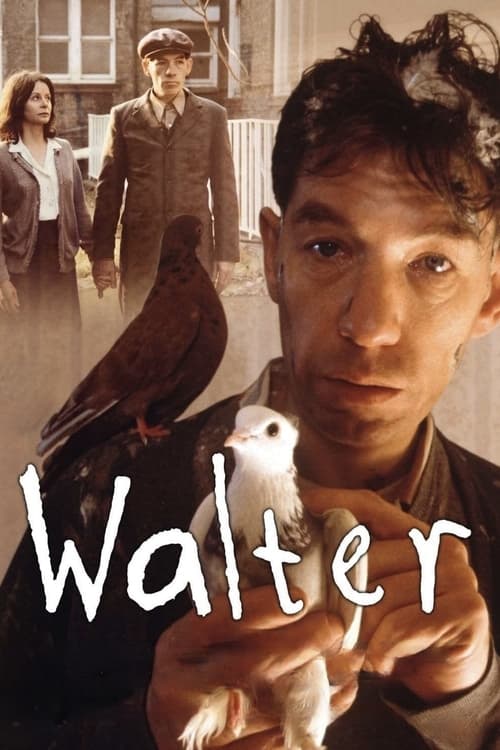
Walter opens in a cramped domestic world that already feels emotionally unstable, even before tragedy strikes. Walter, a young man with learning difficulties, lives with his parents and works at a factory, trying in the only way he knows to fit into the routines of ordinary life. His mother and father are remote and often insensitive toward him, and he clings more warmly to his pigeons than to the human relationships around him, because the birds are the only living things in his life that do not scold, belittle, or reject him. The film establishes from the beginning that Walter is not being prepared for independence so much as being kept in a fragile holding pattern, protected just enough to survive but never truly understood.
That precarious balance breaks when Walter's father dies first. The loss is huge, but the film does not present it as a clean emotional turning point with tears and practical arrangements; instead, it becomes the first fracture in a world already failing him. Soon after, Walter's mother also dies, and the house that once contained his entire life becomes a place of silence and confusion. Walter finds her dead in bed and cannot really grasp what death means. Rather than alerting anyone or fully comprehending the finality of what has happened, he performs the one act that feels meaningful to him: he moves his pigeons into her bedroom and keeps a vigil beside the body. The image is devastating. Day after day, the room becomes a scene of sorrow and neglect as the body is left in place and gradually covered in bird droppings, a grotesque visual sign of Walter's grief, innocence, and incomprehension all at once. The house, which once represented his parents' imperfect shelter, now becomes the site where he is left alone with death and no one around him capable of helping him understand it.
From there, the film turns from domestic tragedy to institutional tragedy. Social services, confronted with a vulnerable adult who has no family left, do not find a humane or personalized solution. Instead, they place Walter in a psychiatric institution, because nobody seems to know what else to do with him. This is the film's central bureaucratic horror: Walter is not "rescued" so much as processed. The system treats him as a problem to be filed away, not a person to be cared for. He is transferred from one kind of neglect to another, from family abandonment to institutional abandonment, and the narrative's tension shifts from mourning to survival.
The institution is bleak from the moment Walter enters it. It is not presented as a place of healing but as a long-stay mental hospital where the patients are warehoused and the staff enforce humiliation as routine. Walter is immediately exposed to a world of cruelty, vulnerability, and bodily degradation. On his first night there, he is sexually molested by a paraplegic dwarf, a shocking violation that establishes how unsafe the environment is and how defenseless Walter is within it. The scene is not simply there for shock; it tells the audience that even in a place supposedly designed for care, Walter's body and dignity are not protected. The next morning, instead of receiving comfort or reassurance, he is ordered to help clean up incontinent wardmates. The cruelty here is bureaucratic and everyday rather than theatrical. Walter is not singled out for one monstrous act so much as forced into a continuing regime of humiliation, where his own fragility is ignored and his labor is folded into the institution's machinery of control.
Walter's life in the hospital becomes a series of small injuries, one after another. He is surrounded by patients whose conditions vary widely, but the common atmosphere is one of abandonment and harshness. The institution does not offer him the clarity or compassion he needs to understand why he is there or how to adapt. Instead, it amplifies his isolation. The pigeons, which once provided a thread of continuity between his inner life and the world around him, are gone from the domestic setting where he had been able to care for them. Without them, Walter has even fewer anchors. The film makes his emotional state visible through the starkness of the ward: fluorescent, cramped, impersonal, full of bodies that are managed rather than understood.
One of the film's most important moments of revelation comes when Walter witnesses a murder inside the institution. Another patient, in the midst of a breakdown, kills a fellow patient. Walter is not the direct target, but he sees the killing, and the scene confirms that the hospital is not merely neglectful; it is dangerous. The institution's failure is now absolute. It does not just strip dignity away. It allows violence to happen in plain sight. Walter's presence in that environment becomes increasingly tragic because he is already emotionally overwhelmed and cannot defend himself from what he is being made to endure. The murder also functions as a grim acknowledgment that the hospital's internal order is precarious and unstable, with breakdown and death lurking underneath its clinical surface.
What makes Walter especially heartbreaking is that his confusion never becomes melodrama; it remains quietly devastating. He does not transform into a rebel, an avenger, or a heroic survivor. Instead, he continues trying to make sense of what has happened to him in the only terms available to him. His attachment to routine, to small gestures, and to the idea of care persists even as the world repeatedly shows him none. The film's power lies in the contrast between Walter's vulnerability and the system's indifference. Every time he reaches for stability, he is met with a new form of institutional violence or emotional incomprehension.
The later part of the story, as reflected in the broader arc associated with the character, suggests that Walter survives this period rather than dying in the institution. He remains trapped in care for a long stretch, and the film's effect is to show that survival itself is not the same as living freely or safely. In the continuation of Walter's life beyond the first film's immediate crisis, he is later shown at age 40, where an attempt is made to give him a life outside the institution with June, another mentally ill patient who falls in love with him. Their connection offers the first real possibility of warmth and mutual recognition in the story. For Walter, this matters because June treats him as a person, not a burden. Their relationship carries the emotional promise that the earlier part of the film has denied him: the chance to be seen, to be wanted, and to live with someone who understands his vulnerabilities.
But that hope is fragile, and the larger truth of Walter's character remains the same: the world has never been built to support him. Even when given a chance outside, he cannot fully thrive in independence, because the damage done by abandonment and institutional mistreatment has shaped every part of his life. The story's emotional resolution is therefore bittersweet rather than triumphant. Walter's early life ends with the collapse of his home, the deaths of both parents, and the brutal transfer into an institution where he is violated, humiliated, and forced to witness death. His later story, where he tries to live beyond the hospital with June, does not erase that trauma; it only shows how late and how limited the chance for real human connection arrives.
The final feeling of the film is one of indictment. Walter is not destroyed by one villain but by a sequence of failures: a family that cannot fully understand him, a society that cannot absorb him, and a care system that treats him as a problem to contain. His father dies, his mother dies, he finds her in bed and does not understand, he keeps his pigeons beside her body, he is taken to the hospital, he is molested on his first night, he is forced to clean up others' messes, and he witnesses a murder inside the ward. Through it all, Walter remains painfully human, still reaching for routine, affection, and meaning. The story ends with the lingering knowledge that he has survived, but at enormous cost, and that the world around him has never offered the protection or dignity he deserves.









What is the ending?
In the ending of the movie "Walter," the protagonist, Walter, confronts the reality of his life and the relationships he has built. He faces the consequences of his actions and ultimately finds a sense of closure, leading to a bittersweet resolution for himself and those around him.
As the film approaches its conclusion, Walter is seen grappling with the emotional weight of his decisions. He has been on a journey of self-discovery, and the culmination of his experiences leads him to a pivotal moment. In a series of poignant scenes, Walter interacts with the people in his life, reflecting on the impact he has had on them and vice versa.
In the final scenes, Walter makes a significant choice that signifies his growth. He acknowledges the importance of connection and the need to move forward, even if it means letting go of certain aspects of his past. The film closes with a sense of hope, as Walter steps into a new chapter of his life, leaving behind the burdens that have held him back.
Now, let's delve into the ending in a more detailed, chronological narrative.
As the film nears its conclusion, Walter finds himself at a crossroads. The weight of his past decisions looms heavily over him, and he is acutely aware of the relationships that have been strained due to his actions. The atmosphere is tense, filled with a mix of regret and the possibility of redemption.
In a pivotal scene, Walter visits his estranged friend, who has been a significant figure in his life. The setting is intimate, with soft lighting that casts shadows on their faces, symbolizing the unresolved issues between them. Walter's heart races as he prepares to apologize, his voice trembling with vulnerability. He expresses his remorse for the pain he has caused, and the emotional exchange is raw and heartfelt. His friend listens, their expressions a mixture of hurt and understanding, reflecting the complexity of their bond.
Following this encounter, Walter seeks out his family, knowing that he must confront the rifts that have formed. The scene shifts to a family gathering, where the atmosphere is charged with unspoken tension. Walter stands at the threshold, hesitating before entering. The camera captures the uncertainty in his eyes, revealing his internal struggle. As he steps inside, the room falls silent, all eyes on him. He takes a deep breath, summoning the courage to address the elephant in the room.
Walter speaks candidly about his feelings, his voice steady yet filled with emotion. He acknowledges the mistakes he has made and the hurt he has inflicted. The family members react in various ways--some with anger, others with tears. The scene is a powerful exploration of familial bonds, showcasing the pain of betrayal but also the potential for healing. As Walter shares his truth, the walls that have separated them begin to crumble, allowing for a glimmer of reconciliation.
In the final moments of the film, Walter stands alone on a quiet street, the sun setting in the background, casting a warm glow over the scene. He reflects on his journey, the choices he has made, and the people he has affected. There is a sense of peace that washes over him as he realizes that while he cannot change the past, he can choose to move forward with a renewed sense of purpose.
The film concludes with Walter taking a step forward, symbolizing his commitment to embracing the future. The camera lingers on his face, capturing a mixture of hope and determination. As he walks away, the screen fades to black, leaving the audience with a sense of closure for Walter and a reminder of the importance of connection, forgiveness, and the courage to change.
In this ending, Walter's fate is one of growth and acceptance. He has faced the consequences of his actions and has taken steps toward mending the relationships that matter most to him. The other characters, while still grappling with their own emotions, are left with the possibility of healing and moving forward, reflecting the film's overarching themes of redemption and the complexity of human relationships.
Is there a post-credit scene?
The movie "Walter," produced in 1982, does not have a post-credit scene. The film concludes its narrative without any additional scenes or content after the credits roll. The story wraps up with a focus on the main character, Walter, and his journey, leaving the audience with a sense of closure regarding his experiences and the themes explored throughout the film.
What motivates Walter to pursue his dream of becoming a successful writer?
Walter, a young man with a vivid imagination, is driven by a deep desire to escape the mundane reality of his life. He feels stifled by his surroundings and yearns for a sense of purpose and validation. His passion for storytelling becomes a means of self-expression and a way to connect with others, as he believes that through his writing, he can create a world that reflects his innermost thoughts and feelings.
How does Walter's relationship with his family influence his character development?
Walter's relationship with his family is complex and fraught with tension. His parents, particularly his father, have traditional expectations for him, which clash with his artistic aspirations. This familial pressure creates internal conflict for Walter, as he struggles to balance his desire for acceptance with his need to pursue his own path. The emotional strain of these relationships propels him to seek validation outside of his family, ultimately shaping his journey as a writer.
What role does Walter's friendship with his mentor play in his journey?
Walter's friendship with his mentor serves as a crucial turning point in his journey. The mentor recognizes Walter's potential and encourages him to embrace his unique voice as a writer. This relationship provides Walter with the guidance and support he desperately needs, helping him to navigate the challenges of the writing world. The mentor's belief in Walter fosters a sense of confidence and determination, pushing him to confront his fears and pursue his dreams more fervently.
How does Walter's perception of success evolve throughout the film?
Initially, Walter equates success with external validation, such as publishing a book or gaining recognition from peers. However, as the story unfolds, he begins to understand that true success lies in the authenticity of his work and the fulfillment it brings him. This evolution is marked by moments of self-reflection and growth, where Walter learns to appreciate the journey of writing itself rather than fixating solely on the end result.
What challenges does Walter face in his writing career, and how does he overcome them?
Walter faces numerous challenges in his writing career, including self-doubt, rejection from publishers, and the pressure to conform to commercial expectations. These obstacles lead him to moments of despair, where he questions his talent and purpose. However, through perseverance and the support of his mentor and friends, Walter learns to embrace his unique voice and write authentically. He overcomes these challenges by redefining his understanding of success and finding joy in the creative process.
Is this family friendly?
"Walter," produced in 1982, is a film that explores themes of family dynamics, personal identity, and the struggles of a young boy. While it has a heartwarming core, there are several elements that may be considered objectionable or upsetting for children or sensitive viewers.
-
Family Conflict: The film depicts moments of tension and conflict within the family, which may be distressing for younger viewers. The emotional struggles of the characters can evoke feelings of sadness or discomfort.
-
Isolation and Loneliness: Walter, the protagonist, experiences feelings of isolation and loneliness, which are portrayed in a poignant manner. These themes may resonate deeply and could be upsetting for sensitive audiences.
-
Emotional Turmoil: There are scenes that showcase characters dealing with significant emotional pain, including disappointment and frustration. The portrayal of these emotions may be intense for some viewers.
-
Difficult Conversations: The film includes discussions about personal struggles and family issues that may be complex and challenging for children to understand fully.
-
Mature Themes: While not explicit, the film touches on themes of identity and belonging that may require a level of maturity to fully grasp.
Overall, while "Walter" has a positive message about acceptance and understanding, its exploration of deeper emotional issues may not be suitable for all children or sensitive viewers.