
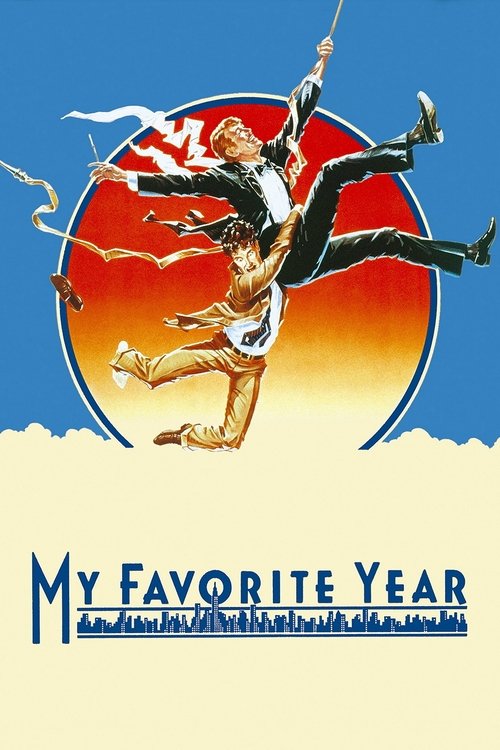

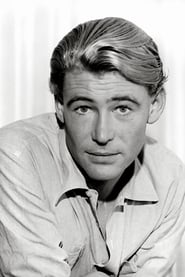

















Popular
What is the significance of Alan Swann's character in the story?
How does Benjy Stone's relationship with his family influence his character development?
What role does the live television show play in the plot of My Favorite Year?
How does the character of King Kaiser contribute to the comedic elements of the film?
What challenges does Alan Swann face during the production of the show?
Should I watch it?
Ask Your Own Question

What is the plot?
Sorry, we aren't able to watch and write up a full detailed plot yet. Check back in a few days.
More Movies Like This
Browse All Movies →


What is the ending?
In the ending of "My Favorite Year," the character Alan Swann, a fading movie star, prepares to leave New York City after a tumultuous week of filming a live television show. He has formed a bond with the young writer, Benjy Stone, who has been his guide and protector throughout the chaos. As the show concludes, Swann delivers a heartfelt performance, showcasing his talent and charm. After the show, he bids farewell to Benjy, who has grown significantly through their experiences together. The film closes with Benjy reflecting on the impact Swann has had on his life, as he embraces his own aspirations in the world of television.
Now, let's delve into the ending in a more detailed, chronological narrative.
As the final moments of the live television show approach, the atmosphere in the studio is electric with anticipation. The crew is bustling about, ensuring everything is in place for the broadcast. Alan Swann, played by Peter O'Toole, is backstage, visibly nervous yet excited. He has been through a whirlwind of events during the week, from his drunken escapades to moments of genuine connection with Benjy Stone, portrayed by Mark Linn-Baker.
In the dressing room, Benjy, who has been both a fan and a caretaker for Swann, tries to calm him down. He reminds Swann of the importance of this performance, not just for the show but for himself. Swann, who has been struggling with his fading career and personal demons, begins to realize that this moment could be a turning point for him. The bond between the two men has deepened, with Benjy seeing Swann not just as a star but as a flawed human being.
As the show goes live, Swann steps onto the stage, and the audience erupts in applause. He delivers his lines with a mix of charisma and vulnerability, showcasing his talent and reminding everyone of the star he once was. The performance is a culmination of the week's chaos, and Swann's ability to rise to the occasion is a testament to his enduring spirit. The audience, both in the studio and at home, is captivated, and for a moment, Swann is back in his prime.
After the show concludes, the cast and crew celebrate their success. Swann, however, knows that this moment is fleeting. He shares a heartfelt goodbye with Benjy, who has been his anchor throughout the tumultuous week. Swann expresses his gratitude, acknowledging how much Benjy has helped him rediscover his passion for acting. Benjy, in turn, has learned valuable lessons about courage and the complexities of fame.
As Swann prepares to leave New York, he reflects on his life and the choices he has made. He understands that he cannot escape his past, but he is determined to move forward. The emotional weight of their farewell is palpable, as both men recognize the impact they have had on each other's lives. Swann departs, leaving Benjy with a sense of hope and inspiration.
In the final scenes, Benjy stands alone in the studio, contemplating his future. He has grown from a timid writer into someone who believes in his own potential. The film closes with Benjy looking out at the city, filled with a renewed sense of purpose. He is ready to embrace his own dreams, carrying with him the lessons learned from his time with Swann.
The fates of the main characters are intertwined in this poignant conclusion. Alan Swann leaves with a sense of redemption, having reclaimed a part of himself through his performance and connection with Benjy. Benjy, on the other hand, steps into his own future, inspired by the man he admired, ready to face the challenges of the television world with newfound confidence. The film ends on a note of optimism, highlighting the transformative power of relationships and the pursuit of dreams.
Is there a post-credit scene?
The movie "My Favorite Year," produced in 1982, does not have a post-credit scene. The film concludes with a heartfelt resolution, focusing on the main character, Benjy Stone, reflecting on his experiences with the legendary actor Alan Swann during a tumultuous week of live television production. The story wraps up with a sense of nostalgia and warmth, leaving the audience with the emotional impact of the characters' journeys without any additional scenes after the credits.
What is the significance of Alan Swann's character in the story?
Alan Swann, played by Peter O'Toole, is a legendary film star who is brought in to guest star on a live television comedy show. His character represents the fading glamour of Hollywood and the challenges of aging in the entertainment industry. Throughout the film, Swann struggles with his own insecurities and the pressures of live performance, which creates a dynamic contrast with the young writer, Benjy Stone, who idolizes him. Swann's journey from a self-absorbed actor to someone who embraces the importance of friendship and responsibility is central to the film's emotional core.
How does Benjy Stone's relationship with his family influence his character development?
Benjy Stone, portrayed by Mark Linn-Baker, is a young writer who is deeply influenced by his Jewish upbringing and his family's expectations. His relationship with his overbearing mother and his desire to prove himself in the world of television comedy create internal conflict. As he navigates the chaos of working with Alan Swann, Benjy learns to assert his own identity and stand up for his beliefs, ultimately gaining confidence and maturity throughout the film.
What role does the live television show play in the plot of My Favorite Year?
The live television show, 'Comedy Cavalcade,' serves as the backdrop for the entire narrative. It is where the characters' conflicts unfold, and the pressure of live performance heightens the stakes for both the cast and crew. The chaotic atmosphere of preparing for a live broadcast, complete with last-minute changes and mishaps, reflects the unpredictability of show business. The show's success or failure becomes a metaphor for the characters' personal growth and relationships, particularly between Benjy and Swann.
How does the character of King Kaiser contribute to the comedic elements of the film?
King Kaiser, played by Joseph Bologna, is the egotistical and flamboyant host of 'Comedy Cavalcade.' His larger-than-life personality and comedic style provide a stark contrast to the more serious and introspective Benjy Stone. Kaiser's antics, including his obsession with ratings and his interactions with the cast, inject humor into the film while also highlighting the absurdities of the television industry. His character serves as both a mentor and a foil to Benjy, pushing him to embrace the chaos of live television.
What challenges does Alan Swann face during the production of the show?
Alan Swann faces numerous challenges during the production of 'Comedy Cavalcade,' including his struggle with alcoholism, the pressure of performing live, and his fear of being irrelevant in a changing industry. His initial arrogance and detachment from the reality of television lead to comedic blunders, but as the story progresses, he confronts his vulnerabilities. The climax of his character arc occurs when he must overcome his fears and deliver a heartfelt performance, showcasing his growth and the importance of connection with others.
Is this family friendly?
"My Favorite Year," produced in 1982, is generally considered a family-friendly film, but it does contain some elements that may be objectionable or upsetting for children or sensitive viewers. Here are a few aspects to consider:
-
Mature Themes: The film touches on themes of alcoholism and the struggles of a fading star, which may be difficult for younger audiences to fully understand.
-
Language: There are instances of mild profanity and some suggestive language that may not be suitable for all children.
-
Alcohol Use: The character of Alan Swann, played by Peter O'Toole, is depicted as a heavy drinker, and there are scenes that involve drinking and the consequences of intoxication.
-
Romantic Situations: There are moments of romantic tension and innuendo that may be inappropriate for younger viewers.
-
Emotional Moments: The film includes scenes that explore feelings of insecurity, disappointment, and the pressures of show business, which could be upsetting for sensitive viewers.
Overall, while the film has comedic elements and a heartwarming story, parents may want to preview it or discuss its themes with their children beforehand.







