







Popular
What are the key turning points in the protagonist's character development?
What motivates the main character to engage in a life of crime?
How does the relationship between the protagonist and his family evolve throughout the film?
What role does betrayal play in the protagonist's journey?
How does the protagonist's environment influence his decisions?
Should I watch it?
Ask Your Own Question

What is the plot?
The film A Life Full of Evils (1983) opens with a raw, gritty scene set in a dimly lit prison corridor, where a man named Wei Jun is released after serving several years behind bars. The camera lingers on his hardened face, marked by the shadows of regret and a simmering hunger for something more than mere survival. It is early autumn of 1983, the air outside the prison heavy with the scent of rain and smoke from the nearby city of Guangzhou.
Wei Jun steps out into the bustling streets, blending into the crowd with practiced ease. His first target is a lonely, wealthy woman named Madam Lin Xiu Ying, a widow in her late forties who lives in a sprawling but isolated mansion on the outskirts of the city. Lin is portrayed as a fragile figure, her loneliness palpable in her slow, deliberate movements and the vacant gaze she casts out her large windows. She is surrounded by opulence but starved for human connection.
Wei Jun's approach is calculated and smooth. He visits Lin's estate under the pretense of being a distant relative recently returned from abroad. Their initial conversations are charged with a strange mix of vulnerability and manipulation. Wei Jun's voice is low and persuasive as he tells Lin, "You don't have to be alone anymore. I can protect you, and together we can rebuild what's been broken." Lin, desperate for companionship and trust, slowly lets down her guard.
Over the next several weeks, Wei Jun ingratiates himself into Lin's life, attending lavish dinners and social gatherings at her mansion. The film uses close-up shots of Lin's trembling hands as she signs over financial documents under Wei Jun's coaxing, the camera lingering on the stark contrast between her fading hope and his growing greed. Wei Jun swindles her out of a substantial portion of her fortune, funneling money into secret accounts and luxury purchases for himself.
The tension escalates when Lin's loyal housekeeper, Aunt Mei, grows suspicious of Wei Jun's intentions. Aunt Mei confronts him one evening in the dimly lit kitchen, her voice trembling but firm: "You're not who you say you are. Leave Madam Lin alone." Wei Jun's response is chillingly calm, "This is none of your concern." That night, Aunt Mei is found dead, an apparent accident staged to look like a fall down the grand staircase. The camera captures the stark horror on Lin's face when she discovers the body, her grief deepening the film's emotional weight.
As Wei Jun's deception unravels, Lin confronts him in the grand hall of her mansion. "Why are you doing this? I trusted you," she pleads, tears streaming down her cheeks. Wei Jun's eyes flash with cold calculation as he replies, "Trust is a luxury I cannot afford. You gave me everything, and now it's time to take what I want." The confrontation turns violent; Wei Jun strangles Lin in a desperate, brutal act that leaves the room silent except for her final, ragged breaths.
The film's climax is a tense, harrowing sequence where Wei Jun attempts to cover his tracks. The mansion is shrouded in darkness, rain pelting the windows as police sirens wail in the distance. Wei Jun's paranoia grows; he burns documents and destroys evidence, but the walls close in. A detective named Chen Wei, who has been quietly investigating Lin's disappearance, arrives at the mansion. Chen's sharp eyes and relentless questioning force Wei Jun into a corner.
In a final confrontation in the mansion's shadowy study, Chen says, "Your lies end here, Wei Jun. Lin's death won't be in vain." Wei Jun, desperate and unhinged, lunges at Chen, but is subdued. The film closes with Wei Jun being led away in handcuffs, the rain washing over the cold stone steps as dawn breaks--a bleak but just resolution.
Throughout A Life Full of Evils, the narrative weaves a dark tapestry of betrayal, loneliness, and greed. Every death--the housekeeper Aunt Mei's suspicious fall and Madam Lin Xiu Ying's murder--serves as a grim marker of Wei Jun's descent into moral depravity. The story reveals no redemption for Wei Jun, only the harsh consequences of a life consumed by evil. The final scenes linger on Lin's empty mansion, a haunting symbol of shattered trust and lost innocence, as the credits roll.


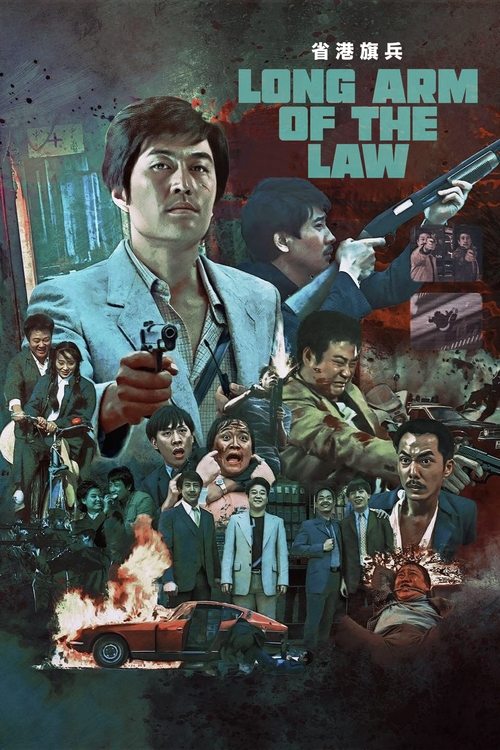






What is the ending?
In the ending of "A Life Full of Evils," the protagonist, after a series of harrowing events and moral dilemmas, confronts the consequences of his actions. He faces a critical choice that leads to a tragic resolution, impacting the lives of those around him. The film concludes with a somber reflection on the nature of evil and the weight of one's decisions.
As the final act unfolds, the protagonist, burdened by guilt and regret, finds himself at a crossroads. He is haunted by the ghosts of his past, each representing a choice that has led him deeper into a life filled with moral corruption. The atmosphere is thick with tension as he navigates through a dimly lit alley, the shadows reflecting his internal struggle.
In a pivotal scene, he encounters a former ally, who has also been affected by the protagonist's choices. Their confrontation is charged with emotion, as the ally reveals the devastating impact of the protagonist's actions on their lives. The protagonist's face is etched with remorse, and he grapples with the realization that his pursuit of power and control has come at a great cost.
As the climax approaches, the protagonist is faced with a final decision that could either redeem him or seal his fate. He stands at the edge of a precipice, both literally and metaphorically, contemplating the path he has taken. The weight of his past decisions crashes down on him, and in a moment of clarity, he understands that he cannot escape the consequences of his actions.
In the closing scenes, the protagonist makes a choice that leads to his downfall. He sacrifices himself in a desperate attempt to save those he has wronged, but it is too late. The screen fades to black as the sounds of sirens echo in the distance, symbolizing the inescapable nature of justice and the repercussions of a life filled with evils.
The fate of the main characters is sealed in this tragic conclusion. The protagonist, once a man of ambition, is left to face the ultimate consequence of his choices, while those he has harmed are left to pick up the pieces of their shattered lives. The film ends on a haunting note, leaving the audience to ponder the true cost of a life led astray.
Is there a post-credit scene?
The movie "A Life Full of Evils," produced in 1983, does not contain a post-credit scene. The film concludes its narrative without any additional scenes or content after the credits roll. The story wraps up with a poignant resolution, leaving the audience to reflect on the themes of morality and the consequences of one's choices. The absence of a post-credit scene aligns with the film's serious tone and focus on character development throughout its runtime.
What are the key turning points in the protagonist's character development?
Key turning points in the protagonist's character development include moments of introspection where he confronts the consequences of his actions. These moments are often triggered by significant events, such as the loss of a loved one or a close call with law enforcement, leading him to reevaluate his choices and ultimately seek a path toward redemption.
What motivates the main character to engage in a life of crime?
The main character, driven by desperation and a desire for power, finds himself entangled in a web of crime as he seeks to escape his mundane existence. His internal conflict is palpable as he grapples with the moral implications of his choices, often reflecting on his past and the circumstances that led him down this dark path.
How does the relationship between the protagonist and his family evolve throughout the film?
Initially, the protagonist's relationship with his family is strained due to his criminal activities. As the story progresses, moments of tension arise, particularly with his spouse, who struggles to understand his choices. The emotional weight of their interactions reveals the protagonist's internal struggle between loyalty to his family and his commitment to his criminal lifestyle.
What role does betrayal play in the protagonist's journey?
Betrayal is a recurring theme that significantly impacts the protagonist's journey. Key moments involve trusted allies turning against him, which not only heightens the stakes but also forces him to confront his own vulnerabilities. Each act of betrayal deepens his isolation and complicates his quest for redemption.
How does the protagonist's environment influence his decisions?
The protagonist's environment, marked by poverty and crime, serves as a catalyst for his decisions. The gritty, oppressive atmosphere of his surroundings amplifies his feelings of entrapment and desperation, pushing him further into a life of evils. The stark contrast between his dreams and reality is vividly portrayed through the settings he navigates.
Is this family friendly?
"A Life Full of Evils," produced in 1983, is not considered family-friendly due to its mature themes and content. The film explores complex and dark aspects of human nature, which may be unsettling for children or sensitive viewers.
Potentially objectionable or upsetting aspects include:
-
Violence and Aggression: The film contains scenes depicting physical confrontations and emotional turmoil, which may be distressing.
-
Moral Ambiguity: Characters often grapple with ethical dilemmas and make questionable choices, leading to a tense atmosphere that may be confusing for younger audiences.
-
Emotional Distress: The characters experience significant emotional pain, including betrayal and loss, which could be upsetting for sensitive viewers.
-
Dark Themes: The narrative delves into themes of revenge, guilt, and the consequences of one's actions, which may not be suitable for children.
-
Intense Situations: There are moments of high tension and anxiety that could provoke fear or discomfort.
Overall, the film's exploration of these heavy themes makes it more appropriate for mature audiences.








