






Popular
Why does Leïla take Gab’s gun, and what is she planning to do with it?
Why do Gab and Driss end up chasing Leïla together, even though they are on bad terms?
What happened to Leïla’s mother, and why does the film treat her death as suspicious?
How are Gab and Driss connected to Leïla personally?
Who are the “orphans” in The Orphans, and how does that relate to the characters’ backstory?
Should I watch it?
Ask Your Own Question

What is the plot?
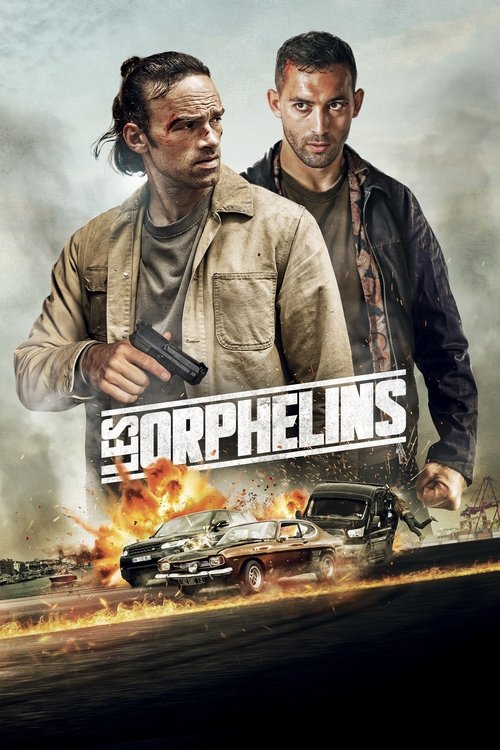
Gabriel Stenne has not thought about Sofia or Driss in eighteen years when the orphanage caretaker calls with bad news: Sofia has been in a horrific car crash, and doctors are unsure whether she survives. That phone call drags him out of his hardened, procedural life as a police investigator and sends him back toward the only two people who ever mattered to him in the orphanage, Driss and Sofia, just as grief begins turning into suspicion and revenge.
He rushes to the hospital, the fluorescent hallways cold and airless around him, and the reunion with Driss is instantly sour. Driss is now a smooth-talking mercenary with criminal connections, the complete opposite of Gabriel's rigid, law-bound existence, and the two men have not spoken since childhood, when they were rivals for Sofia's affection. Their history hangs between them like an old wound reopened all at once: the orphanage, the jealousy, the unfinished love triangle, the years of silence. Sofia is the center of it even now, not because she is present, but because she is not; she is lying between life and death after being run off the road in what first appears to be a crash.
The film makes the past feel alive through the people who carry it. Gabriel Stenne is built around discipline and restraint, a man who retreats into the law, while Driss survives by slipping outside it, moving through criminal networks and surviving by instinct. They are both men shaped by abandonment, "the true orphans" in the emotional sense, and the film immediately uses that shared history to explain why their reunion is so explosive. They are not simply old friends with a grudge; they are two survivors who never learned how to process grief, and now the death of the woman they both loved forces them back into the same emotional room.
Sofia's daughter, Leïla, is the third point in that triangle, and she enters the story with the force of a blade. She is seventeen, grieving, furious, and already convinced that the crash was not an accident. She was in the car with Sofia when the sports car forced them off the road, and the anger she carries is immediate and physical, something visible in the way she moves and speaks, as if she is already half in another world. The sources consistently present her as the engine of the plot: once she learns that the driver of the flashy car may be connected to a powerful organization, her grief hardens into purpose.
The first major turn comes when Leïla steals Gabriel's gun. That theft is not just a practical move; it is the moment the story shifts from investigation into pursuit. The gun becomes the most important object in the film, a grim handoff of violence from one generation to the next. Gabriel, the lawman, loses control of the one tool that symbolizes his authority, and Leïla gains the means to act on her rage. From this point on, the adults are no longer simply chasing the truth about Sofia's death; they are trying to stop Leïla from becoming consumed by revenge before she crosses a line she cannot come back from.
As Gabriel and Driss are forced to work together, their old resentment gives way to reluctant cooperation. The film's tension does not come from whether they can fight side by side; it comes from whether they can actually trust each other long enough to save Leïla. Their investigation leads them away from the hospital and into the web of people connected to the crash, where the official story begins to crack. At first, the records describe the event as a routine accident, a tragic loss on paper and nothing more. But Leïla notices what does not fit, and that inconsistency is the opening through which the truth begins to leak out.
The deeper they push, the clearer it becomes that Sofia's death is tied to a cover-up, not random misfortune. The sources identify a powerful corporation and, more specifically, a security company with enough influence to smother the case under paperwork, delay, and institutional pressure. This is not a simple gangland killing explained by one villain with a gun; it is something colder and more protected, a system that can erase evidence by making the truth harder to access. That realization sharpens the story's moral shape. If the crash is intentional, then Leïla's rage suddenly has a target, and the grief becomes direction rather than chaos.
The pursuit brings Gabriel, Driss, and Leïla into a collision course with the people connected to the car that ran Sofia and Leïla off the road. The sources do not provide a complete scene-by-scene account of every stop they make, but they do make clear that the teenage daughter's hunt grows more dangerous the closer she gets to the family behind the cover-up. One account describes her breaking into the mob's home and confronting the son tied to the crash, while another notes that she follows the trail of a powerful organization willing to do anything to protect itself. In that confrontation, the son is not presented as a monstrous mastermind but as a frightened, compromised young man with guilt eating at him from the inside.
That guilt becomes one of the film's sharpest reversals. In one of the film's major emotional revelations, Leïla finds Mathias in his room, coked up and unraveling, and instead of defending himself or trying to escape, he begs her to shoot him because the guilt is killing him. That moment strips the situation bare. The person she has been hunting is not a triumphant villain standing over her mother's grave but someone already collapsing under the weight of what he helped do. The confrontation does not resolve the damage, but it does change the emotional temperature of the story, because Leïla is no longer facing a faceless enemy. She is facing a broken human being who wants punishment as much as she wants revenge.
The film keeps pressing the idea that violence repeats itself unless someone stops the cycle. Leïla's pursuit of justice is understandable, but the adults around her know that if she kills, she will lose the rest of her life to the same darkness that took her mother. Gabriel and Driss, who spent years refusing to speak, are forced into repeated contact as they move through the city trying to catch up to her. Their confrontations are not only with Leïla's target but with each other. Every time they argue, the old orphanage wounds reopen: who was stronger, who abandoned whom, who became the man who could survive, who became the man who followed rules, and what they each failed to say when they still had the chance.
The orphanage remains the emotional center of the story even when the film moves far from it. It is where Gabriel, Driss, and Sofia formed the first version of themselves, and it is the place that explains why all three adults still carry childhood into every decision they make. The caretaker who contacts Gabriel becomes an important bridge between past and present, the one person who can call the old life back into motion with a single message. The sources do not specify a precise time or date for these events, but they make clear that the span between the orphanage years and the present is eighteen years, enough time for resentment to calcify into identity.
As the plot tightens, the film keeps revealing that Gabriel and Driss have been living opposite but equally damaged lives. Gabriel has hidden inside institutions, language, and procedure; Driss has hidden inside improvisation, street logic, and criminal commerce. Neither path has healed them. The ending analysis makes this explicit: they are both men frozen in childhood, surviving but not truly living. Sofia's death forces them to face the part of themselves that still belongs to the orphanage, still belongs to the first love they never got over, and still belongs to the guilt they have spent years avoiding.
The climax builds out of urgency rather than a single grand reveal. Leïla is running toward a point of no return, armed with Gabriel's gun, and the men are racing after her not just to stop a murder but to keep her from becoming defined by one. When they finally corner the situation, the emotional stakes outweigh the action. The film's strongest confrontations are not just gunpoint stand-offs but impossible conversations: Gabriel and Driss must finally speak to each other honestly after years of silence, and Leïla must confront the reality that the truth about her mother is larger than the revenge story she has built around it.
One of the film's most important revelations is that Sofia herself had a life beyond being the lost first love of two men and the mother of a grieving daughter. Leïla discovers that her mother's past was richer, messier, and more human than she had understood. That changes the meaning of the search. Sofia is no longer just the dead center of a revenge plot; she becomes a full person whose absence has been flattened by grief. The film uses that revelation to move Leïla away from pure vengeance and toward a more painful kind of knowledge: the knowledge that truth does not restore the dead, but it can stop the dead from being reduced to symbols.
The final emotional turn comes when the film stops treating Gabriel and Driss as rivals and starts treating them as guardians. The ending analysis is clear that their shared effort to save Leïla transforms them from two emotionally stranded men into imperfect parental figures. They do not undo the past, and they do not become redeemed in a simple way, but they choose responsibility over resentment. That choice is the film's real resolution. They act to protect Leïla, not because the law or the underworld tells them to, but because they finally understand that grief left unattended will reproduce itself in the next generation.
The source material does not identify any additional confirmed deaths beyond Sofia's, and it does not provide evidence of Gabriel, Driss, or Leïla dying in the ending. What it does show is that the film's final scenes are quiet after the violence, with the three of them changed by what they have learned. Leïla is no longer simply a daughter in search of a killer; she is someone who now understands that her mother's death was tied to a larger system and that the people around her were not just obstacles but damaged witnesses to a long chain of loss. Gabriel questions the institution he belongs to, Driss questions the life he has built outside it, and both are left altered by the act of protecting someone younger than themselves.
The title lands with its full meaning only at the end. "The Orphans" is not just about Leïla, who has lost her mother, but about Gabriel and Driss, who have spent their lives emotionally orphaned by childhood abandonment and by the inability to process what happened to them. By stopping the cycle instead of feeding it, they finally do something they were never able to do as boys: they become responsible for someone else's future. The last idea of the film is not loud or triumphant. It is quieter than revenge and more difficult than victory. Gabriel and Driss are still uncertain, still wounded, still carrying the orphanage inside them, but now they are no longer only defined by what they lost. They are defined, at last, by what they choose to protect.




What is the ending?
The ending of The Orphans follows Gab and Driss as they stop Leïla from going all the way through with her revenge, and Leïla survives. The cover-up around her mother's death is shaken, but it is not completely destroyed, and Gab and Driss end the story with their broken bond partly repaired.
Leïla's mother, Sofia, dies after a suspicious car accident, and Leïla is left furious and grieving after seeing enough to believe the powerful people around the case are hiding the truth. She takes Gab's gun and pushes deeper into the retaliation she wants to carry out, moving toward a violent confrontation with the people connected to the cover-up.
In the final stretch, Gab and Driss are forced to work together again to reach her before she crosses a point of no return. The story moves into an abandoned house, where the last confrontation unfolds as both a physical struggle and a direct clash over what Leïla is about to do. Gab is pushed to confront the limits of his loyalty to the institution he serves, while Driss is pushed to confront the cost of living in the moral shadows.
Leïla is stopped before she can complete her revenge, and she survives the ending. The film does not show a clean public triumph over the people behind the cover-up; instead, enough information comes out to weaken them and leave the larger situation damaged but unresolved. Gab and Driss come out alive, and by the end they have begun to repair the rupture between them that started in childhood.
If you want, I can also give you a character-by-character ending breakdown for Gab, Driss, Leïla, and Sofia in the same simple narrative style.
Who dies?
Yes. The only death explicitly identified in the available sources is Sofia's, the film's central off-screen death that happens before the main chase begins.
Sofia - Why: She is the former first love connecting Gab and Driss, and her death is the inciting incident that pulls the two men back into contact and sets Leïla on a revenge path. - When: She dies before the main present-day action of the film, as the story opens with news of the crash and its aftermath. - How: The sources describe her death as the result of a suspicious car accident or horrific road crash; one source says Leïla sees the other driver flee the scene, and another says the mob's son accidentally kills her in the car accident. - Circumstances: The death is treated as suspicious and tied to a powerful organization that wants to cover it up, which is why Leïla steals Gab's gun and goes after the people she believes are responsible.
No other character deaths are clearly confirmed in the provided search results.
Is there a post-credit scene?
I couldn't verify any post-credits scene for The Orphans (2025) from the available results. The search material shows discussion of the film's ending and general credit behavior, but it does not provide a reliable source confirming a mid-credits or post-credits scene for this movie.
The only directly relevant clue is a reviewer note saying the film has "Cute closing credits," which suggests the credits themselves are noteworthy, but that is not evidence of an extra scene after the credits.
If you want, I can help you determine whether there is a post-credits scene by checking more sources or by reconstructing the film's credited structure from reviews and database entries.
Why does Leïla take Gab’s gun, and what is she planning to do with it?
Leïla takes Gab's gun after her mother dies in what looks like a suspicious road accident, and she sets out on her own to investigate the people she believes are responsible. The gun matters because it turns her grief into direct action and puts her on a path where Gab and Driss have to stop her before she goes too far.
Why do Gab and Driss end up chasing Leïla together, even though they are on bad terms?
Gab and Driss are forced to work together because Leïla's investigation becomes dangerous and they both want to reach her before she does something irreversible. Gab approaches the situation more as a cop trying to protect her, while Driss is pulled in through his connection to the past and his ties to the criminal world, which makes their pursuit tense and personal.
What happened to Leïla’s mother, and why does the film treat her death as suspicious?
Leïla's mother dies in a road accident that is presented publicly as a tragic accident, but the story strongly suggests there is more behind it. The details do not fit cleanly for Leïla, and the film points toward a powerful corporation trying to hide its involvement through intimidation and cover-up efforts.
How are Gab and Driss connected to Leïla personally?
Gab and Driss were both in love with Leïla's mother, so Leïla is tied to their shared past as well as to the present mystery. Their connection to her makes their efforts to find and protect her deeply emotional, because they are not just chasing a girl in danger but confronting the consequences of their own history.
Who are the “orphans” in The Orphans, and how does that relate to the characters’ backstory?
The title refers most directly to Gab and Driss, who grew up in an orphanage and were emotionally shaped by that loss long before the main story begins. Leïla can also be seen as an orphan after her mother's death, but the central idea is that Gab and Driss are the true emotional orphans, still carrying unresolved grief and abandonment into adulthood.
Is this family friendly?
Probably not fully family friendly for younger children. IMDb's parental guide rates it as moderate for violence/gore, profanity, and frightening/intense scenes, with mild alcohol/drug/smoking content, and no sex or nudity listed.
Potentially objectionable or upsetting elements for children or sensitive viewers may include: - Action violence and danger, including crime-related confrontations and a revenge-driven chase premise. - A serious car crash / accident that triggers the story and may be upsetting. - Weapons and gun use, including a teenager taking a gun and pursuing dangerous people. - Threatening or intense scenes tied to organized crime, a powerful security company, and characters in peril. - Moderate profanity, depending on sensitivity to language. - Mild alcohol/drug/smoking content.
If you want, I can also give a simple age-suitability recommendation like "okay for teens / not ideal for under 13" based on this information.







