














Popular
Should I watch it?
Ask Your Own Question

What is the plot?
Sorry, we aren't able to watch and write up a full detailed plot yet. Check back in a few days.


What is the ending?
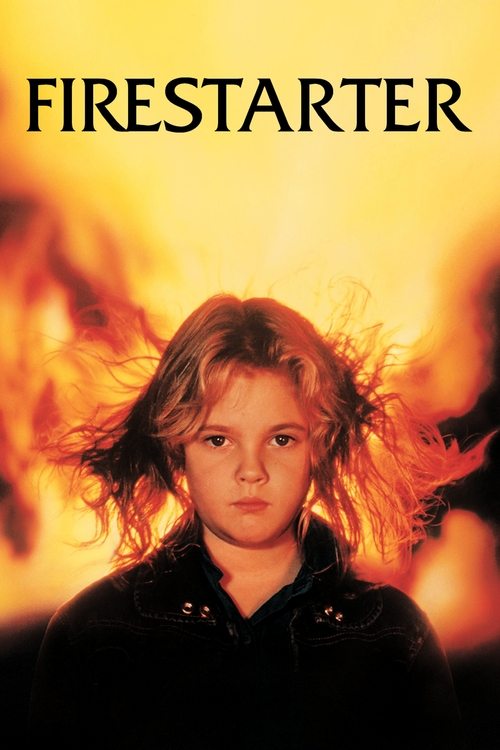
In the ending of the movie "Firestarter," Charlie McGee confronts the government agents who have been pursuing her and her father, Andy. In a climactic showdown, she uses her pyrokinetic abilities to escape and ultimately confronts the head of the agency, Rainbird. The film concludes with Charlie realizing the full extent of her powers and the consequences of her actions.
As the film approaches its climax, the tension escalates dramatically. Charlie McGee, a young girl with extraordinary pyrokinetic abilities, is on the run with her father, Andy. They have been pursued relentlessly by a secret government agency known as The Shop, which seeks to exploit Charlie's powers for their own gain.
In the final act, Charlie and Andy find themselves cornered in a remote facility where The Shop conducts its experiments. Andy, who has the ability to influence people's thoughts, tries to protect Charlie but is ultimately captured by the agents. The emotional weight of their situation is palpable; Andy is desperate to keep his daughter safe, while Charlie is terrified of what will happen to them.
As the agents close in, Andy is forced to use his powers to help Charlie escape. He sacrifices himself, using his mental abilities to distract the agents, allowing Charlie to flee. The moment is heart-wrenching; Charlie's fear and confusion are evident as she realizes she may never see her father again.
Once free, Charlie is filled with a mix of anger and determination. She understands that she must confront the agency that has caused so much pain. In a powerful scene, she returns to the facility, her emotions boiling over. The camera captures her face, a blend of fear and resolve, as she prepares to unleash her powers.
Inside the facility, chaos ensues. Charlie's pyrokinetic abilities manifest in a spectacular display of fire and destruction. She ignites the building, flames roaring around her as she confronts the agents. The visual effects are striking, showcasing her power and the danger she poses.
The climax reaches its peak when Charlie comes face to face with John Rainbird, the head of The Shop, who has been obsessed with capturing her. Rainbird attempts to manipulate her, but Charlie, fueled by her grief and anger, retaliates. In a moment of intense confrontation, she uses her powers to engulf Rainbird in flames, a symbolic act of reclaiming her agency and rejecting the control that The Shop sought to impose on her.
As the facility burns, Charlie escapes into the night, her fate uncertain but her spirit unbroken. The film closes with a haunting image of her walking away from the destruction, a child who has faced unimaginable horrors but has emerged with a newfound understanding of her abilities and the world around her.
In the end, Andy sacrifices himself for Charlie, ensuring her escape but losing his life in the process. Rainbird meets a fiery end, consumed by the very powers he sought to control. Charlie, though left alone, has gained a sense of empowerment, having confronted her fears and the forces that sought to exploit her. The film concludes on a note of ambiguity, leaving the audience to ponder the implications of her journey and the future that lies ahead for her.
Is there a post-credit scene?
The movie "Firestarter," produced in 1984, does not have a post-credit scene. The film concludes with the resolution of the main storyline, focusing on the fate of Charlie McGee and her struggle against the government agency that seeks to control her pyrokinetic abilities. After the climax, where Charlie confronts the agents and ultimately escapes, the film ends without any additional scenes or hints at future developments. The narrative wraps up with a sense of closure regarding Charlie's journey and the dangers posed by those who wish to exploit her powers.
What are the origins of Charlie's pyrokinetic abilities?
Charlie McGee's pyrokinetic abilities stem from an experimental drug called 'Lot Six,' which her parents, Andy and Vicky McGee, were subjected to during a government-sponsored experiment. This drug enhanced their mental capabilities, leading to Charlie's unique ability to start fires with her mind.
How does Andy McGee's ability influence his relationship with Charlie?
Andy McGee possesses a telepathic ability known as 'the push,' which allows him to influence others' thoughts and actions. This ability creates a protective bond between him and Charlie, as he uses it to shield her from the dangers posed by the government agency, The Shop, that seeks to exploit her powers.
What role does The Shop play in the pursuit of Charlie?
The Shop is a secret government agency that conducts experiments on individuals with psychic abilities. They are determined to capture Charlie to harness her pyrokinetic powers for their own purposes, leading to a relentless pursuit that puts both her and her father's lives in danger.
How does Vicky McGee's character impact the story?
Vicky McGee, Charlie's mother, is deeply protective of her daughter and is initially unaware of the full extent of Charlie's powers. Her character adds emotional depth to the story, as she struggles with the implications of their abilities and the threat posed by The Shop, ultimately leading to her tragic fate.
What is the significance of the fire scenes in the film?
The fire scenes in 'Firestarter' are not only visually striking but also serve as a manifestation of Charlie's emotional state. Each instance of her pyrokinetic abilities reflects her inner turmoil, fear, and anger, illustrating the struggle she faces in controlling her powers while being pursued by those who wish to exploit them.
Is this family friendly?
The movie "Firestarter," produced in 1984, is not considered family-friendly due to several potentially objectionable or upsetting scenes. Here are some aspects that may be concerning for children or sensitive viewers:
-
Violence and Intimidation: The film contains scenes of violence, including the use of fire as a weapon, which can be intense and frightening. Characters are shown in perilous situations, and there are moments of physical confrontation.
-
Psychological Trauma: The emotional and psychological struggles of the characters, particularly the young girl, can be distressing. The fear of being hunted and the trauma of loss are central themes.
-
Death and Harm: There are scenes depicting death and injury, including the consequences of the protagonist's powers, which can be unsettling.
-
Government Experimentation: The narrative involves themes of government control and experimentation on individuals, which may be disturbing, especially for younger viewers.
-
Parental Conflict: The relationship between the father and the government agents creates tension and fear, which may be upsetting for children who are sensitive to themes of family separation or danger.
Overall, the film's mature themes and intense scenes make it more suitable for older audiences rather than children.








