











Popular
Who is the main antagonist in Pinocchio and the Emperor of the Night?
What role does Pinocchio's father, Geppetto, play in the story?
How does Pinocchio's character develop throughout the film?
What is the significance of the character Foulfellow in the story?
What challenges does Pinocchio face in the Emperor's realm?
Should I watch it?
Ask Your Own Question

What is the plot?
Sorry, we aren't able to watch and write up a full detailed plot yet. Check back in a few days.


What is the ending?
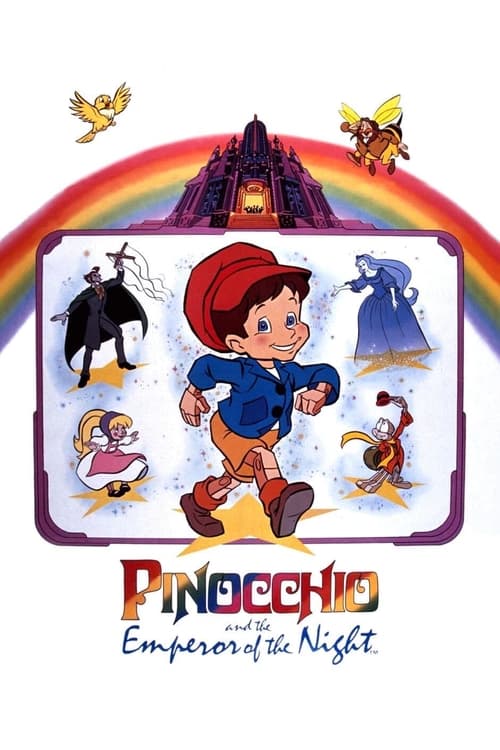
In the ending of "Pinocchio and the Emperor of the Night," Pinocchio confronts the Emperor, who has been manipulating him and his friends. With the help of his allies, including the Blue Fairy, Pinocchio ultimately defeats the Emperor, freeing himself and his friends from his dark influence. The film concludes with Pinocchio realizing the importance of being brave and selfless, leading to his transformation into a real boy.
Now, let's delve into the ending in a detailed, chronological narrative.
As the climax unfolds, Pinocchio finds himself in the dark, foreboding realm of the Emperor of the Night. The atmosphere is thick with tension, shadows dancing ominously around him. Pinocchio, filled with a mix of fear and determination, steps forward, his wooden heart pounding with the weight of his choices. He knows he must confront the Emperor, who has ensnared him and his friends in a web of deceit and manipulation.
In a grand, shadowy chamber, the Emperor looms large, his presence both intimidating and sinister. He taunts Pinocchio, reminding him of his past mistakes and the temptations that led him astray. Pinocchio, however, stands firm, recalling the lessons he has learned about bravery, friendship, and the importance of making the right choices. The Blue Fairy appears, her ethereal glow illuminating the darkness, providing Pinocchio with the strength he needs to face the Emperor.
The confrontation escalates as the Emperor unleashes his dark magic, attempting to overpower Pinocchio. The room is filled with swirling shadows and bursts of light as Pinocchio, with the support of the Blue Fairy and his friends, fights back. Each moment is charged with emotion; Pinocchio's resolve grows stronger as he remembers the love and support of those who care for him. He realizes that true strength comes from within and from the bonds he has formed.
In a pivotal moment, Pinocchio uses his newfound courage to confront the Emperor directly. He declares that he will not be a pawn in the Emperor's game any longer. This declaration resonates with the power of his transformation, and the Emperor, taken aback by Pinocchio's defiance, begins to lose his grip on the dark magic that has held sway over the realm.
As the battle reaches its peak, the Blue Fairy casts a powerful spell, illuminating the chamber with a brilliant light that dispels the shadows. The Emperor, realizing he is losing control, attempts to flee, but Pinocchio, now fully embracing his role as a hero, stands in his way. With one final act of bravery, Pinocchio confronts the Emperor, and in a burst of light, the dark figure is vanquished, his power shattered.
With the Emperor defeated, the realm begins to transform. The darkness lifts, revealing a vibrant landscape filled with light and hope. Pinocchio's friends, who had been trapped in the Emperor's grasp, are freed and rush to his side, celebrating their victory. The Blue Fairy smiles, proud of Pinocchio's growth and bravery.
In the final moments, Pinocchio stands before the Blue Fairy, who tells him that he has proven himself worthy of becoming a real boy. Overwhelmed with joy, Pinocchio feels a warmth spread through him, and in a magical transformation, he becomes flesh and blood, his wooden form replaced by that of a real child. Tears of happiness fill his eyes as he embraces his friends, who cheer for him, celebrating his journey and the lessons learned along the way.
The film concludes with Pinocchio, now a real boy, surrounded by love and friendship, embodying the values of courage, selflessness, and the importance of making the right choices. Each character, having faced their own trials, emerges stronger and more united, ready to embrace a brighter future together.
Is there a post-credit scene?
"Pinocchio and the Emperor of the Night," produced in 1987, does not contain a post-credit scene. The film concludes with a resolution to the story, focusing on Pinocchio's journey and the lessons he learns about bravery, friendship, and the importance of being true to oneself. After the climax, where Pinocchio confronts the Emperor of the Night and ultimately triumphs, the film wraps up with a sense of closure, celebrating Pinocchio's transformation and his reunion with Geppetto. The absence of a post-credit scene aligns with the film's narrative structure, emphasizing the completion of Pinocchio's character arc rather than setting up further adventures.
Who is the main antagonist in Pinocchio and the Emperor of the Night?
The main antagonist in the film is the Emperor of the Night, a dark and sinister figure who seeks to capture Pinocchio and use him for his own nefarious purposes.
What role does Pinocchio's father, Geppetto, play in the story?
Geppetto, Pinocchio's father, is portrayed as a loving and caring figure who is deeply concerned for Pinocchio's safety. He embarks on a quest to rescue Pinocchio from the clutches of the Emperor of the Night.
How does Pinocchio's character develop throughout the film?
Throughout the film, Pinocchio evolves from a naive and carefree puppet into a more courageous and self-aware character. He learns the importance of bravery, friendship, and the consequences of his actions as he faces various challenges.
What is the significance of the character Foulfellow in the story?
Foulfellow is a cunning and manipulative character who serves as a foil to Pinocchio. He represents temptation and deceit, often trying to lead Pinocchio astray, which adds tension to Pinocchio's journey.
What challenges does Pinocchio face in the Emperor's realm?
In the Emperor's realm, Pinocchio faces numerous challenges, including being pursued by the Emperor's minions, navigating through a dark and treacherous landscape, and ultimately confronting the Emperor himself to save his friends and prove his bravery.
Is this family friendly?
"Pinocchio and the Emperor of the Night" contains several elements that may be considered unsettling or objectionable for children or sensitive viewers. Here are some aspects to be aware of:
-
Dark Themes: The film explores themes of temptation, betrayal, and the struggle between good and evil, which may be intense for younger audiences.
-
The Emperor of the Night: The main antagonist, the Emperor, is depicted as a sinister figure with a menacing presence. His intentions and actions can be frightening, especially in scenes where he manipulates and threatens characters.
-
Transformation Scenes: There are moments where characters undergo transformations that can be disturbing, particularly when they are turned into something undesirable or face dire consequences.
-
Emotional Turmoil: Pinocchio experiences significant emotional distress throughout the film, including feelings of fear, loneliness, and confusion, which may resonate deeply with sensitive viewers.
-
Dangerous Situations: The characters find themselves in perilous situations that involve deception and moral dilemmas, which could be anxiety-inducing for younger children.
-
Visual Imagery: Some scenes feature dark and surreal imagery that may be unsettling, including shadowy figures and eerie landscapes.
These elements contribute to a narrative that, while ultimately about growth and redemption, contains moments that may be challenging for younger or more sensitive viewers to process.








