
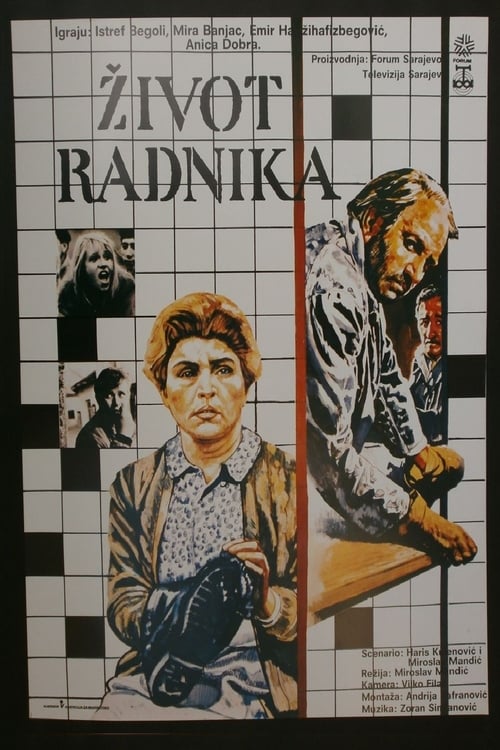











Popular
How does the protagonist's relationship with their family evolve throughout the film?
What challenges does the main character face in their job?
What role do the co-workers play in the protagonist's journey?
What specific events lead to the protagonist's decision to take action against their employer?
How does the protagonist's view of labor and community change throughout the film?
Should I watch it?
Ask Your Own Question

What is the plot?
Sorry, we aren't able to watch and write up a full detailed plot yet. Check back in a few days.






What is the ending?
In the ending of "The Worker's Life," the main character, a factory worker named Miguel, faces the consequences of his fight for workers' rights. After a series of confrontations with management and a growing sense of solidarity among his fellow workers, Miguel ultimately leads a successful strike. The film concludes with a sense of hope as the workers gain better conditions, but it also leaves a lingering uncertainty about the future.
As the final act unfolds, the tension in the factory escalates. Miguel, having rallied his coworkers, stands at the forefront of the strike. The scene is charged with emotion; workers gather outside the factory gates, their faces a mix of determination and fear. The camera captures the solidarity among them, hands raised in unity, as they chant for their rights. Miguel's internal struggle is palpable; he feels the weight of responsibility for his comrades, yet he is also aware of the risks involved.
In a pivotal scene, the factory management confronts the striking workers. The atmosphere is thick with hostility as the managers attempt to intimidate the workers into returning to their jobs. Miguel, however, stands firm, his voice steady as he articulates their demands for fair wages and safe working conditions. The workers rally behind him, their resolve strengthening as they witness his courage.
As negotiations unfold, the film juxtaposes scenes of the workers' determination with the cold, calculating demeanor of the management. The contrast highlights the stark divide between the laborers and those in power. Miguel's passion ignites a fire within the group, and they begin to see the possibility of change.
In the climax, the workers face a critical moment when the police are called in to disperse the crowd. Tension mounts as the workers stand their ground, refusing to back down. Miguel's heart races as he realizes the stakes; this is not just about their jobs, but about dignity and respect. The police advance, and a confrontation seems inevitable. However, in a moment of unexpected solidarity, the workers hold hands, forming a human chain, symbolizing their unity.
The resolution comes when the management, seeing the unwavering determination of the workers and the potential for public backlash, agrees to negotiate. The scene shifts to a meeting room where Miguel and a few representatives sit across from the management. The atmosphere is tense but hopeful. After a series of discussions, an agreement is reached that promises better wages and improved working conditions.
As the film draws to a close, the workers celebrate their victory outside the factory. Miguel stands among them, a mix of relief and pride washing over him. He looks around at his fellow workers, their faces illuminated with joy and hope for the future. However, the camera lingers on Miguel's expression, hinting at the ongoing struggles that lie ahead. The film ends with a wide shot of the factory, now a symbol of both their victory and the challenges that remain, leaving the audience with a sense of both triumph and uncertainty.
In summary, Miguel emerges as a leader who has successfully united his fellow workers, but the ending also emphasizes the ongoing nature of their fight for rights and dignity in the workplace. Each character, from the steadfast workers to the indifferent management, plays a role in this complex narrative of struggle and solidarity, encapsulating the film's themes of resilience and the quest for justice.
Is there a post-credit scene?
The movie "The Worker's Life," produced in 1987, does not contain a post-credit scene. The film concludes its narrative without any additional scenes after the credits roll. The focus remains on the story and character arcs throughout the film, leaving no further content to explore after the main events have wrapped up.
How does the protagonist's relationship with their family evolve throughout the film?
The protagonist's relationship with their family is strained due to the demands of their job. As the story progresses, the character grapples with feelings of guilt for not being present at home, leading to emotional confrontations with family members who feel neglected. Ultimately, the character seeks to reconcile these tensions by prioritizing family time.
What challenges does the main character face in their job?
The main character, a factory worker, faces numerous challenges including long hours, unsafe working conditions, and the pressure of meeting production quotas. These challenges are compounded by the lack of support from management and the struggle to maintain a work-life balance.
What role do the co-workers play in the protagonist's journey?
The co-workers serve as both a support system and a source of conflict for the protagonist. They share similar struggles, which fosters camaraderie, but also create tension as differing opinions on how to address workplace issues arise. Key moments of solidarity and betrayal among the co-workers highlight the complexities of their relationships.
What specific events lead to the protagonist's decision to take action against their employer?
A series of incidents, including witnessing a serious workplace accident and experiencing a personal health scare, catalyze the protagonist's decision to take action. These events expose the negligence of the employer and ignite a sense of urgency to advocate for better working conditions, leading to a pivotal moment of confrontation.
How does the protagonist's view of labor and community change throughout the film?
Initially, the protagonist views labor as a necessary burden, feeling isolated in their struggles. However, as they engage with co-workers and experience collective action, their perspective shifts to see labor as a shared experience that fosters community and solidarity. This transformation is marked by moments of realization and empowerment.
Is this family friendly?
"The Worker's Life," produced in 1987, is a film that delves into the struggles and realities of working-class life. While it offers a poignant exploration of social issues, it may contain elements that could be considered objectionable or upsetting for children or sensitive viewers.
-
Depictions of Poverty: The film portrays the harsh realities of poverty, including scenes of struggle and desperation that may be distressing for younger audiences.
-
Workplace Struggles: There are intense scenes depicting labor disputes, strikes, and confrontations between workers and management, which may be unsettling.
-
Emotional Turmoil: Characters experience significant emotional distress, including anxiety, frustration, and despair, which could be heavy for sensitive viewers.
-
Family Strain: The film explores the impact of economic hardship on family dynamics, leading to arguments and emotional breakdowns that may be difficult for children to process.
-
Social Injustice: Themes of inequality and exploitation are prevalent, with scenes that highlight the struggles against systemic issues, which might be complex for younger viewers to understand.
Overall, while the film carries important messages about resilience and solidarity, its themes and emotional weight may not be suitable for all children or sensitive individuals.







