




Popular
How does Sancho Panza's character contrast with Don Quixote?
What motivates Don Quixote to become a knight-errant?
What is the significance of the windmills in Don Quixote's journey?
How does the character of Dulcinea de Toboso influence Don Quixote's actions?
What role does the theme of reality versus illusion play in Don Quixote's adventures?
Should I watch it?
Ask Your Own Question

What is the plot?
Sorry, we aren't able to watch and write up a full detailed plot yet. Check back in a few days.
More Movies Like This
Browse All Movies →


What is the ending?
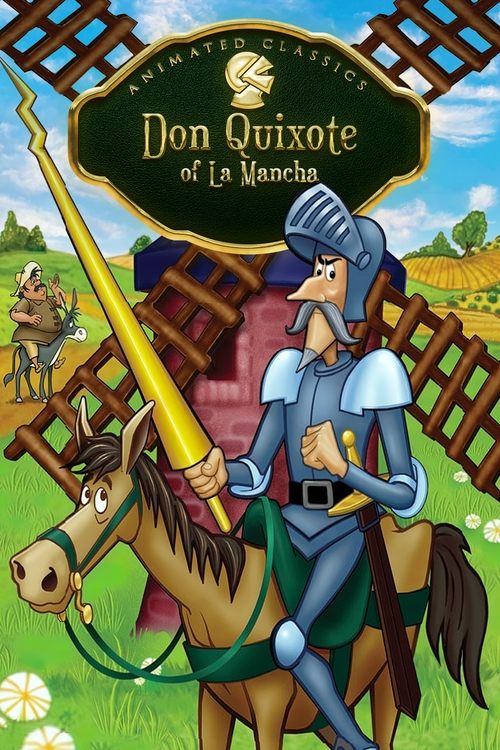
In the ending of the movie "Don Quixote of La Mancha" (1987), Don Quixote, after a series of misadventures and battles against imagined foes, ultimately faces the reality of his delusions. He is defeated in a final confrontation and returns to his home, where he is cared for by his loyal squire, Sancho Panza. In his last moments, he recognizes the futility of his quest and dies peacefully, leaving behind a legacy of dreams and ideals.
As the story unfolds towards its conclusion, we find Don Quixote, portrayed with a mix of nobility and madness, still fervently believing in his chivalric ideals. He has been on a journey filled with both triumphs and humiliations, battling windmills he perceives as giants and rescuing damsels who often do not need saving. His unwavering belief in the chivalric code drives him forward, despite the laughter and scorn of those around him.
In the penultimate scenes, Don Quixote and Sancho Panza encounter a group of actors who are performing a play. Quixote, ever the romantic, believes he is witnessing a real battle and charges into the fray, only to be met with mockery. This moment serves as a poignant reminder of his isolation from reality, as he fights valiantly against shadows and illusions, embodying the tragic hero who cannot see the world as it truly is.
As the climax approaches, Don Quixote faces a final confrontation with a group of men who represent the harshness of reality. They overpower him, and in this moment of defeat, he is stripped of his armor and his delusions. The once-mighty knight is left vulnerable, lying on the ground, a stark contrast to the grand ideals he once embodied. Sancho Panza, loyal to the end, rushes to his side, filled with concern and sorrow for his master.
In the final scenes, Don Quixote is taken back to his home, where he is cared for by Sancho and the women of the household. As he lies in bed, he begins to regain a sense of clarity. In a moment of lucidity, he reflects on his life, acknowledging the futility of his quest for glory and honor. He expresses a deep sense of regret for the pain his delusions have caused both himself and those around him.
In his last moments, Don Quixote passes away peacefully, surrounded by those who love him. His death is not marked by despair but rather a quiet acceptance of his journey. Sancho Panza, heartbroken yet proud, mourns the loss of his friend and master, recognizing the nobility in Quixote's dreams, even if they were unattainable.
The film concludes with a sense of bittersweet resolution. Don Quixote's legacy lives on in the hearts of those who knew him, a testament to the power of dreams and the human spirit's quest for meaning, even in the face of inevitable defeat. The final image lingers on Sancho Panza, who, despite his grief, carries forward the ideals of friendship and loyalty that defined their journey together.
Is there a post-credit scene?
The movie "Don Quixote of La Mancha," produced in 1987, does not have a post-credit scene. The film concludes with the resolution of its central narrative, focusing on the themes of idealism versus reality, as well as the poignant journey of its titular character, Don Quixote. After the final scenes, the story wraps up without any additional content or scenes following the credits. The film leaves viewers with a sense of reflection on the nature of dreams and the human spirit, encapsulating the essence of Cervantes' classic tale.
How does Sancho Panza's character contrast with Don Quixote?
Sancho Panza, played by James Coco, serves as a foil to Don Quixote. While Don Quixote is idealistic and delusional, believing in the grandeur of his knightly quests, Sancho is pragmatic and grounded, often providing comic relief. His loyalty to Don Quixote is unwavering, yet he frequently questions his master's judgment, highlighting the tension between reality and illusion.
What motivates Don Quixote to become a knight-errant?
Don Quixote, portrayed by Peter O'Toole, is driven by his deep-seated desire to revive chivalry and restore honor to a world he perceives as fallen into chaos. His obsession with the romantic tales of knights leads him to don an old suit of armor and set out on a quest to perform noble deeds, despite his age and the absurdity of his mission.
What is the significance of the windmills in Don Quixote's journey?
The windmills represent one of the most iconic moments in the film, symbolizing Don Quixote's delusions. He mistakes them for giants, charging at them with fervor, only to be knocked down by one of the sails. This scene encapsulates his struggle against the harsh realities of life and his unwavering commitment to his chivalric ideals, despite the absurdity of his actions.
How does the character of Dulcinea de Toboso influence Don Quixote's actions?
Dulcinea de Toboso, though never physically present in the film, is the embodiment of Don Quixote's idealized love. He envisions her as the perfect lady, inspiring him to undertake his quests. His devotion to her, despite her being a figment of his imagination, drives many of his decisions and highlights his romanticized view of love and knighthood.
What role does the theme of reality versus illusion play in Don Quixote's adventures?
Throughout the film, Don Quixote's adventures are steeped in the theme of reality versus illusion. His inability to distinguish between the two leads him into various misadventures, such as mistaking a group of actors for a noble court. This theme is central to his character, as it showcases his tragic yet noble quest for meaning in a world that often seems devoid of it.
Is this family friendly?
The 1987 film "Don Quixote of La Mancha" is generally considered family-friendly, but it does contain some elements that may be unsettling for younger viewers or sensitive individuals. Here are a few aspects to consider:
-
Violence and Conflict: There are scenes depicting battles and confrontations, including sword fights and physical altercations, which may be intense for some children.
-
Madness and Delusion: The portrayal of Don Quixote's descent into madness can be distressing, as it explores themes of mental instability and the struggle between reality and illusion.
-
Tragic Elements: The film touches on themes of loss and unfulfilled dreams, which may evoke sadness or confusion in younger audiences.
-
Dark Humor: Some scenes may contain dark or ironic humor that could be misinterpreted by children, leading to discomfort.
-
Social Commentary: The film includes critiques of society and human nature that may be complex for younger viewers to fully grasp.
Overall, while the film is suitable for a family audience, parental guidance may be advisable for younger children or those who are particularly sensitive to these themes.








