
















Popular
What kind of school do Scooby-Doo and the gang visit in the movie?
Who are the main characters that Scooby-Doo and the gang interact with at the Ghoul School?
What is the main conflict that arises during Scooby-Doo and the Ghoul School?
How do Scooby-Doo and the gang help the ghouls at the school?
What role does Shaggy play in the Ghoul School?
Should I watch it?
Ask Your Own Question

What is the plot?
Sorry, we aren't able to watch and write up a full detailed plot yet. Check back in a few days.
What is the ending?
In the ending of "Scooby-Doo and the Ghoul School," the gang successfully defeats the evil witch, and the ghouls, who were initially misunderstood, are saved. They manage to protect the Ghoul School and its students, leading to a celebration of friendship and acceptance. Scooby-Doo and Shaggy, along with the rest of the gang, leave the school with a sense of accomplishment and newfound friendships.
Now, let's delve into the ending in a more detailed narrative fashion:
As the climax of the story unfolds, the gang--consisting of Scooby-Doo, Shaggy, Fred, Daphne, and Velma--find themselves in a tense confrontation with the evil witch, who has been terrorizing the Ghoul School. The atmosphere is thick with suspense as the gang devises a plan to thwart her sinister intentions. The witch, determined to capture the ghouls and use their powers for her own gain, casts spells that create chaos within the school.
In a pivotal scene, the gang splits up to distract the witch while Scooby and Shaggy, driven by their loyalty to their new friends, the ghouls, take on the task of rescuing them from the witch's clutches. The ghouls, including characters like the Mummy, the Vampire, and the Werewolf, show their bravery and determination to fight back against the witch, revealing their true natures as misunderstood beings rather than monsters.
As the battle intensifies, the gang uses their wits and teamwork to outsmart the witch. Fred leads the charge, coordinating the group's efforts, while Velma uses her intelligence to decipher the witch's spells. Daphne, with her resourcefulness, finds a way to counteract the witch's magic, and Scooby and Shaggy, despite their initial fear, muster the courage to confront the witch directly.
In a climactic moment, the gang manages to trap the witch in her own spell, turning her powers against her. The ghouls, who had been fearful of their own identities, find strength in their unity and help the gang in the final confrontation. With a burst of teamwork and bravery, they succeed in banishing the witch, restoring peace to the Ghoul School.
As the dust settles, the ghouls express their gratitude to the gang, realizing that they are not alone and that friendship can transcend fear and misunderstanding. The school, once a place of dread, transforms into a sanctuary of acceptance and camaraderie. The gang shares heartfelt goodbyes with the ghouls, promising to visit and keep in touch.
In the final scenes, Scooby and Shaggy, still a bit shaken but filled with joy, celebrate their victory with a feast, surrounded by their new friends. Fred, Daphne, and Velma reflect on the adventure, acknowledging the importance of understanding and accepting others, regardless of their differences. The gang leaves the Ghoul School with a sense of accomplishment, having not only solved the mystery but also having forged lasting friendships.
As they drive away, the camera pans back to the Ghoul School, now vibrant and alive with laughter, symbolizing the triumph of friendship over fear. Each character, having faced their fears and embraced their identities, leaves with a renewed sense of purpose and belonging, marking the end of their adventure with a promise of future escapades.
Is there a post-credit scene?
"Scooby-Doo and the Ghoul School," produced in 1988, does not have a post-credit scene. The film concludes with the main storyline wrapping up as Scooby-Doo, Shaggy, and the rest of the gang celebrate their victory over the villainous plans of the evil witch, and they bid farewell to the ghoulish students of the school. The ending focuses on the camaraderie and friendship developed throughout their adventure, leaving no additional scenes or content after the credits.
What kind of school do Scooby-Doo and the gang visit in the movie?
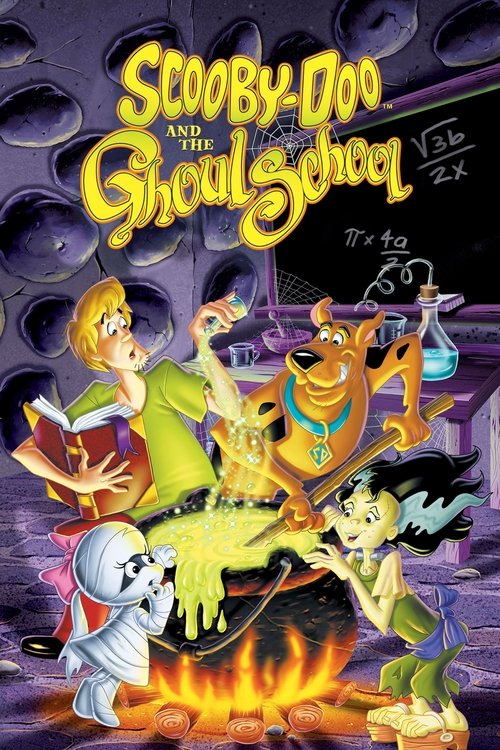
Scooby-Doo and the gang visit a school for ghouls, which is run by a kind-hearted headmistress named Miss Grimwood. The school is designed to educate young monsters, including a werewolf, a vampire, and a mummy, among others.
Who are the main characters that Scooby-Doo and the gang interact with at the Ghoul School?
The main characters that Scooby-Doo and the gang interact with include Miss Grimwood, the headmistress; the students, who are various young monsters like the werewolf named Winnie, the vampire named Phantasma, and the mummy named Mummy; and the antagonists, who are the evil characters trying to capture the ghouls.
What is the main conflict that arises during Scooby-Doo and the Ghoul School?
The main conflict arises when a group of villains, led by the evil Count Dracula, attempts to capture the ghouls for their own nefarious purposes. Scooby-Doo and the gang must protect the students and uncover the villains' plot.
How do Scooby-Doo and the gang help the ghouls at the school?
Scooby-Doo and the gang help the ghouls by using their detective skills to solve mysteries, protect the school from the villains, and ultimately help the ghouls embrace their identities while standing up against the threats they face.
What role does Shaggy play in the Ghoul School?
Shaggy plays a significant role as both comic relief and a source of bravery. He often finds himself in humorous situations due to his fear of monsters, but he also shows a protective side, especially towards the ghouls, and ultimately helps in the fight against the villains.
Is this family friendly?
"Scooby-Doo and the Ghoul School" is generally considered family-friendly, but there are a few scenes and aspects that might be potentially objectionable or upsetting for very young children or sensitive viewers.
-
Monsters and Ghouls: The film features various supernatural creatures, including ghouls and monsters, which may be frightening to some children. Their appearances are designed to be spooky, though they are ultimately portrayed in a comedic light.
-
Scary Situations: There are moments of suspense and tension, such as chase scenes and encounters with the ghouls that could be intense for younger viewers.
-
Themes of Bullying: The characters face challenges related to acceptance and bullying, particularly in the context of being different, which might resonate with some children but could also be upsetting for those who are sensitive to such themes.
-
Mild Frights: There are instances of characters being scared or startled, which could be unsettling for very young children.
Overall, while the film is designed to be entertaining and humorous, parents may want to consider these elements when deciding if it's suitable for their children.








