


















Popular
What motivates the main character, Reggie, to return to London after serving in the military?
How does Reggie's relationship with his friend, Johnny, evolve throughout the film?
What challenges does Reggie face as he tries to adjust to life in London?
What role does Reggie's family background play in his character development?
How does the film depict the impact of war on veterans like Reggie?
Should I watch it?
Ask Your Own Question

What is the plot?
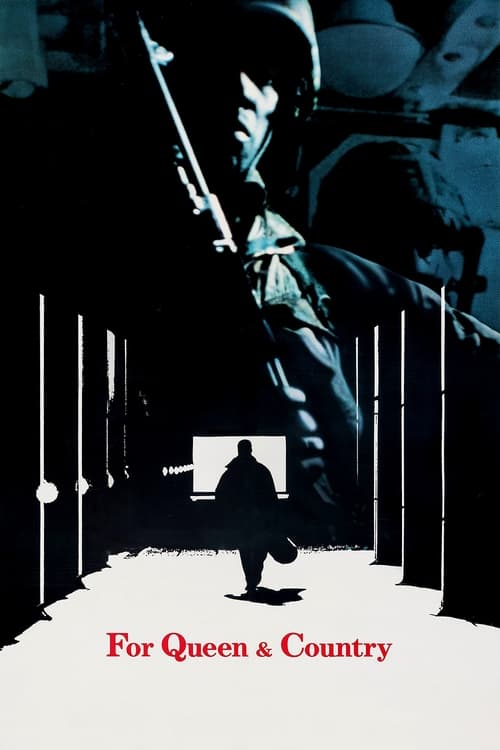
Reuben James steps out of a dimly lit pub in Belfast, Northern Ireland, on a tense evening in 1979. The air is thick with the chill of impending trouble, streetlights casting long shadows on the rain-slicked pavement. As he walks, shadows detach from the walls--IRA militants, their faces hardened by years of conflict, lunging at him with knives glinting under the sodium glow. Reuben fights back fiercely, his paratrooper training kicking in, but he's outnumbered, a blade slicing toward his throat. Suddenly, a burly figure explodes from the darkness: "Fish," a white Londoner with a cockney growl and unyielding loyalty, his fists flying like pistons. He saves Reuben's life, the two men panting side by side as the attackers scatter into the night. "You owe me one, mate," Fish grins through a split lip, clapping Reuben on the shoulder. Their bond is forged in blood that night, unbreakable.
The scene flashes forward to 1982, the windswept Falkland Islands, where the thunder of artillery shakes the earth. Reuben, Fish, and their comrade Bob Harper--another Londoner, steady and square-jawed--huddle in a trench during the brutal campaign. Bullets whine overhead as Argentine forces press the attack. In the chaos of a nighttime assault, an explosion rips through their position. Fish screams as shrapnel tears into his legs, blood soaking the mud. Reuben drags him to safety under fire, Bob covering them with suppressing bursts from his rifle. Surgeons amputate one of Fish's legs later that night in a field hospital, the fluorescent lights harsh against his pale, sweat-drenched face. "I'll be back jumping with you lot soon enough," Fish mutters through the pain, but his eyes betray the lie. Reuben and Bob exchange grim nods--this war has marked them all.
Six years later, in 1988, Reuben James, now honorably discharged, steps off a bus onto the cracked concrete of a bleak South London council housing estate. Tower blocks loom like gray monoliths, graffiti-scarred and pockmarked by decay, the air heavy with the stench of rubbish and despair. Poverty clings to every corner: junkies slump in doorways, children kick cans amid broken glass, and distant sirens wail like a constant dirge. Reuben, tall and broad-shouldered, his dark skin glistening under the weak sun, carries a duffel bag stuffed with his military decorations--medals from the Falklands pinned neatly inside. Born in Saint Lucia but raised in these very streets, he dreams of rebuilding his life here, for queen and country.
He bumps into Lynford almost immediately, an old neighborhood wheeler-dealer with a flashy jacket and a sly grin, hustling on the corner. "Reuben! The hero returns! You gonna sort these streets out?" Lynford laughs, slapping his back. Before Reuben can respond, a police car screeches up. Out steps racist policeman Sergeant Challoner, his face twisted in contempt, eyes narrowing at Reuben's skin. "What you doing back here, boy? Stirring trouble?" Challoner snarls, shoving Reuben against the wall, frisking him roughly. Reuben stands tall, jaw set. "Just home from service, officer. Falklands." Challoner's boss, Inspector Kilcoyne, intervenes smoothly, recognizing the ex-army poise. "Let him go, Challoner. Man's a paratrooper." Challoner spits on the ground but backs off, his glare promising future clashes. Tension simmers--Reuben senses the estate's rot runs deep.
Inside his sparse new flat on the estate, Reuben unpacks: books on military history, photos of him and Fish in uniform, his cherished medals gleaming. A noise startles him--a teenage girl, Hayley, and her younger brother Oscar rummaging through his things. Reuben grabs Oscar by the collar. "Take me to your mum." They lead him to a neighboring flat, where Stacey, a fiery woman with weary eyes and curves hugged by a tight dress, explodes in anger. "Get out! This ain't your business!" But Reuben's calm authority disarms her. Later, apologetic, Stacey returns his stolen medals, her fingers brushing his. "Sorry about the kids. Times are hard." Sparks fly; soon, they're lovers, her body warm against his in the dim light of his bed, a brief oasis amid the chaos.
Old friend Colin drops by next, no longer the scrappy kid Reuben remembers but a sleek drug kingpin in a tailored suit, his Porsche gleaming illegally parked outside. "Business is good, Reuben. Legitimate imports," Colin lies smoothly, but his eyes dart to the glove compartment where a pistol hides. He offers Reuben a cut: enforcer in the operation. "You're a soldier. We need muscle." Reuben declines firmly. "Not my war anymore." Colin shrugs, but plants the seed.
Employment hunts yield nothing but humiliation. At a factory, the foreman sneers, "Sorry, lad--no room for your sort." A bar job: "We don't hire off the boat." Racism is blatant, corrosive, eating at Reuben's resolve. Even the Job Centre turns him away with bureaucratic shrugs. Nights, he and Stacey dance close at a local party, her laughter a rare melody, but police sirens shatter the joy. The raid comes hard--Challoner leading the charge, batons swinging. Lynford is dragged away in cuffs, screaming, "This is bullshit!" Bob Harper, now a civilian with a steady job, pulls Reuben aside. "Don't get involved, mate. It's their game."
The next morning, chaos erupts: Stacey's teenage daughter Debbie goes into early labor. Reuben bundles Fish--now a one-legged veteran hobbling on crutches, his face lined with bitterness--into a cab to the hospital. Fish hands over two tickets to a big event. "Can't make it, Reuben. Legs ain't what they used to be. You and Stacey go." Reuben nods, but senses Fish's despair deepening; eviction notices pile up at his door.
Pressure mounts. Fish faces the streets without cash. Colin corners Reuben again: "One job. Help set up Sadiq--that rival dealer's been muscling in. Easy money for your mate." Reuben relents, just once. Under cover of night on the estate's shadowy stairwells, they frame Sadiq, planting drugs in his stash. Police swarm--Challoner grinning triumphantly as Sadiq is cuffed. Reuben slips away, heart pounding, returns Colin's pistol. "I'm out. For good." Colin nods, but his smile is cold.
Stacey discovers the gun, her face crumpling in fury. "You're just like them now! Get out!" She storms away, slamming the door, leaving Reuben hollow. Worse follows: immigration authorities summon him. In a sterile office, a smug official slides papers across the desk. "Mr. James, born in Saint Lucia? New laws--you're no longer a British citizen. No passport." Reuben stares, disbelief turning to rage. "I fought for this country! Falklands, Ireland--bled for the Queen!" The official shrugs. "Rules are rules." The betrayal slices deeper than any knife; his pride, his identity, shattered. Visual fury builds: Reuben's fists clench, medals mocking him from his pocket.
Fish unravels next. Debbie, his sometime partner, has left him, taking the newborn and other kids to Ireland. Reuben finds him distraught in his flat, bottles everywhere. "She took everything, Reuben. I'm done." Reuben presses cash into his hand. "Go after her. On your feet, soldier." Fish packs a bag, hope flickering briefly.
Tension crests as Reuben decides to leave for Saint Lucia, kit-bag slung over his shoulder, walking the estate's tense corridors. Riots brew--police hunting Lynford after his latest scam. In the groaning lift, Reuben runs into Fish, bag in hand. "Off to Ireland?" Reuben asks. Fish nods grimly. The doors open on the ground floor; Lynford cowers there, wild-eyed, police closing in. "Help me, Reuben!" Lynford begs, pulling a pistol and waving it wildly at Reuben.
Fish acts fast, lunging to disarm him--crutches clattering. He knocks Lynford out cold with a brutal punch. But Challoner bursts in with a subordinate officer, gun drawn, panic in his eyes amid the shadows and flickering emergency lights. "Armed suspect!" Challoner screams, firing wildly. The bullet tears into Fish's chest; he crumples, blood bubbling from his lips, eyes locking on Reuben's in shock. "Mate..." Fish gasps, then stills forever. Challoner caused the death, his racism and fear turning lethal. Kilcoyne races in seconds later, face ashen. "What the hell happened?" He confiscates Challoner's gun swiftly, covering it up, but the damage is done--Fish lies dead on the filthy floor, his one good leg twitching in final agony.
Rage consumes Reuben, a volcano erupting. He breaks into Fish's flat, heart shattering at the eviction papers and family photos. He grabs Fish's service rifle, the cold steel familiar, loads it with practiced hands. Outside, the estate erupts: rioters hurl bricks at police lines, fires blooming in bins, the air thick with tear gas and shouts. "Burn it down!" crowds roar. Reuben stalks the chaos, a ghost of vengeance, rifle shouldered.
From a rooftop perch, he spots Challoner barking orders, smug amid the fray. Reuben aims, breath steady--crack! The shot echoes, Challoner's head snaps back, blood spraying as he collapses dead, caused by Reuben's bullet. Retaliation complete, but the momentum surges. Reuben walks away through the subsiding riot, smoke curling around him, emotional weight crushing: friend avenged, but soul fractured.
High above, a police sniper tracks him through crosshairs--it's Bob Harper, rifle steady, face torn between duty and brotherhood. "Take the shot, Harper!" his superior crackles over radio. Bob hesitates, memories flashing: Falklands trenches, Fish's screams, Belfast pub. Reuben pauses below, sensing the end. Bob's finger tightens--crack! The bullet strikes true, Reuben crumples to the bloodied concrete, eyes staring skyward, life ebbing as sirens wail. Bob lowers the rifle, haunted.
The estate quiets under dawn's gray light. Colin slips away unscathed, his empire intact. Stacey remains, children in tow, hardened by loss. Lynford survives his knockout, slinking back to shadows. Kilcoyne covers tracks, promoting silence. Bob lives, but the shot echoes in his nightmares. Reuben and Fish are dead, the Queen and country they served spitting on their graves. No heroes win; the council estate endures, a monument to betrayal.
(Word count: 3472)


What is the ending?
In the ending of "For Queen & Country," the protagonist, Reggie, confronts the harsh realities of his life after returning from military service. He faces betrayal and the consequences of his past decisions, leading to a tragic conclusion that underscores the struggles of veterans reintegrating into society.
As the film approaches its climax, Reggie, played by Denzel Washington, finds himself increasingly isolated and frustrated by the systemic failures around him. He is drawn into a conflict with local gang members, which culminates in a violent confrontation. The film concludes with Reggie realizing that the world he fought for is not the one he returned to, leaving him disillusioned and without a clear path forward.
As the final act of "For Queen & Country" unfolds, the tension escalates. Reggie, having navigated the challenges of civilian life after serving in the British Army, is now grappling with the disillusionment that comes from his experiences. The streets of London, once familiar, now feel foreign and hostile.
Scene by scene, the narrative deepens. Reggie is seen walking through his neighborhood, the weight of his military past heavy on his shoulders. He encounters old friends, but their lives have taken different paths, and the camaraderie he once knew feels distant. The vibrant energy of the city contrasts sharply with his internal turmoil, highlighting his sense of alienation.
In a pivotal moment, Reggie confronts a local gang that has been terrorizing the community. The confrontation is charged with emotion; Reggie's anger and frustration boil over as he stands up for what he believes is right. The scene is intense, filled with the sounds of shouting and the palpable tension of impending violence. Reggie's motivations are clear--he wants to protect his community, but he is also driven by a desire to reclaim his sense of purpose.
As the conflict escalates, the stakes become personal. Reggie's friend, who has been a source of support, is caught in the crossfire. The violence that erupts is brutal and chaotic, reflecting the harsh realities of life for those who have served in the military and returned to a society that seems indifferent to their struggles. The emotional weight of the scene is heavy, as Reggie realizes that his actions have consequences that extend beyond himself.
In the aftermath of the confrontation, Reggie is left to grapple with the fallout. The community is shaken, and the sense of victory he sought feels hollow. He stands alone, the sounds of sirens echoing in the distance, a stark reminder of the chaos that has unfolded. The camera lingers on his face, capturing the deep sense of loss and betrayal that has settled in.
The film concludes with Reggie walking away from the scene, his future uncertain. The streets that once felt like home now seem like a battleground, and he is left to ponder the sacrifices he made for a country that does not seem to value him. The final shot captures his solitary figure against the backdrop of the city, a poignant image of a man caught between two worlds--one that he fought for and one that has turned its back on him.
In the end, Reggie's fate is left ambiguous, symbolizing the struggles of many veterans who return home only to find themselves lost in a society that has moved on without them. The film closes on a note of somber reflection, emphasizing the emotional and psychological scars that linger long after the physical battles have ended.
Is there a post-credit scene?
For the movie "For Queen & Country," produced in 1988, there is no post-credit scene. The film concludes without any additional scenes or content after the credits roll. The story wraps up with the main character, Reggie, reflecting on his experiences and the challenges he faces upon returning to civilian life after serving in the British Army. The focus remains on the themes of disillusionment and the struggles of reintegration into society, leaving the audience with a sense of closure regarding Reggie's journey.
What motivates the main character, Reggie, to return to London after serving in the military?
Reggie, played by Denzel Washington, is motivated to return to London after his service in the British Army due to a desire to reintegrate into civilian life and find a sense of purpose. He hopes to reconnect with his roots and navigate the challenges of post-war life, but he is also haunted by the memories of his time in the military.
How does Reggie's relationship with his friend, Johnny, evolve throughout the film?
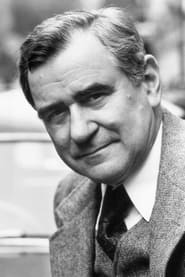
Reggie's relationship with Johnny, portrayed by John Thaw, begins as a supportive friendship, with Johnny acting as a mentor figure. However, as the story progresses, the strain of their differing views on life and the impact of their past experiences in the military creates tension. Reggie becomes increasingly frustrated with Johnny's cynicism and his inability to move forward, leading to a rift between them.
What challenges does Reggie face as he tries to adjust to life in London?
Reggie faces numerous challenges as he attempts to adjust to life in London, including the struggle to find stable employment, the alienation from his former friends, and the pervasive violence and crime in his neighborhood. He grapples with feelings of disillusionment and frustration as he witnesses the societal changes that have occurred during his absence, which often leave him feeling out of place.
What role does Reggie's family background play in his character development?
Reggie's family background significantly influences his character development. Growing up in a working-class environment, he carries the weight of his family's expectations and the struggles they faced. His experiences with his family, particularly the loss of his father, shape his understanding of loyalty, honor, and the desire to make a better life for himself, which drives many of his decisions throughout the film.
How does the film depict the impact of war on veterans like Reggie?
The film poignantly depicts the impact of war on veterans like Reggie through his internal struggles and external conflicts. Reggie's flashbacks to his time in combat reveal the psychological scars he carries, while his interactions with other characters highlight the societal neglect faced by veterans. The film illustrates how Reggie's experiences in the military have left him feeling disconnected and struggling to find his place in a world that seems indifferent to his sacrifices.
Is this family friendly?
"For Queen & Country," produced in 1988, is not considered family-friendly due to its mature themes and content. Here are some potentially objectionable or upsetting aspects that may affect children or sensitive viewers:
-
Violence: The film contains scenes of violence, including confrontations and altercations that may be intense or graphic.
-
Drug Use: There are depictions of drug use and the impact of addiction, which may be distressing for younger audiences.
-
Language: The dialogue includes strong language and profanity, which may not be suitable for children.
-
Themes of Betrayal and Loss: The emotional weight of betrayal and the struggles of the protagonist can be heavy and may resonate deeply, potentially upsetting sensitive viewers.
-
Social Issues: The film addresses themes of racism, poverty, and the struggles of veterans reintegrating into society, which may be complex and difficult for younger viewers to understand.
These elements contribute to a tone that is more appropriate for mature audiences.







