












Popular
What is the relationship between Chance Wayne and Alexandra Del Lago?
How does Chance Wayne's past influence his actions in the film?
What role does Heavenly play in Chance's life and decisions?
How does the character of Boss Finley impact the story?
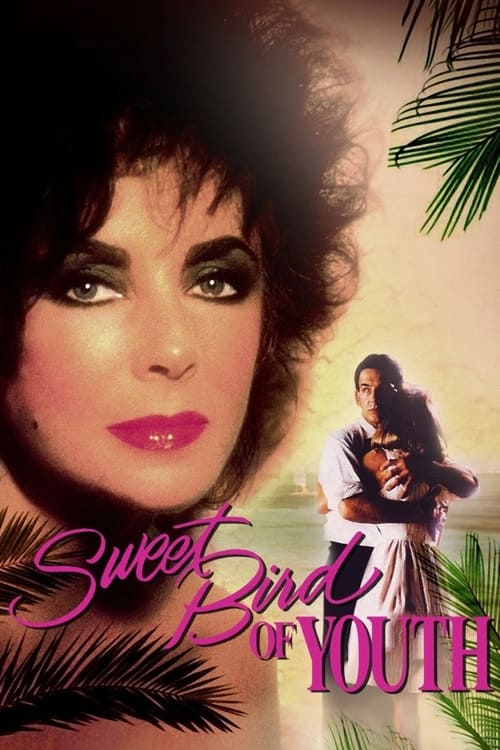
What is the significance of the title 'Sweet Bird of Youth' in relation to the characters?
Should I watch it?
Ask Your Own Question

What is the plot?
Sorry, we aren't able to watch and write up a full detailed plot yet. Check back in a few days.
More Movies Like This
Browse All Movies →




What is the ending?
In the ending of "Sweet Bird of Youth," Chance Wayne confronts the reality of his life and the choices he has made. After a series of emotional confrontations, he ultimately faces rejection and despair, leading to a tragic conclusion for both him and the aging actress, Alexandra Del Lago.
As the film unfolds towards its conclusion, Chance Wayne, a once-promising young man, returns to his hometown with Alexandra Del Lago, an aging actress seeking refuge from her own demons. Their relationship is fraught with desperation and longing, as Chance hopes to reclaim his youth and dreams, while Alexandra grapples with her fading beauty and relevance.
In the final scenes, Chance's past catches up with him. He confronts his former love, Heavenly, who is now engaged to another man. The tension escalates as Chance's desperation becomes palpable. He seeks validation and acceptance, but is met with hostility and rejection from the townspeople and Heavenly's father, Boss Finley, who represents the oppressive forces of the past that Chance cannot escape.
As Chance's dreams crumble, he is confronted by the harsh realities of his life. The emotional climax occurs when he realizes that he cannot reclaim his lost youth or the love he once had. In a moment of despair, he lashes out, revealing the depth of his pain and the futility of his quest. Alexandra, witnessing Chance's breakdown, is also forced to confront her own failures and the inevitability of aging.
The film concludes with Chance left alone, stripped of his illusions and dreams. Alexandra, too, is left to face the consequences of her choices, as she recognizes that her attempts to escape her past have ultimately led her to a similar fate. The ending encapsulates the themes of lost youth, the passage of time, and the harsh realities of life that both characters must confront.
In summary, Chance Wayne is left in a state of despair, unable to reclaim his past, while Alexandra Del Lago faces the stark reality of her own aging and the loss of her former glory. Their fates intertwine in a poignant reflection on the nature of dreams and the inevitability of time.
Is there a post-credit scene?
The movie "Sweet Bird of Youth," produced in 1989, does not have a post-credit scene. The film concludes with a powerful and emotional climax that encapsulates the themes of lost youth and the harsh realities of life. After the final scene, the credits roll without any additional content or scenes following them. The focus remains on the intense character dynamics and the resolution of the story, leaving the audience to reflect on the events that have transpired.
What is the relationship between Chance Wayne and Alexandra Del Lago?
Chance Wayne, a young drifter with dreams of becoming a successful actor, has a complicated and tumultuous relationship with Alexandra Del Lago, an aging movie star. Their connection is rooted in Chance's desperate desire for validation and success, while Alexandra seeks to escape her own fading fame and the harsh realities of aging. Throughout the film, their interactions oscillate between moments of tenderness and manipulation, revealing their vulnerabilities and the impact of their pasts on their present.
How does Chance Wayne's past influence his actions in the film?
Chance Wayne's past is marked by his small-town origins and his unfulfilled ambitions. He returns to his hometown seeking to reclaim his lost youth and the love of his former girlfriend, Heavenly. His memories of being a promising young man are juxtaposed with his current state of desperation and disillusionment. This internal conflict drives him to pursue Alexandra, hoping that her fame and influence can help him achieve his dreams, but ultimately, it leads to a cycle of self-sabotage and regret.
What role does Heavenly play in Chance's life and decisions?
Heavenly, Chance's former girlfriend, represents both his lost innocence and the life he yearns to reclaim. She is the daughter of the town's influential politician, and her relationship with Chance is fraught with tension due to her father's disapproval and Chance's reckless lifestyle. As Chance attempts to reconnect with her, his motivations are clouded by his desire for redemption and the fear of being rejected. Heavenly's own struggles with her father's expectations and her feelings for Chance add layers of complexity to their interactions.
How does the character of Boss Finley impact the story?
Boss Finley, Heavenly's father and a powerful political figure, serves as a formidable antagonist in the story. His presence looms large over Chance, representing the societal constraints and expectations that Chance is desperate to escape. Finley's disapproval of Chance fuels the tension in the narrative, as he seeks to protect his daughter from what he perceives as Chance's corrupting influence. The conflict between Chance and Finley culminates in a confrontation that highlights the themes of power, control, and the consequences of one's past.
What is the significance of the title 'Sweet Bird of Youth' in relation to the characters?
The title 'Sweet Bird of Youth' symbolizes the fleeting nature of youth and the characters' longing to recapture it. For Chance, it embodies his dreams and aspirations, while for Alexandra, it reflects her struggle against the inevitability of aging and obsolescence in the entertainment industry. The title resonates throughout the film as both characters grapple with their past choices and the harsh realities of their present lives, ultimately leading to a poignant exploration of lost opportunities and the desire for renewal.
Is this family friendly?
"Sweet Bird of Youth," produced in 1989, is not considered family-friendly due to its mature themes and content. Here are some potentially objectionable or upsetting aspects that may occur for children or sensitive viewers:
-
Sexual Content: The film includes explicit discussions and depictions of sexual relationships, which may be inappropriate for younger audiences.
-
Substance Abuse: Characters are shown using alcohol and drugs, which could be distressing or concerning for sensitive viewers.
-
Violence and Threats: There are scenes that involve physical confrontations and threats, contributing to a tense atmosphere.
-
Themes of Aging and Despair: The narrative explores heavy themes such as aging, lost dreams, and the desperation that can accompany these experiences, which may be emotionally challenging.
-
Manipulation and Exploitation: The dynamics between characters often involve manipulation and exploitation, which can be unsettling.
These elements contribute to the film's overall tone and may not be suitable for children or those who are sensitive to such themes.





