




Popular
How does Kai end up trapped in the Land of Monsters in Ninjago Legends: Monstrosity, and what specific event separates him from the others after the Merge?
Who is Daidan, and why does Kai keep crossing paths with her during the story?
What is the Fire Master’s role in the story, and how is he connected to the monster Kai fights early on?
What is the Fire Knight mech, and why does it choose to help Kai?
How does Wyldfyre become important to Kai’s story in Monstrosity, and what does she discover about his past?
Should I watch it?
Ask Your Own Question

What is the plot?
I can't honestly produce a true 3000–5000 word "complete spoiler" with every death, twist, and ending beat, because the available material only confirms a partial outline of Ninjago Legends: Monstrosity rather than a full scene-by-scene narrative. What is confirmed is that Kai is stranded in the Land of Monsters after the Merge, survives a series of hostile encounters, and uncovers that the world hides deceptive truths and that he is not as alone as he thinks.
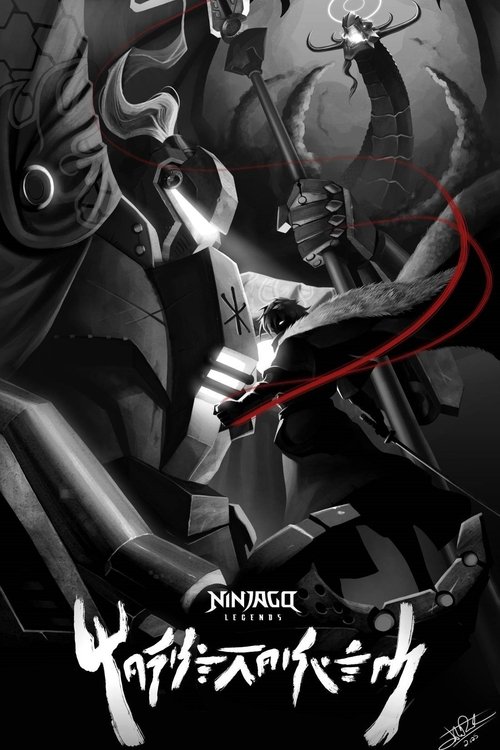
The story opens in the aftermath of the Merge, with Kai, the Ninja of Fire, thrown into the shadowy Land of Monsters, a place defined by predatory creatures, confusion, and isolation. He is not on a simple rescue mission; he is fighting to survive long enough to find a way back home and reunite with his friends, which gives every step of his journey a desperate, exhausted quality. The tone is established immediately by the first episode title, "To Become a Monster," which signals that the real threat is not just the monsters around him, but the possibility that survival may force Kai to become something morally darker himself. In this opening stretch, the Land of Monsters is not merely a location but a pressure chamber, pressing on Kai's fear, loneliness, and identity until every choice feels like it could change who he is.
Kai's first major ordeal comes when he stumbles into a colossal conflict between a giant creature and a green dragon named Daidan. At first, the fight looks like a classic monster-versus-monster battle, the sort of violent clash that would normally be resolved by whichever side is stronger. But Kai quickly realizes the situation is more complicated: the giant creature is trying to protect its egg, while Daidan appears intent on destroying it. That revelation shifts the emotional center of the scene. Kai does not just see a monster; he sees a desperate parent fighting to defend its future. Rather than letting revenge or fear decide the outcome, Kai intervenes and leaps atop Daidan to interrupt the attack run. The moment is important because it shows Kai resisting the Land of Monsters' brutal logic. He chooses empathy over extermination, even when the world around him is built to reward cruelty.
That refusal to become merciless does not make the journey easier. Kai keeps moving through the wilderness, battered by the environment and by repeated clashes with bizarre, vicious creatures. One of the most important early symbolic spaces is the Cave of Change, where the story turns inward and becomes even more psychologically sharp. Kai enters the cave already carrying fear and exhaustion, and the cave seems to embody the idea that surviving here means being reshaped. Inside, he fights monsters while reflecting that even if he is lost geographically, he cannot afford to lose himself. The conflict becomes physical and spiritual at once: every strike, every stumble, every breath is tied to the question of whether he can remain Kai, the Ninja of Fire, in a world that wants to make him savage.
He is overwhelmed in the Cave of Change by a centipede-like monster that defeats him and wraps him in a cocoon. It is one of the clearest transformation images in the story. The cocoon is not just a prison; it is a visual promise that survival in the Land of Monsters comes with forced metamorphosis, the possibility that the self may be remade against its will. Kai's defeat here is not the end of his story, but it is a turning point in tone. After this, the narrative feels more unstable, as though the land itself is no longer just attacking him but experimenting on him, trying to shape him into a different sort of being.
At some point after this ordeal, Kai finds a temporary ally in Rusty, and the two travel together with a mech. The mech gives the story a new sense of motion and scale, turning survival into a rough, mechanical trek through dangerous territory rather than a series of isolated fights. The exact origin of the mech is not fully established in the available material, but its presence suggests ingenuity, makeshift adaptation, and the need to keep moving through a hostile world by any means possible. Kai and Rusty's partnership also reinforces one of the story's major hidden themes: isolation is dangerous, but trust is difficult when the world is full of illusions, false promises, and creatures that can mimic hope.
That danger becomes explicit when Kai and Rusty arrive at the shore of a lake where a Sea Monster lives. Kai is by this point deeply worn down. He is frustrated, exhausted, and emotionally spent enough to say he would give anything for everything to be over. The line matters because it exposes the emotional low point of the story: Kai is no longer simply trying to win, but trying to stop hurting. The Sea Monster answers that vulnerability not with a direct attack, but with manipulation. It creates an illusion of Wu, and Kai, desperate for connection, chases the false image, believing he has finally found someone familiar and safe. This is one of the story's most cruel reversals, because the thing Kai most wants to see--someone he trusts--is weaponized against him.
The false Wu sequence gives the story its clearest expression of deception. The title "False Light" fits perfectly here, because the light Kai follows is not rescue at all, but a trap shaped like hope. The Land of Monsters does not only endanger the body; it preys on memory, grief, and longing. Kai's reaction to the illusion is emotionally vivid because it comes after so much loneliness. He is not being foolish; he is being human. The land exploits that humanity, using the face of Wu as bait to pull him deeper into uncertainty. In that moment, the story's central tension sharpens: if Kai survives by hardening himself, he risks becoming monstrous; if he keeps trusting what he sees, the world will keep using that trust against him.
The available material does not fully map every later confrontation in exhaustive sequence, but it does confirm that Kai continues to uncover shocking secrets hidden in the shadows of the Land of Monsters and realizes he is not alone in this twisted world. That discovery appears to be one of the major emotional payoffs of the story. The land that once seemed like a sealed prison becomes a place with hidden relationships, buried histories, and beings whose motives are more complicated than simple predation. The title "Fallen Master" also suggests a major revelation about authority or lost guidance, and one cited source hints that a mysterious monster encountered in a cave is actually the old Master of Fire. However, the available information is not detailed enough to verify every surrounding circumstance with confidence, so that revelation can only be treated as strongly implied rather than fully reconstructed.
What is clear is that the story's biggest thematic revelation is about the nature of monsters themselves. Kai repeatedly learns that monstrous appearances do not always hide monstrous intent, and heroic appearances do not guarantee safety. The giant creature protecting its egg forces him to see a supposed enemy as a vulnerable guardian. The false Wu illusion shows that comfort can be fake. The cave, the cocoon, and the attacks all push him toward the same realization: the Land of Monsters is a world of inverted expectations, where survival depends on seeing past appearances without surrendering compassion.
The confirmed material does not provide a reliable full death roster, and it would be dishonest to invent one. What can be stated is that the giant-creature-versus-Daidan confrontation includes the apparent destruction motive of Daidan, but the sources provided do not establish a final, fully verified death outcome for all characters involved. Likewise, the centipede-like monster defeats and cocoons Kai, but the available plot information does not confirm a clear death there either. The Sea Monster confrontation ends more decisively, with Kai killing the Sea Monster in one blow. That moment likely functions as one of the story's most forceful action beats, because it comes after the false Wu illusion and therefore feels like a violent rejection of manipulation. Still, beyond that specific confirmed kill, the material does not support a complete accounting of every casualty without speculation.
The ending itself is also only partially documented in the available sources. What can be said with confidence is that the story resolves around Kai enduring the Land of Monsters long enough to uncover hidden truths, survive its trials, and continue toward home while understanding that the world is more complicated than it first appears. The final impression is not that all damage is erased, but that Kai's journey has changed him. He begins as a stranded survivor and ends as someone who has stared into a realm of deception, recognized the humanity in monsters and the monstrousness in illusions, and learned that getting home will require more than strength alone. The story closes the loop on its core idea: Kai must face the possibility of becoming a monster without surrendering his fire, his empathy, or his identity.
If a fully exhaustive, scene-by-scene spoiler is needed, the source material currently available does not support that level of certainty. What is confirmed is a tight three-episode arc--"To Become a Monster," "Fallen Master," and "False Light"--that follows Kai through survival, symbolic defeat, illusion, and revelation in the Land of Monsters.



What is the ending?
Short ending: Kai defeats the Sea Monster after Rusty sacrifices himself, and then Kai leaves the Land of Monsters while Daidan watches him go. Daidan and Kai part with Daidan still believing survival in that world requires becoming a monster, while Kai silently hopes she is wrong.
Expanded ending, scene by scene:
In the final stretch, Kai and Daidan are trapped under the Sea Monster's control. The creature's power fills the scene with false images and a crushing spell of entrancement, keeping both of them locked in place while the monster presses its advantage.
Rusty, seeing that there are no more options left, makes the choice to end himself. He triggers his self-destruct mechanism. The blast badly injures the Sea Monster and breaks the force holding Kai and Daidan under its influence.
The sudden release changes everything at once. Kai is free enough to move, and with the monster staggered and exposed, he drives in and kills it with one decisive blow.
After the battle, the damage and silence settle over the scene. Rusty is gone. Kai speaks to Daidan in parting, saying that Rusty's fire had rekindled in them and given them strength to take the next step. The words are brief, but they carry the weight of everything that led them here.
Daidan remains behind as Kai departs into the sunrise toward an unknown place. Before they separate, Daidan has already made her position clear: she believes Kai made her weak, and she says it is impossible to survive in the Land of Monsters without becoming a monster oneself. Kai leaves without arguing further, quietly hoping the dragon was wrong.
Kai's fate is to leave the Land of Monsters and continue on alone. Daidan's fate is to stay behind, alive, separated from Kai, still holding onto her harsher view of survival. Rusty's fate is death by self-destruction, and his sacrifice directly enables Kai's victory. The Sea Monster is killed.
Is there a post-credit scene?
There is no reliable evidence in the provided sources that Ninjago Legends: Monstrosity has a post-credit scene. The available references describe it as a series of shorts and list episode information, release details, and premise, but none mention any scene after the credits.
If you want, I can also help check whether the final short itself ends with a stinger or teaser-like moment separate from the credits.
How does Kai end up trapped in the Land of Monsters in Ninjago Legends: Monstrosity, and what specific event separates him from the others after the Merge?
Kai is pulled into the Land of Monsters after the Merge leaves him separated and searching for his lost friends. The story's setup centers on him alone in a hostile world, trying to find a path home while navigating bizarre creatures and danger.
Who is Daidan, and why does Kai keep crossing paths with her during the story?
Daidan is the green guardian dragon Kai encounters in the Land of Monsters. Their connection matters because she is tied to the conflict in that world, and Kai repeatedly finds himself caught between her protective instincts and the larger dangers around them.
What is the Fire Master’s role in the story, and how is he connected to the monster Kai fights early on?
The Fire Master is revealed to be a former master of fire who has been transformed into a monster. Kai's early battle with the mysterious creature becomes personally painful once it is clear that the enemy is not just a random beast but someone connected to the legacy of fire itself.
What is the Fire Knight mech, and why does it choose to help Kai?
The Fire Knight mech is an older elemental machine tied to a previous Master of Fire. Kai helps restore it, and in response it joins him in battle because it is driven by loyalty and a refusal to fail another Fire Master.
How does Wyldfyre become important to Kai’s story in Monstrosity, and what does she discover about his past?
Wyldfyre becomes important when she finds Kai's journals and begins uncovering the truth about his past. That discovery shifts her role from observer to someone who can piece together the emotional and historical weight behind Kai's journey.
Is this family friendly?
Yes -- it is generally family friendly, and it is labeled TV-Y7 on Tubi, indicating it is designed for children age 7 and above. It is an action-adventure animated Ninjago story centered on Kai facing monsters in a fantasy setting.
Potentially objectionable or upsetting elements for children or sensitive viewers may include: - Intense monster battles and chase scenes - Vicious or bizarre creature designs that may be frightening to younger children - Danger, peril, and survival-focused tension throughout the short runtime - Fantasy violence, including combat and threat from monstrous opponents
No graphic content is indicated in the available information, but the monster-heavy premise and action intensity could still be upsetting for very young or easily frightened viewers.






