















Popular
How does Niculae’s love affair with Vera Solomon shape his decisions in the story?
What role does Aurora Cornu play in Niculae’s personal and professional crisis?
Why does Niculae return to Siliștea Gumești, and what happens there?
How does Ilie Moromete affect Niculae’s conflict in the film?
Which characters surround Niculae in the film’s literary and social world?
Should I watch it?
Ask Your Own Question

What is the plot?
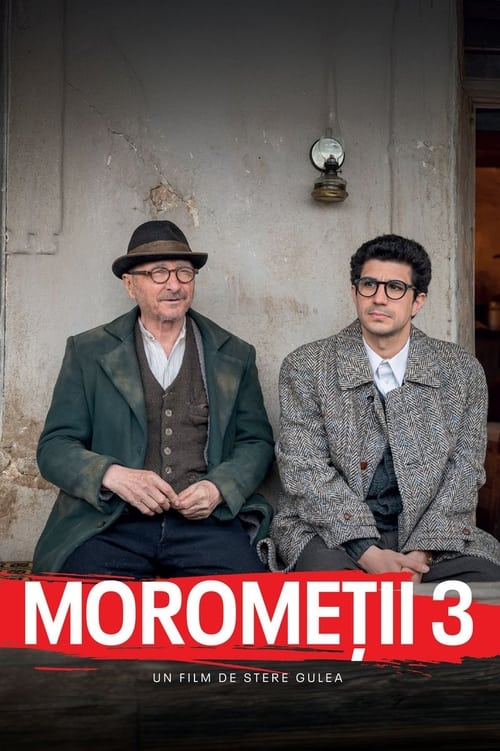
The film opens in 1954, with Niculae Moromete already living the life of a rising young writer in the city, a man who has found success on paper but not peace in himself. He moves through literary circles that feel tense, watchful, and politically loaded, where every conversation seems to carry an unspoken test of loyalty. Around him, writers speak carefully, smile too quickly, and measure each other's words, because the communist cultural world is not really a world of free art at all, but a system of pressure, compromise, and quiet fear. Niculae has learned how to survive in it, but the film makes clear from the beginning that he is not at ease there. He has the status of a promising "comrade writer," yet that label sits on him like a borrowed coat. Beneath it, he remains the same inward, stubborn, idealistic son of Ilie Moromete, still searching for a way to keep faith with himself.
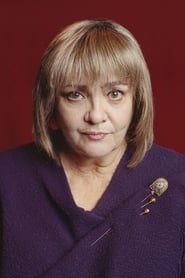
His private life is just as unstable as his public one. Niculae is in a passionate but impossible affair with Vera, a married poetess who draws him in emotionally and then keeps him suspended in uncertainty. Their relationship has heat, intimacy, and mutual attraction, but it also has a constant ache of incompletion. Niculae cannot bear the fact that she belongs to another man, and Vera, for her part, cannot make a decisive break. Their scenes together are charged with longing and frustration, and the film lets their connection feel both sensual and doomed. What should be a refuge from the ideological coldness of the literary world becomes another arena of tension, another place where Niculae cannot get the stable love or certainty he wants. The affair deepens his loneliness rather than easing it.
At the same time, his political faith starts to crack. Niculae is not introduced as a simple dissident, nor as a man who has already abandoned the regime. He begins from inside the system, still believing in the project enough to have collaborated with it, still hoping that art and socialist ideals might coexist. But the pressure around him grows heavier. The writers' guild, with its shifting ideological expectations, appears less and less like a community of artists and more like an administrative machine that rewards conformity. Niculae feels increasingly alienated from the literary establishment. He sees that talent matters less than obedience, and that the language of culture has been hollowed out by slogans and caution. The emotional toll of this realization is subtle at first, but it steadily worsens. He is trapped between what he once believed and what he is now forced to see.
That tension begins to sharpen around his own work. One of Niculae's stories has been successful enough to attract attention, and it becomes something larger and uglier than he intended: it is adapted into a propaganda film. That transformation is a turning point. A work that may have been born from genuine literary ambition is now being used as a political instrument. The film's logic is brutal in its simplicity: the state can seize a writer's success and turn it into proof of the state's own correctness. Niculae is pulled back into the countryside through this adaptation, and the journey is not just geographical. It is a forced return to origin, memory, and moral truth.
He returns to his native village region, to Siliștea Gumești and the surrounding poor rural world, where the fever of collectivization is raging. The contrast with the city is immediate and painful. Here the stakes are not abstract ideological debates among writers; here the state is entering people's lives, land, labor, and dignity with coercive force. Peasants are being pressured to surrender what remains of their independence, and the campaign is wrapped in the language of progress while carrying the machinery of fear. Niculae arrives as an educated man from the city, but the village strips away the illusion that he can remain detached from what is happening. He sees the land not as a theme for literature or propaganda, but as a place where real people are being broken.
This homecoming is where the film's emotional center shifts. Ilie Moromete, Niculae's father, remains the moral gravity of the story even if his role is smaller than in the earlier films. His voice carries the calm authority of someone who understands life in a way official ideology never will. The film emphasizes the power of his words because they are measured, moderate, and wise, the opposite of the feverish certainty preached by the regime. When Niculae listens to him, he is not simply hearing family advice; he is hearing a different philosophy of human life, one rooted in patience, dignity, and practical wisdom. Ilie's presence forces Niculae to confront the fact that the world he has been helping to serve has no room for this kind of moral complexity.
The decisive shock comes when collectivization turns violent. The available plot accounts describe a violent repression of peasants who are protesting collectivization, and this incident is what fully awakens Niculae's doubts. The scene is not presented as a private disagreement or a theoretical argument; it is the state's force made visible against ordinary rural people. Whatever specific details surround the confrontation, the meaning is unmistakable. Niculae witnesses the contradiction at the heart of the system he has tolerated: the new order claims to emancipate the peasantry, but in practice it crushes them when they resist. This is the moment when collaboration becomes morally impossible for him. He can no longer pretend that the regime's violence is a temporary excess or a regrettable necessity. It is the truth of the system.
His disillusionment is not only political. It is also literary. The city's writers, the guild, the ideological machinery, the propaganda film, the collectivized countryside, and the assault on peasant life all collapse into a single realization: the language of culture has been captured. Niculae sees that art is being asked to serve lies, and that his own talent has been pulled into that service. His earlier pragmatic compromises begin to feel like self-betrayal. The film builds this as a gradual moral pressure rather than a sudden epiphany. He returns from the village with his conscience no longer at ease. The old balance between ambition and belief is gone.
Just as his political and professional life are reaching crisis point, a new figure enters his world: Aurora, a young poetess whose appearance offers not just romance but possibility. She is described as providential, and the film treats her almost like an interruption from another register of life. She is youthful, perceptive, and direct in a way that cuts through Niculae's confusion. Unlike the unstable, impossible bond with Vera, Aurora represents clarity and movement. She does not simply console him; she reorients him. In the middle of his emotional collapse, she becomes the person who can see what he himself has not yet fully understood about his own writing.
Aurora's importance is tied to the film's deepest revelation. Niculae has been writing something privately, something kept "for the drawer," meaning work not yet meant for publication or official approval. At first, this detail suggests another small act of concealment, another compromise in a dangerous climate. But the twist is that this hidden writing is not minor at all. Aurora recognizes it as serious literature and gives him the confidence to claim it. In the version of the story described in the sources, she effectively inspires him to publish or complete Moromeții, the novel that emerges from his own life and family history. This is the great structural revelation of the film: the literary work that matters most does not come from obedient participation in the official cultural system. It comes from memory, family, and private truth. The title itself is thus not merely a reference to the family line; it becomes the source of the art.
The film's emotional movement after this revelation is one of gathering force. Niculae has been pulled apart by Vera, by censorship, by ideological pressure, by the false authority of the literary guild, and by the state's violence in the countryside. Now, through Aurora's intervention and the renewed meaning of what he has been writing, his life begins to come back into focus. The story does not erase the pain of what he has seen. It does not suggest that disillusionment is easy to recover from. Instead, it offers literature as a form of survival and recovery. Niculae's way out is not political victory or personal romance; it is the reclamation of his own voice.
The final movement is therefore both intimate and historical. Niculae remains in a world of suspicion, still living under a regime that demands ideological obedience, still facing a literary culture shaped by fear, and still carrying the wound of what he has seen in the village. But the ending turns away from the system's power and back toward authorship. The hidden work in his drawer becomes the center of the film's resolution. Aurora's recognition matters because it confirms that what Niculae has made in private is worthy and alive. The novel Moromeții is no longer just an idea or a project. It is the outcome of his suffering, memory, and return.
The closing scenes complete a circle. Niculae, who began as a compromised writer moving within official structures, emerges as someone who recovers himself through the very family story he had inherited and perhaps tried to outgrow. Ilie Moromete's moral presence, the violence of collectivization, the failed love with Vera, the pressures of the literary world, and Aurora's clarifying intervention all converge into a final act of self-recognition. The film ends with the sense that Niculae has finally chosen the truth of his own life over the demands of the state. There is no triumphant revolution, no public reckoning, no easy happiness. Instead, there is the harder victory of artistic integrity. The Moromete family story does not just survive history; it becomes literature.
No deaths are identified in the available plot summaries for the film, and the story's major confrontations are resolved through moral and emotional transformation rather than fatal violence. The violent repression of peasant protest is the darkest event, but the sources do not name a specific character death tied to it. What remains at the end is Niculae's hard-earned clarity: he has seen the lie at the heart of the system, the collapse of his affair with Vera, the false comfort of ideological conformity, and the truth that his deepest work comes from the family and village he can never truly leave behind. The final image is of a writer no longer divided against himself, with Moromeții finally taking its place as the authentic expression of the world that made him.


What is the ending?
The film ends with Niculae realizing that the novel he has been circling around is already taking shape within him. In the final turn, he moves from uncertainty and private turmoil toward writing the book that will become Moromeții, while the story closes on the idea that the family's own life has become the source of the work.
In the ending, Niculae is still in the middle of his difficult 1954 life: he has been weighed down by the affair, by political pressure, and by distrust around him. Then a young poet enters his life and gives him a clear path forward, and that encounter pushes him back toward literature. The final revelation is that he has been writing in secret all along, and the manuscript in his drawer is recognized as serious work, leading to the decision to publish Moromeții. The ending makes clear that Niculae survives the conflict by turning it into writing, and that his father's family story becomes the novel's foundation.
Expanded ending, scene by scene:
Niculae reaches the last stretch of the story as a man under pressure from several directions at once. He is already known as a young writer, but his life is unstable, and the atmosphere around him is marked by suspicion. His personal life has become tangled, and the film keeps him in a state of strain rather than calm resolution.
Scene by scene, the ending begins with the continuation of his emotional and professional crisis. He is not simply blocked as a writer; he is exhausted by the weight of private desire, public expectation, and political unease. The affair with the married woman has not brought him peace. Instead, it leaves him split between attraction, guilt, and practical disorder. At the same time, his confidence in the literary world has weakened, and he feels cut off from the people who should have supported him.
Then the young poet appears in his life. She is shown as a providential presence, someone who arrives at the exact moment when Niculae seems most trapped. She does not solve his problems in a broad, dramatic way; rather, she gives him a way to move again. Her presence opens a practical and emotional passage out of the confusion. Niculae responds to her not with instant certainty, but with the slow return of purpose.
The film then moves to the decisive ending detail: Niculae has not started from nothing. Throughout his difficulties, he has already been writing material away, keeping it aside as if it were unfinished or private. Near the end, that hidden writing is understood to matter. The young woman who will become his wife recognizes what he has made and tells him that it is great literature. This moment gives the ending its clear turning point: the work he has kept in the drawer is not merely personal scribbling, but the beginning of Moromeții itself.
From there, the ending resolves on publication. Niculae is inspired to publish the novel Moromeții, and the film closes on the fact that the story of the Moromete family is now being transformed into literature from inside the family circle. The final movement is not a death, exile, or collapse, but an act of creation. Niculae's fate is to become the author who preserves the family's life in a book.
The fates of the main characters at the end are as follows:
Niculae Moromete ends as a writer who turns his crisis into the novel Moromeții and moves toward publishing it.
The young poet, Aurora, ends as the person who helps Niculae out of his personal and professional dead end and becomes part of his future.
The married woman from the affair remains part of the turmoil that has burdened Niculae, but she does not drive the final resolution; the ending leaves that conflict behind in favor of writing.
Ilie Moromete is not resolved through action in the ending itself; instead, his presence survives through Niculae's book, which makes the father and the family into the subject of the finished work.
The closing idea is simple and direct: Niculae does not escape his life by leaving it. He escapes by writing it down, and the family story becomes literature.
Is there a post-credit scene?
I could not verify any post-credit scene for The Moromete Family 3: Father and Son from the available sources. The film's listings and festival/release information identify the movie and its runtime, but none of the provided sources mention a post-credit, mid-credit, or end-credit scene.
If you want, I can still help by checking whether the film's ending itself contains a final epilogue or scene that some viewers might mistake for a post-credit stinger.
How does Niculae’s love affair with Vera Solomon shape his decisions in the story?
In the 1950s setting, Niculae's relationship with Vera Solomon is one of the story's central pressures, and it becomes a direct source of emotional conflict as he struggles with jealousy, commitment, and the impossibility of fully sharing her life.
What role does Aurora Cornu play in Niculae’s personal and professional crisis?
Aurora Cornu enters Niculae's life as a young poetess who offers him a way out of his tangled private and literary troubles, and she becomes important because her presence helps redirect him toward publishing the novel Moromeții.
Why does Niculae return to Siliștea Gumești, and what happens there?
Niculae is sent back to Siliștea Gumești for propaganda work during the period of communist radicalization and agricultural collectivization, placing him directly in the social world from which the Moromete family comes.
How does Ilie Moromete affect Niculae’s conflict in the film?
Ilie Moromete remains a powerful presence in Niculae's life, especially because Niculae is disappointed by his father's political beliefs, turning their relationship into a source of ideological and emotional tension.
Which characters surround Niculae in the film’s literary and social world?
Niculae's story is framed by a wide circle of figures including Vera Solomon, Aurora Cornu, Ilie Moromete, Cocosila, Sergiu, Catrina Moromete, Ouabei, Sorana, Tita, and Zimra, all of whom shape the charged atmosphere around his life and work.
Is this family friendly?
The Moromete Family 3: Father and Son does not appear especially family-friendly for young children. It is a drama centered on adult relationships, political tension, and emotional strain, so the main concerns are likely mature themes rather than explicit action or fantasy elements.
Potentially upsetting or objectionable aspects may include: - A complicated love affair involving a married woman - Marital and relationship conflict - Emotional distress, jealousy, and betrayal - Political suspicion and ideological pressure - A tense, uneasy atmosphere - Adult conversations and themes that may be heavy for children
For sensitive viewers, the film's overall mood may feel somber and psychologically intense rather than light or uplifting.







