

























Loading additional questions...
Popular
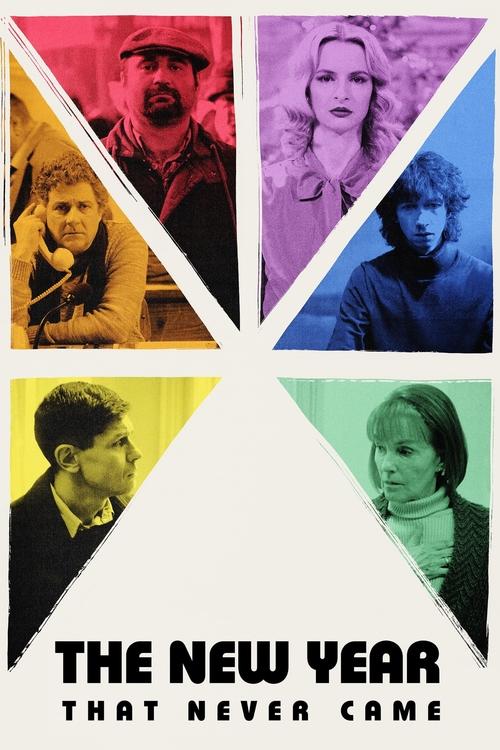
Who is the distressed theatre actress and what motivates her actions in the film?
What role does the TV director Stefan play in the story and how does he handle the crisis?
How does the subplot involving Gelu and his son contribute to the narrative?
What is the significance of the secret police officer Ionuț in the film?
How do the various characters' stories converge at the climax of the film?
Should I watch it?
Ask Your Own Question

What is the plot?
Sorry, we aren't able to watch and write up a full detailed plot yet. Check back in a few days.

What is the ending?
The New Year That Never Came - Ending Summary
The film culminates on December 21, 1989, when Gelu, a factory worker whose son wrote a letter to Santa Claus requesting the death of Nicolae Ceaușescu, finds himself at a pro-Ceaușescu rally. Resigned to his fate and carrying firecrackers he had confiscated from a boy the night before, Gelu uses them to create a disturbance that causes the crowd to boo Ceaușescu during a televised mass rally. This moment, set to the crescendo of Ravel's Boléro, triggers the collapse of the communist regime and the beginning of the Romanian Revolution. The film ends with a grand finale showing each character in their final moments as the regime crumbles, with the focus centered on Gelu as his desperate wish miraculously comes true.
The Ending Narrated in Full
The final sequence of The New Year That Never Came unfolds across December 20 and 21, 1989, as six interconnected lives converge toward a singular historical moment that will reshape their nation.
Gelu, the factory worker, has spent the previous night in a state of mounting panic. His young son, in an act of innocent honesty, wrote a letter to Father Christmas requesting gifts for the entire family: a toy train for himself, a new purse for his mother, and, having overheard his father's private wishes, the death of Uncle Nick, the nickname for Nicolae Ceaușescu. In a totalitarian state where such words could result in arrest, imprisonment, or execution, Gelu understands the catastrophic danger this letter represents. He ventures into the dead of night, armed with washing detergent and soda water, to vandalize the post box and destroy any evidence of his son's devastating Christmas wish list. His desperation is palpable as he scrubs away the words that could condemn his entire family.
By the morning of December 21, Gelu has resigned himself to whatever fate awaits him. He is called up to participate in the pro-Ceaușescu rally, joining his friends and factory worker colleagues as they are marshaled into the streets. They march through the city, chanting slogans through gritted teeth, feigning joy and enthusiasm at their marching orders while their true feelings remain buried beneath layers of enforced compliance. The atmosphere is suffocating, the performance exhausting.
As Gelu stands among the crowd at the televised mass rally, he feels around in his pockets and remembers the firecrackers he had confiscated from a boy the night before. In this moment, with nothing left to lose and everything to gain, he makes a choice. He ignites the firecrackers in the crowd, creating a disturbance that ripples through the assembled masses. The sound cuts through the carefully orchestrated propaganda event, and in that instant, the crowd begins to boo Ceaușescu. For the first time in decades, the dictator hears the voice of the people turned against him, broadcast live on televisions in every household across Romania.
This moment, occurring at 12:08 on December 21, 1989, is captured on film with a near twenty-minute final sequence set to the building crescendo of Ravel's Boléro. The music swells as the regime begins to crumble, and the film employs increasingly rapid parallel montage to show the simultaneous experiences of all the characters. The images are slowed down, as if to stretch out this monumental moment, while the frame widens, signaling that the characters are no longer suffocating and beginning to breathe.
Stefan, the television director who had been desperately trying to save his New Year's show after his key actress defected, witnesses the collapse of the propaganda apparatus he had been forced to serve. Florina, the distressed theatre actress whose voice was broken and whose cheeks were scarred from self-abuse, who had been forced to recite lines about Ceaușescu being "the living symbol of love for our country" despite her emotional devastation, is finally released from the performance of false devotion.
The two teenagers who had been planning to flee the country by swimming across the Danube no longer need to risk their lives in such a desperate escape. The Securitate officer who had been struggling to move his mother from her soon-to-be-demolished house to an apartment she could not stand finds that the entire system of control and coercion that had defined his existence is collapsing around him. His mother, who had refused to leave her home, is no longer trapped in the machinery of forced relocation.
The film ends with Gelu at the center of the final frame, his wish miraculously fulfilled. The father whose desperation had driven him to scrub post boxes in the night, whose son's innocent letter had nearly destroyed him, stands as the unwitting catalyst for the revolution. His act, born from panic and resignation, becomes the spark that ignites the fall of Nicolae Ceaușescu and the communist regime that had poisoned every aspect of Romanian life for decades. The characters, who had been living under constant and invisible surveillance, suffocating under the weight of political control that touched and poisoned everything from children to retirees, are finally breathing. The New Year that had seemed impossible to reach arrives not as a celebration of the old order, but as the birth of a new era.
Is there a post-credit scene?
Who is the distressed theatre actress and what motivates her actions in the film?
The distressed theatre actress is Florina, who is called in to replace the key actress who defects from the New Year's Eve telecast. She is emotionally troubled because she is trying to contact her ex-boyfriend in Timișoara amid the unfolding revolution. Florina resists paying tribute to Ceaușescu on camera and actively tries to be fired from the job, reflecting her internal conflict and opposition to the regime.
What role does the TV director Stefan play in the story and how does he handle the crisis?
Stefan is the TV director tasked with saving the New Year's show after the lead actress defects. He finds a solution by recruiting Florina, the theatre actress, to re-record the patriotic New Year's special. Stefan also struggles with his absent son, who is a student planning to flee Romania and is under surveillance by the secret police.
How does the subplot involving Gelu and his son contribute to the narrative?
Gelu is a factory worker who helps neighbors move into government-assigned apartments as their homes are demolished. His son writes a letter to Santa Claus that inadvertently reveals Gelu's wish for Ceaușescu's death. This leads Gelu to desperately try to destroy the letter to avoid repercussions from the secret police, adding a darkly comedic element to the story.
What is the significance of the secret police officer Ionuț in the film?
Ionuț is a secret police officer who monitors the student Laurentiu, Stefan's son, because of his involvement in anti-regime activities and plans to escape Romania. Ionuț also struggles with personal issues, including moving his mother from her soon-to-be-demolished home to an apartment she dislikes, highlighting the oppressive atmosphere and personal conflicts under the regime.
How do the various characters' stories converge at the climax of the film?
The film culminates in a dramatic and explosive moment where the lives of six seemingly disconnected characters intersect. This climax is marked by a firecracker ignited by an unlikely character, symbolizing the start of the Romanian revolution. The final sequence uses Ravel's Bolero and blends archive footage to capture the historical impact and emotional intensity of the moment.







