





Popular
What role does the setting play in the development of the story?
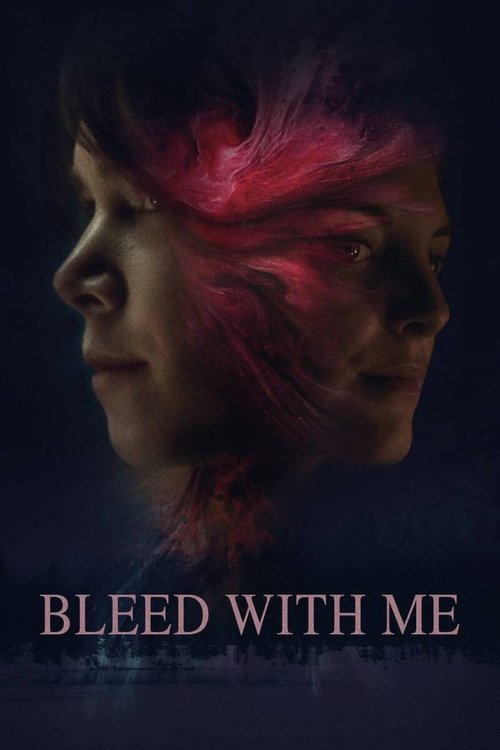
What is the significance of the blood in Bleed with Me?
How does the relationship between Rowan and Emily evolve throughout the film?
How does the character of Brendan influence the dynamics between Rowan and Emily?
What are the implications of Rowan's nightmares throughout the film?
Should I watch it?
Ask Your Own Question

What is the plot?
Bleed with Me begins in motion, with Rowan half-asleep in the back seat of a car as Emily and Brendan drive through a frozen landscape toward Emily's family cabin in the woods. The air is wintry, the roads are icy, and the trip already feels slightly off-balance because Rowan is not part of a simple friends' outing but has been folded into what was originally Emily and Brendan's private getaway. Emily comes across as confident and socially smooth, the kind of person who knows how to steer a room and a conversation, while Brendan is more quietly irritated by Rowan's presence, making the cabin trip feel from the start like a triangle that has been forced into a shape it does not want.
The film establishes that Rowan and Emily are not lifelong confidantes but relatively new friends, having known each other for only about six months. Their connection begins at work, after Emily intervenes to help Rowan during an encounter with a sexually aggressive colleague, and that act of rescue becomes the foundation for an intimacy that now feels both sincere and unstable. Rowan is vulnerable, self-destructive, and clearly carrying pain of her own, while Emily seems to thrive on being needed, on being the person who steps in, comforts, and directs. Brendan, meanwhile, is the boyfriend who has been attached to Emily's life and now seems to be watching his own role diminish in real time as Emily focuses on Rowan instead of him.
The car pauses at an icy roadside store, where the camera briefly leaves Rowan's sleeping form to show Emily getting out and Brendan bringing coffee to her before they continue on through the snowy road. That small stop matters because it emphasizes how cut off they already are from the ordinary world: there is only the car, the snow, and the uneasy companionship among the three of them. When they finally arrive, Emily wakes Rowan, and the cabin appears as a remote family property owned by Emily's parents, isolated deep in the woods and buried in snow. The place is beautiful in a severe, inhospitable way, with blank white drifts and dark trees pressing around the house, turning the setting itself into a kind of silent enclosure.
At first, the cabin feels merely awkward rather than threatening. Rowan is tired, unwell, and out of place, while Emily and Brendan move around with the familiarity of a couple trying to salvage a romantic retreat that has been interrupted by an extra guest. The social atmosphere is built from meals, drinks, card games, and strained casual talk, all of it ordinary on the surface but loaded with undercurrents. Rowan tries to settle into the weekend, but she is already physically and emotionally fragile, and the film lets that fragility hang over every interaction.
The first clear sign that something is wrong comes during dinner on the first night, when Rowan cuts her finger while cooking or preparing food. Emily reacts by kissing the blood from the wound, and the gesture lands as unnerving instead of tender, because it fuses intimacy with hunger and bodily violation. In that moment, the film plants a seed that will keep growing: Emily's affection is beginning to look less like care than possession, less like comfort than appetite. Rowan is visibly perturbed by the kiss, even if she does not yet fully understand why.
After dinner, they drink and play cards, and Rowan tells a story about being stalked by a customer from work. The story adds another layer to her unease, because it confirms that she already lives with fear and a sense of threat before any strange incidents in the cabin begin. She then seems to pass out, likely from exhaustion, alcohol, or something more sinister. Emily and Brendan carry her to bed, which should be a mundane act of care but instead deepens the film's sense of helplessness: Rowan is no longer fully in control of her own body or surroundings.
When Rowan wakes during the night, the film shifts into its most disorienting mode. She sees what looks like Emily seated beside her bed, a dark, silent presence lingering in the room. The image is half dream, half intrusion, and when Rowan becomes fully awake, the figure is gone. That visual flicker is crucial because it keeps the movie balanced between psychological collapse and genuine predation; Rowan cannot tell whether she is seeing a hallucination or a person who has been there all along. The uncertainty is not abstract--it is personal, intimate, and rooted in the body lying under the blankets.
Shaken, Rowan goes to the bathroom and vomits. Emily comes in, and the two of them speak in a scene that is at once calm and deeply uncomfortable. During this exchange, the film reveals that Rowan has scars on her arm from older self-harm. That detail changes the meaning of everything that has come before, because it gives Rowan a history that could explain some of her mistrust while also making her doubt her own memory and perception. If she has hurt herself before, then maybe she is doing it again without remembering; maybe the marks on her body are not evidence of Emily's violence but a continuation of her own self-destruction.
The next morning, Rowan wakes to find fresh, small cuts on her arm. The wounds are precise and unnerving, like little signatures made under cover of darkness. She looks at them with rising horror and confusion, and the film makes clear that this is the central mystery: is Emily sneaking into the room at night and slicing Rowan's skin, or is Rowan injuring herself in a fugue of drink, drugs, trauma, or sleepwalking? Rowan's condition worsens day by day, and each new mark on her body pushes her further into panic.
From this point on, the cabin becomes less a vacation spot than a trap. Rowan grows increasingly convinced that Emily is stealing her blood, and the film carefully preserves the ambiguity long enough to let paranoia and danger feed each other. The darkness of the room, the groggy half-consciousness of the nights, and the blurred hangover of the mornings all make it nearly impossible for Rowan to trust what she sees. Emily and Brendan, meanwhile, often respond with a mix of concern and distance, as if Rowan's fears are both worrying and inconvenient. Brendan's irritation is especially important because it reinforces the sense that Rowan has disrupted an already unstable arrangement between the couple.
As the weekend continues, the film keeps building tension through small acts and evasions rather than big external shocks. Rowan searches for answers in Emily's behavior, in the medicines and supplies around the cabin, and in the changes she feels in her own body. She wonders if she has been drugged, because her blackouts and bizarre dreams feel too severe to be ordinary fatigue or alcohol alone. The film does not flatten that uncertainty; instead, it turns it into the engine of dread. Every ordinary object--drinks, pills, blankets, dim lamplight, a doorway half open in the night--becomes suspect.
Emily's behavior remains warm on the surface, but that warmth begins to feel increasingly possessive. She seems to relish being the person Rowan depends on, and one review notes that caring for another person is something Emily desperately thrives on. That detail reframes her invitation to the cabin: she is not simply hosting a friend, she is creating conditions in which dependency can flourish. Rowan, in contrast, is isolated not only by geography but by her own fragility, her history of self-harm, and her inability to decide whether the danger is real.
Brendan remains caught in the middle throughout, more irritated than malicious, but never truly able to stop the emotional pressure building around him. He is the third point of the triangle, the one who can see that something is wrong but cannot define it clearly enough to intervene successfully. His presence also confirms that Emily's attention has shifted from him to Rowan, a fact that matters because it gives the cabin trip a hidden emotional logic: Emily no longer has Brendan's full focus, so she seems to draw Rowan into a role of replacement companion, emotional patient, and object of care.
As the nights continue, Rowan's fear becomes more embodied. The fresh cuts recur. The bedside figure returns. Her waking and sleeping selves begin to blur. In one reading of the film, these are hallucinations or drug-induced visions; in another, they are the visual language of a predatory act happening just beyond certainty. The movie never fully abandons ambiguity, but the pattern of injuries makes Rowan's suspicion increasingly difficult to dismiss. Emily's kiss on the bleeding finger, the nighttime presence, the worsening condition, and the neat slices in the morning all seem to point toward the same horrifying conclusion: Emily is accessing Rowan's body while she sleeps.
The emotional tension sharpens because Rowan is not merely afraid of Emily--she is afraid that Emily may be the only one who understands her, and that losing Emily would mean losing the fragile connection she has been offered. That is why the horror cuts so deeply. The threat is not only physical but relational, built from the possibility that care itself is the weapon. Emily's intimacy is inseparable from control, and Rowan's dependence makes it hard for her to break free even as she becomes more terrified.
By the final stretch, the film stops feeling like a mystery with competing explanations and starts feeling like a slow tightening of the noose. The core revelation arrives: Rowan is not simply imagining the pattern, and the violence is not just self-inflicted delusion. Emily has been drugging Rowan and cutting her while she sleeps in order to make her more reliant on Emily. That revelation retroactively poisons everything Emily has done since Rowan arrived, from the gentle hosting to the blood-kissing to the bedside presence in the night. What looked like concern is exposed as manipulation; what looked like tenderness is revealed as a method of domination.
The ending is tragic and cruel. Emily's control escalates into fatal violence, and she kills Rowan accidentally. The exact mechanism of the death is not elaborated in the available plot material, but the result is unmistakable: Rowan does not survive the weekend. The accidental nature of the killing makes the ending even bleaker, because it suggests that Emily's need to possess, soothe, and feed on dependency has gone too far and destroyed the very person she has been clinging to. There is no triumphant exposure, no clean rescue, no last-minute escape into the snow.
After Rowan is lost, Brendan returns to Emily. The cabin is left with the ruin of what has happened there, but the emotional outcome is even darker than the physical one: Emily is already dead by the time he comes back, and the triangle collapses into absence. That final arrangement leaves no neat survivors' reunion, only the wreckage of a relationship that turned parasitic and fatal. The snow-covered isolation of the cabin, which once felt merely atmospheric, ends up functioning like a sealed chamber for grief, guilt, and decay.
The last impression the film leaves is of a bond that was never as innocent as it first seemed. Emily had drawn Rowan in when Rowan was vulnerable, then used proximity, care, and concealment to make that vulnerability worse. Rowan's fear that Emily was stealing her blood proves correct, but by the time the truth is fully legible, it is too late to save her. The final scene does not restore order; it confirms that the weekend getaway has ended in death, with Rowan gone, Emily dead, and Brendan left to return to a disaster he can no longer undo.




What is the ending?
In the ending of "Bleed with Me," the tension culminates as the characters confront their fears and desires. The film concludes with a haunting ambiguity, leaving the fate of the characters uncertain and open to interpretation.
As the final scenes unfold, we find the three main characters--Rowan, Emily, and Brendan--entangled in a web of psychological manipulation and emotional turmoil. Rowan, who has been grappling with her own insecurities and feelings of isolation, becomes increasingly paranoid about the intentions of her friends. Emily, who initially appears supportive, reveals a more sinister side as the story progresses. Brendan, caught in the middle, struggles to maintain his loyalty to both women while dealing with the escalating tension.
In the climactic moments, Rowan's mental state deteriorates. She becomes convinced that Emily is trying to harm her, leading to a confrontation that is both physical and emotional. The atmosphere is thick with dread as Rowan's fears manifest into reality. The film's final moments leave viewers questioning the nature of friendship, trust, and betrayal.
As the screen fades to black, the fates of the characters remain ambiguous. Rowan's fate is left uncertain, as she grapples with her own demons. Emily's true intentions are shrouded in mystery, and Brendan's role as a mediator becomes increasingly complicated. The ending encapsulates the film's exploration of psychological horror, leaving audiences to ponder the complexities of human relationships.
Now, let's delve into the ending in a more detailed, chronological narrative.
The final act begins with Rowan, Emily, and Brendan gathered in the remote cabin, where the atmosphere is thick with tension. Rowan, already feeling vulnerable and isolated, becomes increasingly suspicious of Emily. The once supportive friendship begins to fray as Rowan's paranoia takes hold. She starts to question Emily's motives, feeling as though she is being watched and manipulated.
In a pivotal scene, Rowan confronts Emily about her feelings of unease. The conversation is charged with emotion, as Rowan's voice trembles with fear and anger. Emily, maintaining a calm demeanor, tries to reassure Rowan, but her words only deepen Rowan's distrust. The camera captures the flicker of doubt in Rowan's eyes, emphasizing her internal struggle.
As night falls, the cabin becomes a claustrophobic space filled with shadows and whispers. Rowan's mental state continues to unravel. She experiences vivid hallucinations, blurring the lines between reality and her fears. The audience witnesses her descent into paranoia, as she believes that Emily is plotting against her. The tension escalates when Rowan discovers a bloodied knife, heightening her sense of danger.
In a climactic confrontation, Rowan accuses Emily of trying to harm her. The scene is fraught with intensity, as both women grapple with their emotions. Emily's facade begins to crack, revealing a more sinister side. The dialogue is sharp and biting, filled with accusations and revelations. Brendan, caught in the middle, attempts to mediate, but his presence only adds to the chaos.
As the confrontation reaches its peak, Rowan's fear transforms into a desperate need for survival. In a moment of panic, she lashes out, leading to a physical struggle between the two women. The scene is visceral, with the camera capturing the raw emotion and desperation in their movements. The sound of heavy breathing and frantic whispers fills the air, amplifying the tension.
In the aftermath of the struggle, the cabin is left in disarray. Rowan, shaken and breathless, stands over Emily, who lies on the floor, her expression unreadable. The audience is left in suspense, unsure of the outcome. Rowan's face is a mixture of fear and triumph, but the ambiguity of the moment leaves her fate uncertain.
Brendan, witnessing the chaos, is left to grapple with his own feelings of helplessness. He approaches Rowan, but the trust between them has been irrevocably damaged. The emotional weight of the situation hangs heavy in the air, as the camera lingers on their faces, capturing the complexity of their relationship.
As the film draws to a close, the screen fades to black, leaving the audience with lingering questions about the characters' fates. Rowan's journey through fear and paranoia culminates in a moment of violence, but the resolution remains elusive. Emily's true intentions are left ambiguous, and Brendan's role as a peacemaker is overshadowed by the chaos that has unfolded.
The ending of "Bleed with Me" encapsulates the film's exploration of trust, betrayal, and the fragility of human relationships, leaving viewers to ponder the psychological depths of the characters and the haunting nature of their experiences.
Is there a post-credit scene?
In the movie "Bleed with Me," there is no post-credit scene. The film concludes its narrative without any additional scenes or content after the credits roll. The story wraps up with a focus on the psychological tension and emotional turmoil experienced by the characters, leaving the audience to reflect on the events that transpired throughout the film.
What role does the setting play in the development of the story?
The secluded cabin in the woods serves as a crucial backdrop for 'Bleed with Me', amplifying the film's themes of isolation and paranoia. The claustrophobic environment heightens the characters' emotional states, creating a sense of entrapment. As the characters navigate their relationships within this confined space, the setting becomes a character in itself, reflecting their inner turmoil and the escalating tension.
What is the significance of the blood in Bleed with Me?
In 'Bleed with Me', the blood serves as a powerful symbol of connection and vulnerability among the characters. It represents the physical and emotional ties that bind them, as well as the darker aspects of their relationships. The act of bleeding becomes a metaphor for the characters' struggles with trust, intimacy, and the fear of being hurt.
How does the relationship between Rowan and Emily evolve throughout the film?
Rowan and Emily's relationship begins with a sense of camaraderie and shared experiences, but as the story unfolds, it becomes increasingly strained. Rowan's jealousy and insecurities surface, particularly as she feels overshadowed by Emily's confidence and allure. This tension culminates in a series of emotional confrontations that reveal their vulnerabilities and fears, ultimately leading to a tragic climax.
How does the character of Brendan influence the dynamics between Rowan and Emily?
Brendan acts as a catalyst in the relationship between Rowan and Emily. His presence introduces a layer of competition and jealousy, particularly for Rowan, who feels threatened by Brendan's charm and connection with Emily. As the story progresses, Brendan's interactions with both women reveal their insecurities and desires, ultimately complicating their friendship and leading to pivotal moments of conflict.
What are the implications of Rowan's nightmares throughout the film?
Rowan's nightmares serve as a reflection of her inner fears and anxieties, foreshadowing the psychological unraveling that occurs as the story progresses. These dreams often blur the lines between reality and her subconscious, heightening the sense of dread and paranoia. They reveal her struggles with self-identity, her feelings of inadequacy, and her deep-seated fears of betrayal, which ultimately manifest in her waking life.
Is this family friendly?
"Bleed with Me," produced in 2020, is not considered family-friendly. The film contains several potentially objectionable or upsetting elements that may be distressing for children or sensitive viewers.
-
Themes of Isolation and Paranoia: The film explores deep psychological themes, including feelings of isolation and paranoia, which may be unsettling.
-
Self-Harm: There are scenes that depict self-harm, which can be triggering for some viewers.
-
Violence: The film includes moments of violence that are graphic and may be disturbing.
-
Intense Emotional Distress: Characters experience significant emotional turmoil, which can evoke feelings of anxiety or discomfort.
-
Dark Atmosphere: The overall tone of the film is dark and unsettling, contributing to a sense of dread that may not be suitable for younger audiences.
These elements combine to create a narrative that is more appropriate for mature viewers.







