












Loading additional questions...
Popular
What is the significance of the character Richard Boca's profession in the story?
How does Richard's relationship with the female character, Lila, impact his mental state?
What role do the mosquitoes play in the film's narrative?
How does the setting of New York City contribute to the film's atmosphere?
What is the significance of the film's visual style and cinematography in conveying Richard's psychological state?
Should I watch it?
Ask Your Own Question

What is the plot?
Sorry, we aren't able to watch and write up a full detailed plot yet. Check back in a few days.




What is the ending?
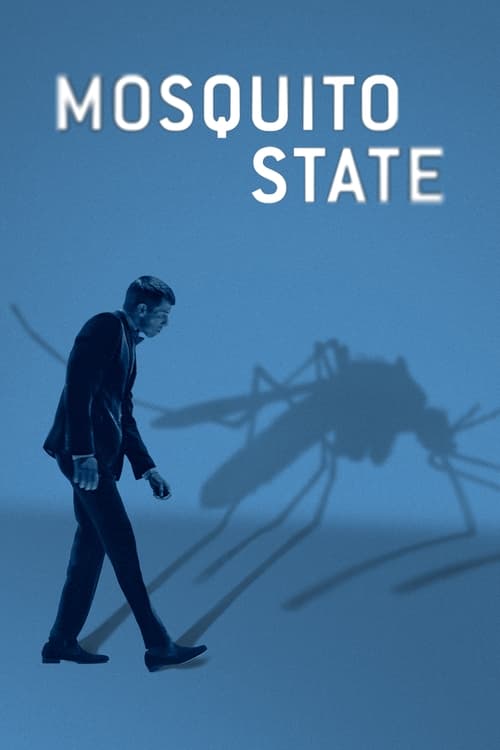
In the ending of "Mosquito State," the protagonist, Richard Boca, succumbs to his paranoia and isolation, leading to a tragic and surreal conclusion. As his mental state deteriorates, he becomes increasingly consumed by the infestation of mosquitoes in his apartment. Ultimately, he meets a grim fate, surrounded by the very creatures that symbolize his unraveling.
Expanding on the ending in a chronological and narrative fashion:
The climax of "Mosquito State" unfolds in Richard Boca's dimly lit apartment, a space that has transformed into a breeding ground for mosquitoes. The once pristine environment is now chaotic, filled with the incessant buzzing of the insects that have invaded every corner. Richard, portrayed as a meticulous and successful Wall Street analyst, has spiraled into a state of paranoia and obsession. His mental health deteriorates as he becomes increasingly isolated from the outside world, fixated on the mosquitoes that seem to mirror his own internal chaos.
In the final scenes, Richard is seen pacing through his apartment, his eyes wide with fear and desperation. The walls, once a symbol of his success, now feel like a prison. He is haunted by the buzzing sound, which grows louder, echoing his spiraling thoughts. The mosquitoes, which he initially viewed as a mere nuisance, have become a manifestation of his fears and anxieties. He attempts to swat them away, but they are relentless, swarming around him, feeding off his despair.
As the night deepens, Richard's grip on reality slips further. He is shown in a series of disjointed moments, reflecting his fractured psyche. He talks to himself, his voice trembling with a mix of anger and fear. The camera captures his frantic movements, the sweat glistening on his forehead, and the wild look in his eyes. He is trapped in a cycle of self-destruction, unable to escape the very thing he has created.
In a pivotal moment, Richard collapses onto the floor, surrounded by the buzzing swarm. The mosquitoes, now a part of him, seem to invade his very being. The scene is surreal, with close-ups of the insects crawling over his skin, symbolizing his complete surrender to his fears. Richard's breathing becomes labored, and he is engulfed by the swarm, a visual representation of his ultimate defeat.
The film concludes with a haunting silence, broken only by the faint sound of buzzing. Richard's fate is sealed as he lies motionless on the floor, consumed by the very creatures that have come to represent his inner turmoil. The camera lingers on the scene, capturing the stark contrast between the life he once led and the desolation he now faces.
In the aftermath, the audience is left to ponder the fate of Richard Boca. His isolation and obsession have led to his demise, a tragic end for a character who once thrived in the fast-paced world of finance. The mosquitoes, once a mere annoyance, have become the embodiment of his fears, ultimately leading to his downfall. The film closes on this haunting image, leaving a lingering sense of unease and reflection on the consequences of unchecked ambition and isolation.
Is there a post-credit scene?
What is the significance of the character Richard Boca's profession in the story?
Richard Boca is a successful Wall Street analyst whose profession symbolizes the high-stakes, cutthroat world of finance. His obsession with data and numbers reflects his desire for control and success, but it also foreshadows his eventual descent into chaos as he becomes increasingly consumed by his own mind and the environment around him.
How does Richard's relationship with the female character, Lila, impact his mental state?
Lila represents a fleeting connection to reality for Richard. Their relationship begins with passion and intrigue, but as Richard's mental state deteriorates, Lila becomes a source of anxiety and confusion for him. Her presence amplifies his internal struggles, leading him to question his own sanity and the nature of his reality.
What role do the mosquitoes play in the film's narrative?
The mosquitoes serve as a physical manifestation of Richard's deteriorating mental state. As he becomes more isolated and obsessed with his work, the mosquitoes multiply, symbolizing his growing paranoia and the overwhelming nature of his environment. They reflect his internal chaos and the consequences of his detachment from reality.
How does the setting of New York City contribute to the film's atmosphere?
The bustling, vibrant backdrop of New York City contrasts sharply with Richard's increasingly claustrophobic and paranoid mindset. The city represents both opportunity and entrapment, mirroring Richard's internal conflict as he navigates his professional ambitions while spiraling into madness. The urban landscape becomes a character in itself, amplifying the tension and isolation he experiences.
What is the significance of the film's visual style and cinematography in conveying Richard's psychological state?
The film employs a distinct visual style, using close-ups, distorted angles, and a muted color palette to reflect Richard's psychological unraveling. The cinematography captures his growing disconnection from reality, with scenes becoming increasingly surreal and claustrophobic, mirroring his internal chaos and the suffocating presence of the mosquitoes.








