




















Popular
Who is the main antagonist in Call of Heroes and what motivates his actions?
What role does the character of Yang Kenan play in the story?
How does the character of the village chief influence the events in Call of Heroes?
What is the significance of the final battle in Call of Heroes?
How does the character of the young warrior, played by Eddie Peng, evolve throughout the film?
Should I watch it?
Ask Your Own Question

What is the plot?
Sorry, we aren't able to watch and write up a full detailed plot yet. Check back in a few days.
What is the ending?
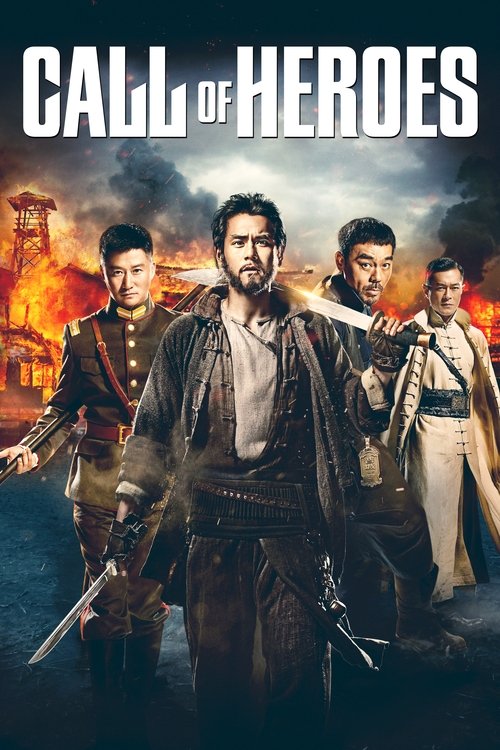
In the ending of "Call of Heroes," the main characters face off against the antagonist, Cao Shao, in a climactic battle. After intense fighting, the heroes manage to defeat Cao Shao, but not without significant sacrifice. The film concludes with the village safe, but the cost of their victory weighs heavily on the surviving characters.
As the final act unfolds, the tension escalates in the village as the heroes prepare for the inevitable confrontation with Cao Shao and his men. The atmosphere is thick with anticipation and dread, as the villagers look to their protectors for hope. The sun sets, casting long shadows over the village, symbolizing the looming danger.
The first scene of the climax begins with the heroes--led by the steadfast and honorable Yang Kenan--gathering their resolve. They know that the fate of the village rests on their shoulders. Each character reflects on their motivations: Yang Kenan is driven by a sense of duty and honor, while the hot-headed Zhao is fueled by a desire for revenge against the oppressive forces that threaten their home.
As night falls, the heroes set up a defensive perimeter around the village. The tension is palpable as they hear the distant sounds of Cao Shao's approaching army. The villagers, frightened yet hopeful, look to their defenders for strength. The camera captures the determination etched on the faces of the heroes, each one aware of the sacrifices that may lie ahead.
The battle erupts with a fierce clash as Cao Shao's men storm the village. The choreography of the fight scenes is intense, showcasing the martial arts prowess of the heroes. Yang Kenan leads the charge, his sword flashing in the moonlight as he takes on multiple opponents. The cinematography captures the chaos of battle, with dust and debris swirling around, heightening the sense of urgency.
In the midst of the fight, Zhao confronts one of Cao Shao's top lieutenants. Their duel is personal, filled with rage and a thirst for vengeance. Zhao's emotional turmoil is evident as he fights not just for survival, but to avenge the wrongs done to his people. The stakes are high, and the audience can feel the weight of his struggle.
Meanwhile, the wise and strategic elder, who has been a guiding force for the heroes, finds himself in a precarious situation. He faces off against Cao Shao himself, embodying the wisdom of experience. The elder's calm demeanor contrasts sharply with the chaos around him, and he uses his knowledge of the terrain to outmaneuver Cao Shao, but not without sustaining injuries.
As the battle rages on, the heroes begin to fall one by one. The emotional weight of their sacrifices becomes evident as they fight valiantly, knowing that their lives may be the price for the village's freedom. The camera lingers on their faces, capturing the pain and determination in their eyes.
In a pivotal moment, Yang Kenan finally confronts Cao Shao. The two engage in a fierce duel, their swords clashing with a resounding echo that symbolizes the clash of ideals--honor versus tyranny. The fight is brutal, and both men are pushed to their limits. Yang Kenan's resolve is unwavering, fueled by the memories of his fallen comrades and the hope of the villagers.
In a final, desperate move, Yang Kenan manages to outsmart Cao Shao, delivering a decisive blow that brings the tyrant to his knees. The moment is bittersweet; while the village is saved, the cost of victory is heavy. The camera captures Yang Kenan's expression as he stands over Cao Shao, a mix of triumph and sorrow.
As dawn breaks, the surviving heroes gather in the village square, their bodies battered but their spirits unbroken. The villagers emerge from their homes, tears of relief and gratitude in their eyes. The elder, though injured, stands tall, embodying the resilience of the community. Zhao, having avenged his personal losses, reflects on the futility of revenge, realizing that true strength lies in unity and protection.
The film concludes with a poignant scene of the heroes looking out over the village, now safe but forever changed. They understand that their fight was not just against Cao Shao, but for the very essence of their humanity. Each character's fate is intertwined with the village's future, and as they stand together, they embody the spirit of hope and resilience that defines their journey. The screen fades to black, leaving the audience with a sense of closure, yet aware of the sacrifices made for peace.
Is there a post-credit scene?
In the movie "Call of Heroes," there is no post-credit scene. The film concludes its narrative without any additional scenes or content after the credits roll. The story wraps up with the resolution of the main conflict, focusing on the characters' fates and the aftermath of the events that transpired throughout the film. The absence of a post-credit scene allows the audience to reflect on the themes of honor, sacrifice, and justice that are central to the story.
Who is the main antagonist in Call of Heroes and what motivates his actions?
The main antagonist in Call of Heroes is the ruthless warlord Cao Shao. His motivations stem from a desire for power and control, as he seeks to establish dominance over the region. His violent and merciless nature is showcased through his brutal treatment of the villagers and his relentless pursuit of revenge against those who oppose him.
What role does the character of Yang Kenan play in the story?
Yang Kenan is a key character in Call of Heroes, portrayed as a skilled and honorable warrior. He is deeply motivated by a sense of justice and loyalty to his village. Throughout the film, he grapples with the moral dilemmas of protecting his home while facing the overwhelming threat posed by Cao Shao. His internal struggle is highlighted as he balances his duty to his people with the need to confront the warlord.
How does the character of the village chief influence the events in Call of Heroes?
The village chief, played by a wise and experienced leader, serves as a moral compass for the community. His decisions and guidance are pivotal in rallying the villagers to stand against Cao Shao's tyranny. He embodies the spirit of resilience and sacrifice, urging the villagers to unite and fight for their freedom, which ultimately influences the course of the conflict.
What is the significance of the final battle in Call of Heroes?
The final battle in Call of Heroes is a climactic showdown that encapsulates the themes of bravery, sacrifice, and the fight for justice. It is significant not only for its intense action sequences but also for the emotional stakes involved, as the characters confront their fears and fight for their loved ones. The battle serves as a turning point for Yang Kenan and the villagers, solidifying their resolve and unity against oppression.
How does the character of the young warrior, played by Eddie Peng, evolve throughout the film?
The young warrior, portrayed by Eddie Peng, undergoes significant character development throughout Call of Heroes. Initially depicted as impulsive and somewhat reckless, he learns the importance of strategy, teamwork, and sacrifice as the story progresses. His evolution is marked by moments of self-reflection and growth, ultimately leading him to embrace his role as a protector of the village and a key player in the fight against Cao Shao.
Is this family friendly?
"Call of Heroes," produced in 2016, is an action-packed martial arts film that contains several elements that may not be suitable for children or sensitive viewers. Here are some potentially objectionable or upsetting aspects:
-
Violence and Action Sequences: The film features intense martial arts combat, including hand-to-hand fighting, swordplay, and other forms of violence. These scenes can be graphic and may be distressing for younger audiences.
-
Blood and Injury: There are moments where characters sustain injuries, and blood is depicted, which could be unsettling for sensitive viewers.
-
Death and Threats: The narrative includes themes of death, with characters facing life-threatening situations. The portrayal of threats and the consequences of violence may be intense.
-
Moral Ambiguity: Characters often grapple with complex moral decisions, which may be difficult for younger viewers to understand or process.
-
Emotional Turmoil: The film explores themes of betrayal, loyalty, and sacrifice, which can evoke strong emotional responses and may be heavy for children.
Overall, while "Call of Heroes" is an engaging film for action enthusiasts, its content may not be appropriate for all audiences, particularly younger children or those sensitive to violence and emotional distress.








