
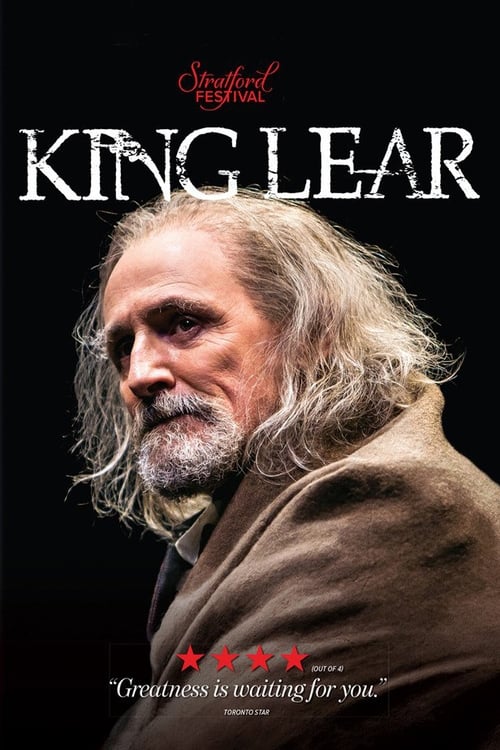
















Popular
What motivates King Lear to divide his kingdom among his daughters?
How does Goneril's character evolve throughout the film?
What is the significance of the storm scene in relation to Lear's character?
How does the relationship between Lear and Cordelia develop throughout the film?
What role does Edmund play in the conflict between the characters?
Should I watch it?
Ask Your Own Question

What is the plot?
Sorry, we aren't able to watch and write up a full detailed plot yet. Check back in a few days.








What is the ending?
In the ending of the 2015 film "King Lear," Lear is devastated by the death of his daughter Cordelia. He carries her lifeless body, mourning her loss deeply. The film concludes with Lear's own death shortly after, overwhelmed by grief and despair.
As the final act unfolds, we find Lear, played with profound emotional depth, in a desolate state. The scene is set against a bleak backdrop, emphasizing the desolation of his heart. Lear, having been stripped of his power and dignity, is now a broken man. He wanders through the remnants of his kingdom, a place that has become a battlefield of betrayal and loss.
In a poignant moment, Lear is reunited with Cordelia, who has been captured and brought before him. The atmosphere is heavy with tension and sorrow. Lear's face is etched with anguish as he cradles Cordelia in his arms, desperately trying to revive her. His cries echo through the air, filled with a father's love and regret. The camera lingers on his expression, capturing the raw pain of a man who has lost everything he held dear.
As Lear realizes that Cordelia is gone, the weight of his grief becomes unbearable. He collapses, his body shaking with sobs, and the world around him fades into a blur. The once-mighty king is now reduced to a figure of despair, embodying the tragic consequences of his earlier decisions. The scene is haunting, filled with the sounds of distant chaos, symbolizing the turmoil that has engulfed his life and kingdom.
In the aftermath, Lear's fate is sealed. He succumbs to his grief, his heart breaking under the weight of his loss. The film captures his final moments with a sense of tragic inevitability, as he breathes his last, still holding Cordelia close. The camera pulls away, leaving the audience with a haunting image of a father mourning his child, a powerful reminder of the fragility of life and the devastating impact of betrayal.
The other characters meet their fates as well. Goneril and Regan, Lear's treacherous daughters, have already faced their demise due to their ruthless ambition and betrayal. Edmund, the illegitimate son who played a significant role in the chaos, is also killed in the conflict, a victim of his own machinations. The kingdom lies in ruins, a testament to the destructive nature of greed and ambition.
In the final moments, the film leaves viewers with a sense of profound loss and reflection on the themes of love, betrayal, and the tragic consequences of human folly. The once-great King Lear, now a shadow of his former self, serves as a poignant reminder of the fragility of power and the enduring bond between a parent and child, even in the face of overwhelming tragedy.
Is there a post-credit scene?
The 2015 film adaptation of King Lear does not include a post-credit scene. The film concludes with the tragic resolution of the story, focusing on the emotional devastation and the consequences of betrayal and madness. The final moments are poignant, emphasizing the themes of loss and the fragility of human relationships, leaving the audience with a sense of somber reflection rather than a continuation of the narrative.
What motivates King Lear to divide his kingdom among his daughters?
King Lear is driven by a desire for flattery and reassurance as he approaches old age. He wishes to retire from the burdens of rule and seeks to determine which of his three daughters--Goneril, Regan, and Cordelia--loves him the most. This misguided test of loyalty leads to tragic consequences.
How does Goneril's character evolve throughout the film?
Goneril begins as a seemingly dutiful daughter, but as the story progresses, her ambition and ruthlessness become apparent. After receiving her share of the kingdom, she reveals her true nature by betraying Lear and plotting against her sister Regan, showcasing her insatiable thirst for power.
What is the significance of the storm scene in relation to Lear's character?
The storm scene serves as a powerful metaphor for Lear's inner turmoil and descent into madness. As he battles the elements, Lear's emotional state reflects his growing realization of his mistakes and the betrayal he has faced, symbolizing his struggle against the chaos of his own mind and the world around him.
How does the relationship between Lear and Cordelia develop throughout the film?
Initially, Lear's relationship with Cordelia is strained due to her refusal to flatter him falsely. However, after Lear's fall from grace and his subsequent madness, Cordelia's unwavering love and loyalty shine through. Their reunion is marked by deep emotional resonance, highlighting themes of forgiveness and redemption.
What role does Edmund play in the conflict between the characters?
Edmund, the illegitimate son of the Duke of Gloucester, is a cunning and manipulative figure who seeks to usurp power for himself. His machinations create significant conflict, as he plays Goneril and Regan against each other while betraying his father, ultimately leading to tragic outcomes for multiple characters.
Is this family friendly?
The 2015 film adaptation of King Lear, directed by Richard Eyre, is not considered family-friendly due to its intense themes and mature content. Here are some potentially objectionable or upsetting aspects that may affect children or sensitive viewers:
-
Violence and Death: The film includes scenes of physical violence and the deaths of key characters, which can be distressing.
-
Emotional Turmoil: Characters experience profound emotional suffering, betrayal, and madness, which may be unsettling for younger audiences.
-
Themes of Betrayal and Madness: The exploration of familial betrayal and the descent into madness can be heavy and difficult to process.
-
Grief and Loss: The portrayal of grief, particularly in the context of loss and the impact on relationships, may be too intense for some viewers.
-
Dark Atmosphere: The overall tone of the film is somber and bleak, which may not be suitable for children.
These elements contribute to a narrative that is complex and emotionally charged, making it more appropriate for mature audiences.