
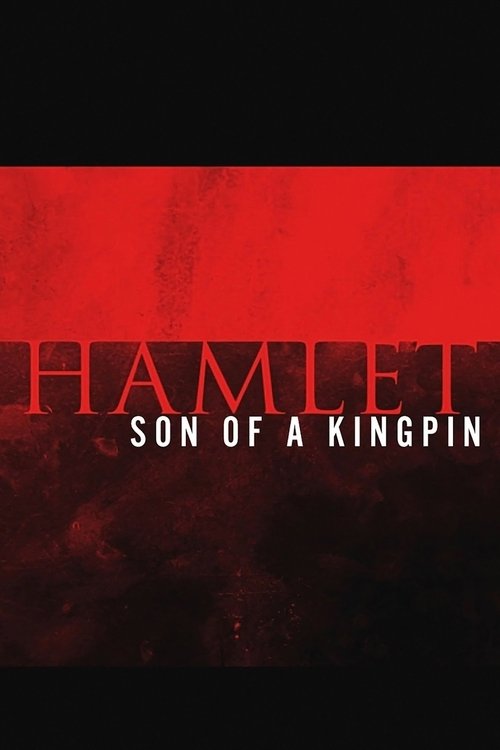






Popular
How does the setting influence the characters' actions and decisions?
What motivates Hamlet to seek revenge against his uncle?
How does Ophelia's relationship with Hamlet evolve throughout the film?
What role does the character of Claudius play in Hamlet's internal conflict?
What is the significance of the ghost in Hamlet's journey?
Should I watch it?
Ask Your Own Question

What is the plot?
Sorry, we aren't able to watch and write up a full detailed plot yet. Check back in a few days.






What is the ending?
In the ending of "Hamlet: Son of a Kingpin," Hamlet confronts his uncle Claudius, leading to a series of tragic events that culminate in a violent showdown. The film concludes with the deaths of several key characters, including Hamlet, Claudius, and Gertrude, leaving the kingdom in turmoil.
As the final act unfolds, the scene opens in the dimly lit throne room, where tension hangs thick in the air. Hamlet, fueled by a mix of rage and sorrow, stands before Claudius, who is seated on the throne, a symbol of his ill-gotten power. The atmosphere is charged with the weight of betrayal and revenge. Hamlet's face is a mask of determination, his eyes burning with the desire for justice for his father's murder.
Claudius, aware of Hamlet's intentions, tries to manipulate the situation, attempting to sway Hamlet with words of reason. However, Hamlet's grief and anger overpower any attempts at reconciliation. The dialogue is sharp, filled with accusations and revelations, as Hamlet confronts Claudius about the murder of King Hamlet. The audience can feel the emotional turmoil within Hamlet, torn between his duty to avenge his father and the moral implications of his actions.
As the confrontation escalates, Gertrude enters the scene, her expression a mix of confusion and fear. She senses the impending violence and tries to intervene, pleading with Hamlet to reconsider. But Hamlet, consumed by his quest for vengeance, dismisses her pleas. In a moment of tragic irony, Gertrude inadvertently drinks from a poisoned cup meant for Hamlet, a fatal mistake that seals her fate. Her collapse sends shockwaves through the room, and Hamlet's face contorts with horror as he realizes the consequences of his actions.
In the ensuing chaos, a duel is set between Hamlet and Laertes, who has his own vendetta against Hamlet for the death of his father, Polonius. The duel is intense, filled with swift movements and emotional stakes. Both men are driven by grief and a desire for revenge, their motivations intertwining in a tragic dance of fate. As they fight, the audience can see the desperation in Laertes' eyes, reflecting his internal conflict between loyalty to his family and the realization of the futility of their feud.
The duel reaches its climax when both men are wounded by the poisoned blades. As they fall to the ground, the reality of their choices sinks in. Hamlet, in his final moments, manages to kill Claudius, ensuring that the man who caused so much pain and suffering is brought to justice. However, this victory is bittersweet, as Hamlet himself succumbs to the poison, lying beside Laertes and Gertrude.
In the final scene, the throne room is a scene of devastation. The bodies of Hamlet, Laertes, Gertrude, and Claudius lie scattered, a grim testament to the destructive power of revenge and ambition. Fortinbras, the Prince of Norway, enters the room, surveying the aftermath of the tragedy. He recognizes the need for a new beginning and takes charge, signaling a shift in power and the hope for a more peaceful future.
The film closes on a somber note, with the camera panning over the fallen characters, emphasizing the heavy cost of their conflicts. Each character's fate serves as a poignant reminder of the consequences of their choices, leaving the audience to reflect on the themes of revenge, betrayal, and the fragility of life.
Is there a post-credit scene?
In "Hamlet: Son of a Kingpin," there is indeed a post-credit scene that adds an intriguing layer to the film's conclusion. After the credits roll, the screen fades back in to reveal a dimly lit room filled with shadows. The camera slowly pans across the space, revealing remnants of a lavish party that has clearly ended in chaos. Empty bottles and discarded party favors litter the floor, hinting at the wild night that has just transpired.
In the center of the room, a figure is seen sitting alone at a table, nursing a drink. As the camera zooms in, it becomes clear that it is Horatio, Hamlet's loyal friend. His expression is one of deep contemplation, a mix of sorrow and determination. He stares into his glass, lost in thought, reflecting on the tragic events that have unfolded throughout the film.
Suddenly, the door creaks open, and a shadowy figure enters. The tension in the room thickens as Horatio looks up, his eyes narrowing in suspicion. The figure steps into the light, revealing themselves to be Fortinbras, the ambitious prince from Norway. He carries an air of confidence and authority, a stark contrast to Horatio's somber demeanor.
Fortinbras approaches Horatio, a smirk playing on his lips. "It seems the kingdom is ripe for the taking," he says, his voice smooth yet laced with menace. Horatio's expression hardens as he realizes the implications of Fortinbras's words. The scene ends with a close-up of Horatio's face, a mix of resolve and fear, as he contemplates the future of the kingdom and the legacy of his fallen friend, Hamlet.
This post-credit scene serves as a powerful reminder of the ongoing power struggles and the cyclical nature of ambition and betrayal, leaving the audience with a sense of unease and anticipation for what might come next.
How does the setting influence the characters' actions and decisions?
The gritty urban landscape of the film serves as a backdrop that mirrors the characters' internal struggles. The oppressive atmosphere of crime and betrayal in the kingpin's world amplifies Hamlet's feelings of entrapment and despair, influencing his decisions and pushing him further into a spiral of vengeance and madness.
What motivates Hamlet to seek revenge against his uncle?
Hamlet is driven by a deep sense of betrayal and grief after learning that his uncle, Claudius, has murdered his father, the former king. This revelation ignites a burning desire for vengeance, as Hamlet grapples with feelings of anger, confusion, and a sense of duty to honor his father's memory.
How does Ophelia's relationship with Hamlet evolve throughout the film?
Ophelia's relationship with Hamlet begins as a romantic connection filled with passion and hope. However, as Hamlet becomes increasingly consumed by his quest for revenge and his erratic behavior escalates, Ophelia feels neglected and confused. Her emotional turmoil culminates in a tragic descent into madness, reflecting her struggle to cope with the chaos surrounding her.
What role does the character of Claudius play in Hamlet's internal conflict?
Claudius serves as the primary antagonist and represents the embodiment of corruption and moral decay. His usurpation of the throne and manipulation of those around him create a profound internal conflict for Hamlet, who is torn between his desire for revenge and his moral hesitation about committing murder, even against someone as vile as Claudius.
What is the significance of the ghost in Hamlet's journey?
The ghost of Hamlet's father acts as a catalyst for the entire narrative, igniting Hamlet's quest for revenge. This spectral figure not only reveals the truth about Claudius's treachery but also symbolizes Hamlet's internal conflict between action and inaction, as he grapples with the weight of his father's expectations and the moral implications of avenging his death.
Is this family friendly?
"Hamlet: Son of a Kingpin" is a modern adaptation of Shakespeare's classic tragedy, set against the backdrop of organized crime. While it incorporates elements of the original play, it also introduces themes and scenes that may not be suitable for children or sensitive viewers.
Potentially objectionable or upsetting aspects include:
-
Violence and Crime: The film features scenes of violence typical of gangster narratives, including confrontations and possibly graphic depictions of crime-related activities.
-
Mature Themes: The story delves into themes of betrayal, revenge, and moral ambiguity, which may be complex and unsettling for younger audiences.
-
Substance Abuse: There may be references to drug use or alcohol consumption, reflecting the lifestyle of the characters involved in organized crime.
-
Emotional Turmoil: Characters experience intense emotional struggles, including grief, anger, and existential despair, which could be distressing for sensitive viewers.
-
Language: The dialogue may include strong language or adult themes that are not appropriate for children.
These elements contribute to a tone that is more suited for mature audiences, making it less family-friendly.





